
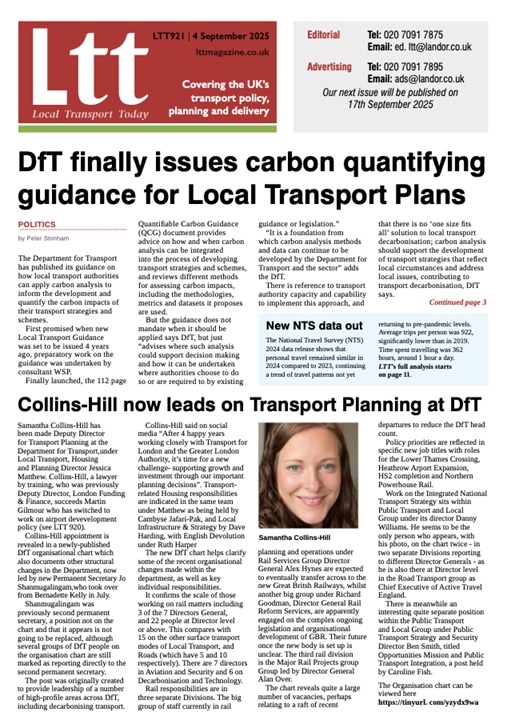
This week I have made my debut as a columnist in LTT magazine, with an analysis of the draft third Road Investment Strategy, (RIS 3) concluding with the idea that there are a lot of gaps to be filled in.
Promises of “a greater focus than ever before on the maintenance and renewal of the network” have not, SOFA, been backed with confirmation that asset management will get more money.
The closest the document comes is a reference to “increased renewals funding” which isn’t even described as increasing in real terms.
The document states:
The final RIS strategy will define how this [£25bn] is split between capital and resource expenditure and outline the main categories of spend, including the schemes that will be delivered.
Operations, Maintenance and Renewals are lumped together in a single section, which begins with a classic lie:
43% of the RIS2 investment programme focussed on operating, maintaining, and renewing the existing network.
Yes, £10.8bn of the eventual RIS 2 budget of £24bn was spent on these three things, but money spent on operating the network was resource spending, not investment.
There is then a statement of the should-does-not-mean-yes variety – an assertion of what is needed without a commitment to actually do it:
Maintaining a safe and reliable road network depends on a well-funded, carefully coordinated maintenance programme, delivered through a balanced combination of operations, maintenance, and renewals (OMR) activities.
And then it gets murkier:
These three elements are strongly interconnected. For instance, strategic investment in road surface renewals can reduce the need for reactive maintenance and unplanned operational responses such as road closures, contributing to smoother journeys and enhanced user experience. Targeted investment in renewals also supports long-term economic growth by improving the resilience and efficiency of the network. The plans for each OMR workstream are developed in coordination, ensuring that interdependencies are considered and aligned, with full details provided for each funding line in the final RIS.
If I am reading this correctly, it may be saying that the greater focus than ever before on the maintenance and renewal of the network may be increased renewals funding at the expense of repairs – the same cake divided up differently.
The conspicuous absence of any pledge of higher maintenance spending, combined with the suggestion that OMR spending was already at a high level last time tend to support this interpretation.
I’m not saying that spending more on preventative work isn’t a good idea – just that banking the savings before you have spent the money may seem a bit previous.
 Transport Insights
Leave a comment