Transport Insights

The transport stories you won't see in the industry-friendly media

Author

Chris Ames

Tag: funding

  • Has the draft RIS taken a sledgehammer to local road funding?

    An obvious point to make about the draft of the 3rd Road Investment Strategy (RIS 3) is that it looks set to gobble up almost all of the £24bn announced by Rachel Reeves in the spending review, with the local network getting around £1bn a year.

    Let’s start with the spending review:

    Providing £24 billion of capital funding between 2026-27 and 2029-30 to maintain and improve motorways and local roads across the country. This funding increase will allow National Highways and local authorities to invest in significantly improving the long-term condition of England’s road network, delivering faster, safer and more reliable journeys;
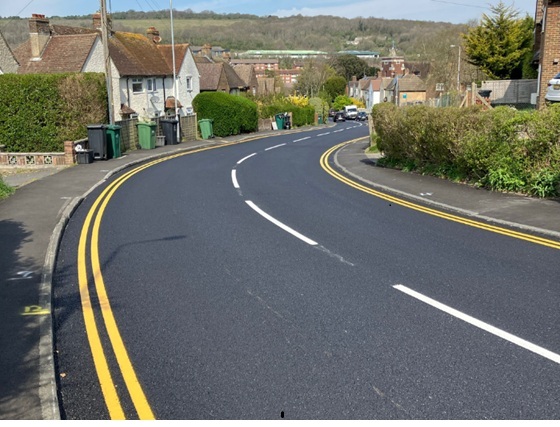
    The draft RIS 3 sets a total funding envelope of £24.98bn up to and including 2030-31. Assuming that this is approximately £5bn a year, that makes £20bn up to 2030, leaving just £4bn to maintain and improve local roads across the country.

    Even before you get into funding for improvements under the Major Road Network and Large Local Majors funding stream(s), this isn’t even enough to fund the current level of £1.6bn a year for local road maintenance.

    On the other hand, we don’t know how much of the RIS funding will be capital and how much resource.
    Leave a Reply

  • Exclusive: ORR knew shelved A1 scheme had been defunded

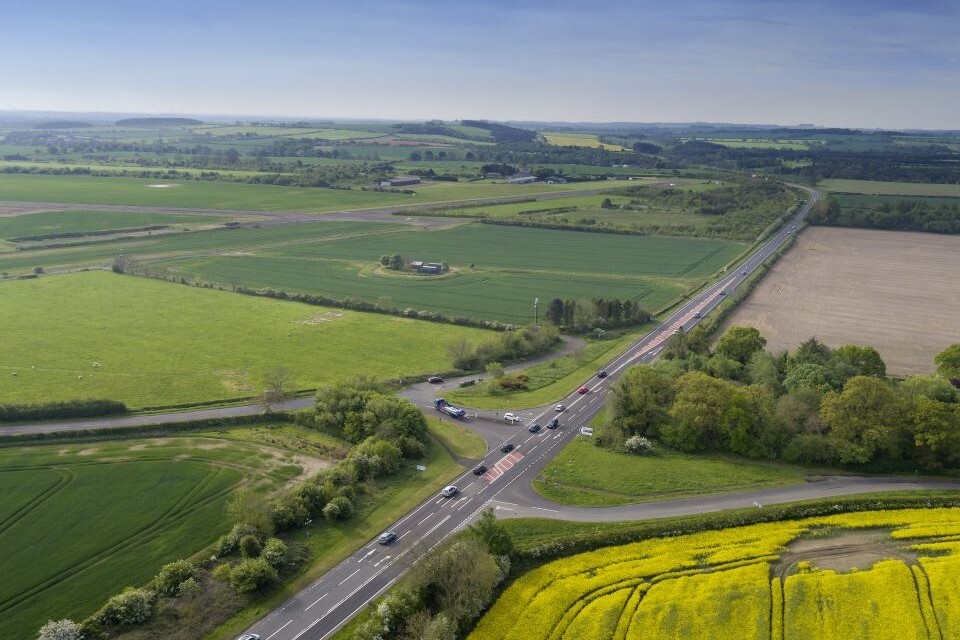
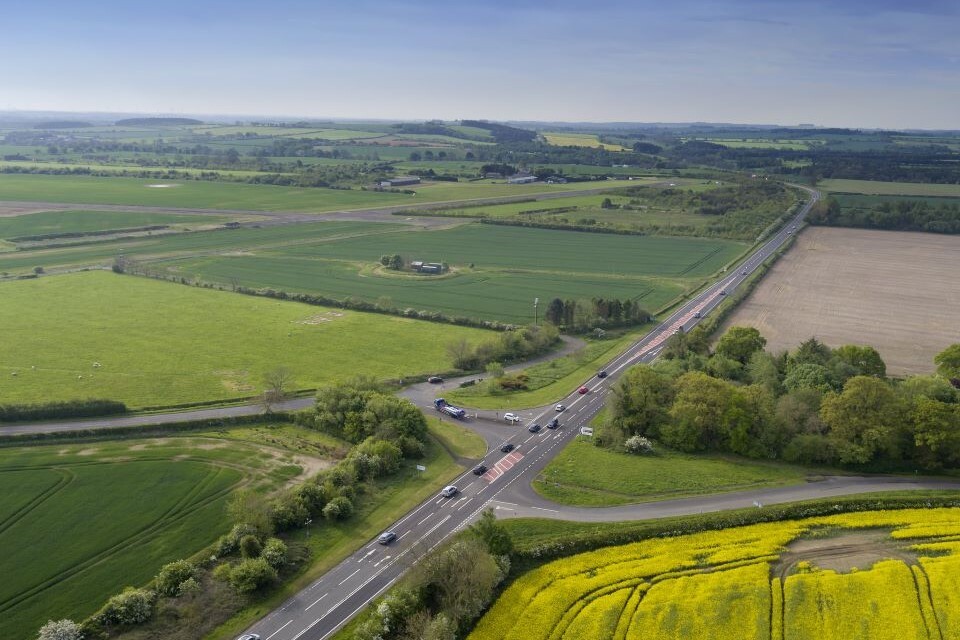
    I have obtained new documents showing that National Highways’ regulator knew the government had removed funding from a large roadbuilding scheme and was hiding this from the public and Parliament. The regulator then falsely reported that the scheme would go ahead when it got planning permission.

    By doing this, the Office of Road and Rail (ORR) – supposedly an independent watchdog – became complicit in the deception over the shelving of the A1 Morpeth to Ellingham scheme, which has undermined parliamentary oversight of the government-owned company’s operation and development of the strategic road network.

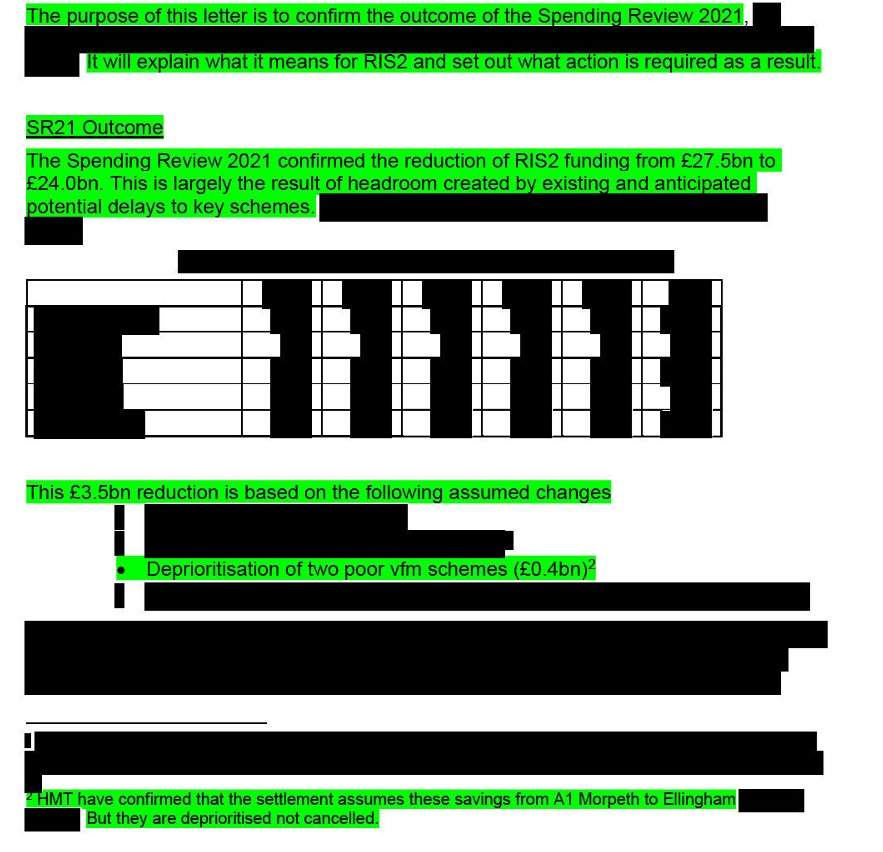
    As has previously been reported, the Department for Transport (DfT) told National Highways in February 2022 that the A1 scheme had been deprioritised and its funding removed following the Spending Review in late 2021.

    Despite this, both National Highways and the ORR published reports and presented them to Parliament claiming that the scheme would enter construction in the 2022-23 financial year.

    I have now obtained correspondence between the DfT and National Highways from February 2022, which was copied to the regulator, showing not only that a cut to the company’s funding included a saving from not progressing the A1 scheme but that a deliberate decision had been taken to keep the public and Parliament in the dark about the scheme being shelved.

    A letter from a senior DfT official to National Highways’ chief financial officer notes that:

    No public announcement was made about the A1 Morpeth to Ellingham [and another redacted scheme]. Plans will be drawn up for communications about the A1 Morpeth to Elllingham, but for the time being it remains a committed scheme recognising that costs will continue to accrue pending a decision.

    (more…)

  • Watt achievement?

    Labour, to its credit, is cracking on with the Transpennine Route Upgrade (TRU), filling gaps left by the Tories, but looks like it may be falling into the Tory habit of making unfunded promises when it comes to Northern Powerhouse Rail.

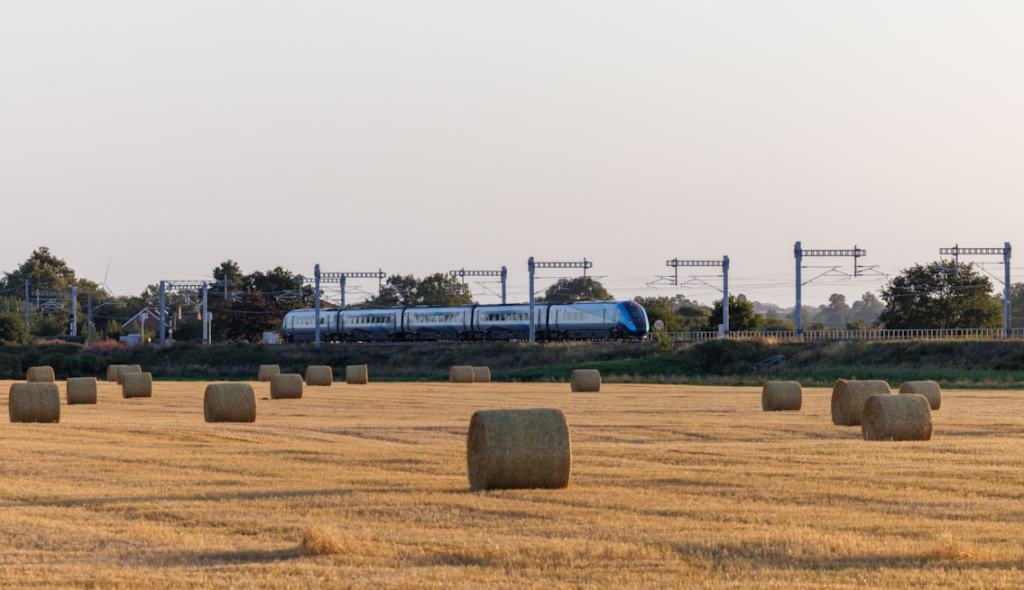
    A couple of weeks ago ministers and Network Rail announced that the latest stretch of the TRU, between Church Fenton and York, had been completed on time and on budget, allowing an electrified passenger train to run between the two.

    Network Rail said:

    This achievement means that 25% of the 70-mile Transpennine main line is now electrified, laying the foundations for a faster, greener and more reliable railway between Manchester, Huddersfield, Leeds and York once complete.

    It is an achievement but means that TransPennine Express will continue to run (mainly) bi-mode Nova 1 (class 802) trains along the route, running on diesel for the 75% that is not electrified, and carrying both diesel engines and electric motors, which is hardly efficient or environmentally beneficial.

    (more…)
  • More fibs about shelved A1 scheme

    The saga/farce of the cancellation of the A1 to Morpeth to Ellingham scheme, secretly shelved by the Tories in 2022, continues with notice that Labour intends to revoke the Development Consent Order that was granted last year before the election.

    According to the Department for Transport (DfT):

    The Secretary of State for Transport proposes to make an order to revoke the A1 in Northumberland: Morpeth to Ellingham Development Consent Order 2024.

    By way of explanation, the DfT says the transport secretary “is satisfied that there are exceptional circumstances that make it appropriate to exercise the power to revoke the A1 in Northumberland: Morpeth to Ellingham Development Consent Order 2024 (“the DCO”). Accordingly, the Secretary of State proposes to make an order to revoke the DCO.”

    It’s not really an explanation of course, and New Civil Engineer reports that  Northumberland Council deputy leader Richard Wearmouth said that the move “feels needless and spiteful”.

    But it brings up another question about the secret shelving of the scheme, which National Highways and its regulator the ORR lied about.

    (more…)
  • Labour copies Tories with unfunded scheme pledges

    I have had confirmation from the Department for Transport (DfT) that the Major Road Network (MRN) and Large Local Majors (LLM) are still a “programme” to fund local road upgrades but the DfT remains reluctant to be straight about how much is in the funding pot, perhaps because it isn’t very much or perhaps because it wants to makes its own re-announcement.

    As I have written before Labour ministers previously made a fake announcement about a “green light” for 28 local road upgrades of which only two were newly approved, 10 were in construction and 16 awaiting business cases and therefore dependent on how much money the DfT has to pay its share or their costs.

    In response to a question about how much money is in the combined or individual MRN and LLM budgets, the DfT told me:

    The Spending Review committed a total of £24bn of capital funding for road schemes in England over the period from 2026/27 to 2029/30, which will cover both strategic and local roads. The MRN/LLM programme is a part of that figure, and further details of this and other programmes that make up the £24bn total will be provided in due course.

    It didn’t even say that it will reveal the budget for the MRN/LLM programme “in due course”, just that it will provide “further details”.

    Labour ministers have been very critical of the previous government for announcing schemes that do not have funding but seem happy to do the same.

    I have reminded the DfT that my request for information is covered by the Freedom of Information Act.

  • DfT confirms funding withdrawn from A1 scheme

    I have a further explanation from the Department for Transport (DfT) on why it doesn’t think that National Highways and the Office or Rail and Road (ORR) misled the public and Parliament when they said the A1 Morpeth to Ellingham scheme would start construction in 2022-23, despite being deprioritised and its funding withdrawn.

    It isn’t really much of an explanation and appears to depend on conflating the suggestion that these bodies should have said the scheme was cancelled (it wasn’t; I didn’t) with what I actually said, which is that they should not have actively pretended it was going ahead within a specific timeframe, when it wasn’t.

    I think the top line is that:

    The claims National Highways and the Office of Rail and Road misled the public are untrue, as the positions they set out were in accordance with the status of ministerial decisions on the projects at the time.

    This depends on pretending that schemes going ahead soon and not (yet) being cancelled is the same thing. In addition: 

    A Spending Review funding allocation is not the same as a project decision; the latter requires specific approval by a Transport Minister. 

    The DfT also says that the scheme remained in the RIS portfolio [which] is reflected in the language used by the National Audit Office (NAO) report in September 2022 and the subsequent National Highways delivery plan.

    It is absolutely true that the scheme remained without funding in the portfolio awaiting a final decision on whether to proceed, as the NAO revealed and as I reported.

    But again, the DfT is trying to pretend that being in the portfolio without funding awaiting a final decision on whether to proceed is compatible with what National Highways said and the ORR also reported, which is that it was going ahead *that year*.

    (more…)
  • How National Highways planned to fail on safety

    Returning to the subject of National Highways’ pledge to carry out 43 “additional” actions during 2024-25 to improve its failing safety record, a raft of recent documents from the company and its regulator suggest that it *might* have spent more money on the issue, but there remains no confirmation on either point.

    To recap, according to the Office of Rail and Road (ORR), National Highways’ enhanced safety plan, which both bodies have continued to hide from the public, was said to have included 43 additional actions for the year: 24 road safety schemes, eight communications campaigns, and 11 ‘working with others’ actions. Only 33 were delivered during the year and almost all of the undelivered actions were road safety schemes.

    Both organisations said these actions, in a plan delivered in March 2024, were “additional” to the company’s 2024-25 delivery plan, which was published a year later and did not list specific actions.

    I calculated that during the first four years of the second (2020-25) roads period, National Highways had spent £105.8m from its Safety and Congestion designated fund, leaving around £34m to be spent of the £140m five-year budget against a projected “investment” of £27m in the delivery plan.

    In its Annual Report and Accounts for the year, the company, claimed to have “invested” £41.3m in around 160 projects improving safety or congestion. When added to the existing spend, this corresponds with the £147m “spend” in the ORR’s “efficiency and finance” report for RIS 2, although the ORR may have included cost of schemes that have not been completed.

    So National Highways *may* have spent more over the year than it claimed *as the year ended* to have intended to spend and appears to have overshot its RIS 2 budget of £140m.

    Its annual report says that with cuts for designated funds, there was “an exercise to prioritise those schemes contributing to corporate and legislative targets and commitments”. This appears to have led to a boost to the Safety and Congestion fund via by a raid on the Users and Communities fund and National Highways *may* have focused the Safety and Congestion fund more on safety and congestion.

    But there is no real evidence that this happened and National Highways has never said how many of its Safety and Congestion fund were safety and how many were congestion.

    (more…)

  • More random numbers from the DfT

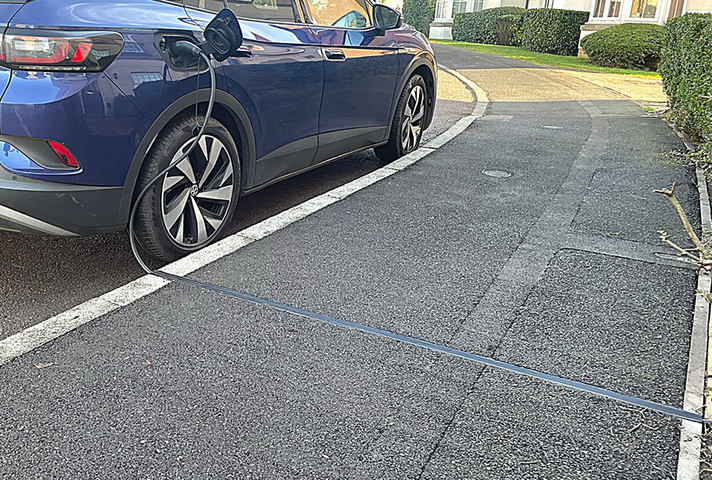
    The Department for Transport (DfT) has put out another press release with big numbers quoted out of context, this time a “New £63 million boost for Britain’s electric vehicle revolution”.

    Whether the boost is new is always the first question, with the age-old tradition of announcing a funding envelope and then each tranche of funding from it as a separate “new” boost.

    Image: DfT

    It looks as if the £63m is drawn from the “£200m for charging infrastructure” announced in the Autumn budget.

    The details are quite vague: £25m for local authorities, £8m for the NHS and the rest apparently for a “major new grant scheme to help businesses install charging points at depots nationwide”, which the government says it “is launching” but only on the basis that it intends to launch it.

    The money is said to “build on” – implicitly to be additional to – the “£400 million announced in the Spending Review to support charging infrastructure, including on the strategic road network”, or rather the redirected portion of the £950 rapid charging fund that Labour scrapped.

    (more…)

  • Uncertainty remains over local road upgrades

    It’s worth returning to Tuesday’s announcement about rail and road projects, in which the government falsely claimed to have green-lit 28 local road schemes, while actually confirming two, for what transport secretary Heidi Alexander told MPs about the schemes that are not (yet) getting funding.

    We know expectations were raised. And, sadly, we know there was no plan to pay for them. Indeed, schemes that formed part of the previous government’s major road network programme, all of which were meant to be in construction by now, have not progressed as expected. Almost half are yet to reach the outline business case stage, despite being in the programme for 6 years. Years of dither and delay wasted everyone’s time and left communities in limbo. This, I must say, is the tragic legacy of the farcical ‘Network North’ announcement made by the previous Prime Minister.

    I have probably covered the major road network (MRN), which ran alongside large local majors (LLM), more closely than any other journalist, noting how it was supposed to be part of a National Roads Fund paid for hypothecated Vehicle Excise Duty, but the money was never there and schemes just dribbled out.

    I also wrote extensively about how the Network North shambles promised to ensure that schemes happened but that really only meant potentially paying the full cost at outline business case stage for schemes that had got significantly more expensive since.

    The Department for Transport also suggested that £1.6bn MRN/LLM funding – focused on the North and Midlands – could continue into the next parliament (now the current parliament).

    (more…)
  • Not all good news

    The local authority that will receive government funding for one of the two local road schemes that the Department for Transport (DfT) *actually announced* yesterday is far from happy and expects the cost of the scheme to rise further.

    The Middlewich Eastern Bypass is a 1.6-mile bypass including a new bridge over a railway line and a combined cycleway and footway. Cheshire East Council has told me that the estimated total cost of the scheme is currently £97.941m, of which the DfT will provide a maximum funding contribution of £48.037m, including £1.257m already paid.

    “Cheshire East Council is solely responsible for meeting any expenditure over and above this maximum amount.”

    Yesterday the council’s leader and deputy leader, Nick Mannion and Michael Gorman, issued a statement with a strong good news, bad news flavour:

    (more…)