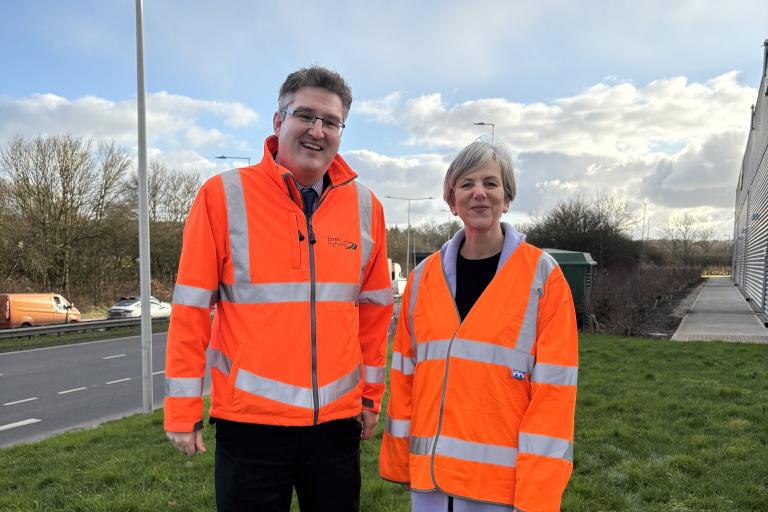
Ministers have let National Highways off the hook over its continued failings on safety, excusing the company’s failure to meet its 2025 casualty reduction target and allowing it to put its 2040 zero harm pledge back by a whole decade.
The Department for Transport has published what it is calling a Draft Road Investment Strategy 3, running from April 2026 to March 2031, although the document is billed as a “high-level vision” policy paper and has very little detail.
The document notes that a consultation on previous papers “revealed that respondents placed the highest importance on improving road safety and environmental outcomes” but offers almost nothing to take these issues forward.
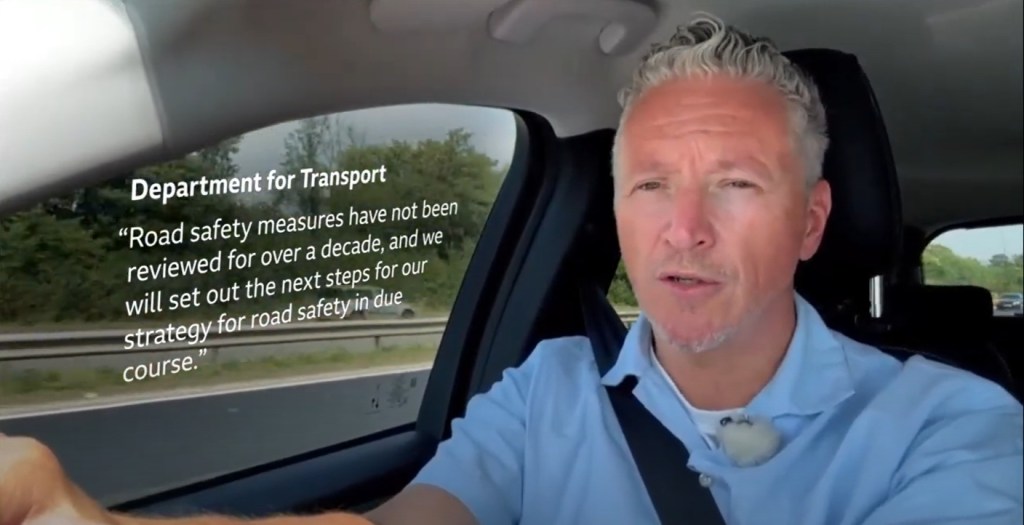
Back on the subject of the (allegedly) forthcoming Road Safety Strategy, I note that this BBC report ends with a comment from the Department for Transport (DfT) that:
…we will set out the next steps for our strategy for road safety in due course.
Not only is “in due course” deliberately vague but the DfT is only here referencing the next steps for its strategy in relation to that non-existent deadline.
For all the spin and expectation that the strategy will be published in the autumn, there have only been two on-the-record statements that the government hopes it will happen this year.
At the Transport Select Committee in April 2025, the Secretary of State set out that we hope to publish the Strategy later this year.
It may be that the vague timeline given by the DfT is because it wants to make an announcement that will seem like new news rather than something we been expecting, but it could also be a reflection that the timeline is slipping.
I have obtained new documents showing that National Highways’ regulator knew the government had removed funding from a large roadbuilding scheme and was hiding this from the public and Parliament. The regulator then falsely reported that the scheme would go ahead when it got planning permission.
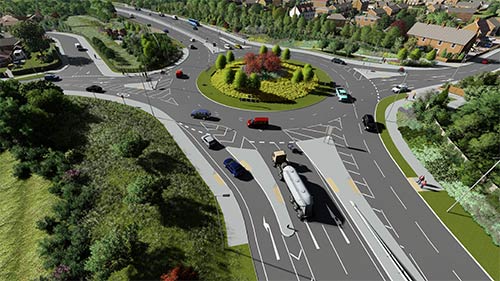
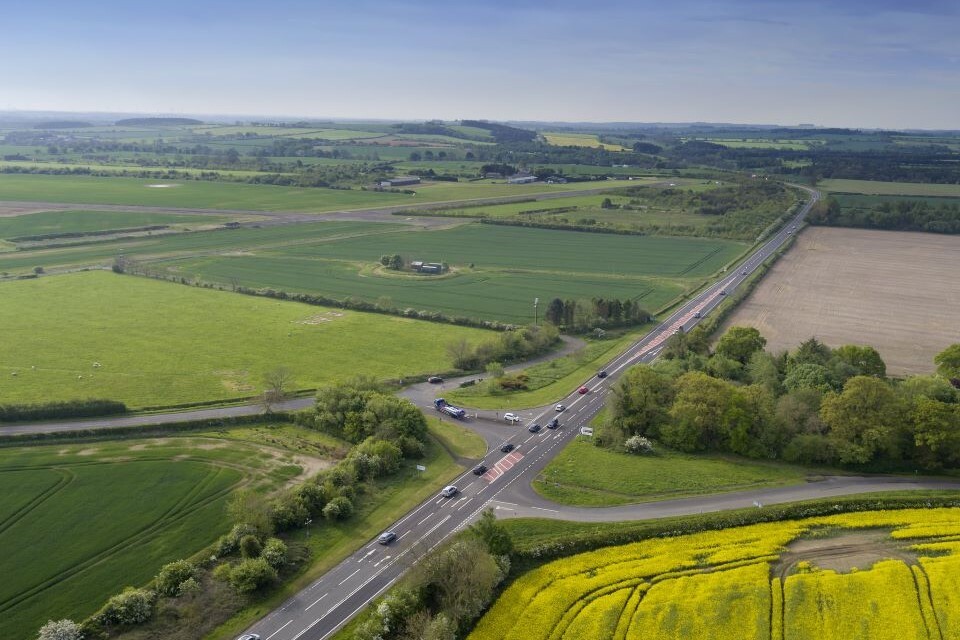
By doing this, the Office of Road and Rail (ORR) – supposedly an independent watchdog – became complicit in the deception over the shelving of the A1 Morpeth to Ellingham scheme, which has undermined parliamentary oversight of the government-owned company’s operation and development of the strategic road network.
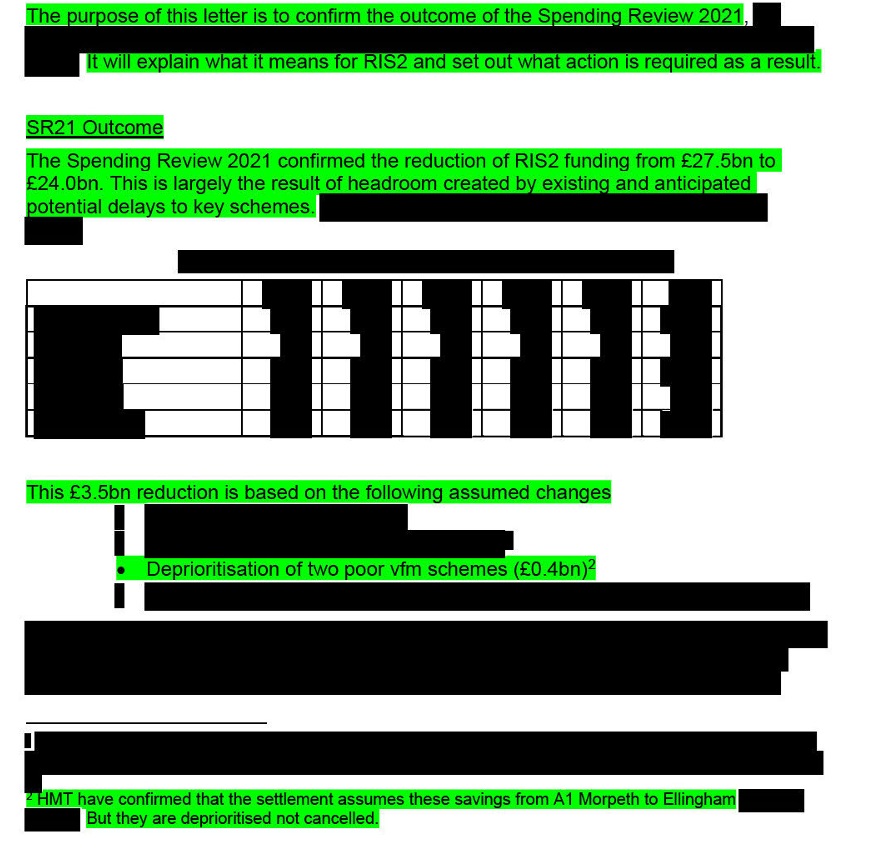
As has previously been reported, the Department for Transport (DfT) told National Highways in February 2022 that the A1 scheme had been deprioritised and its funding removed following the Spending Review in late 2021.
Despite this, both National Highways and the ORR published reports and presented them to Parliament claiming that the scheme would enter construction in the 2022-23 financial year.
I have now obtained correspondence between the DfT and National Highways from February 2022, which was copied to the regulator, showing not only that a cut to the company’s funding included a saving from not progressing the A1 scheme but that a deliberate decision had been taken to keep the public and Parliament in the dark about the scheme being shelved.
A letter from a senior DfT official to National Highways’ chief financial officer notes that:
No public announcement was made about the A1 Morpeth to Ellingham [and another redacted scheme]. Plans will be drawn up for communications about the A1 Morpeth to Elllingham, but for the time being it remains a committed scheme recognising that costs will continue to accrue pending a decision.
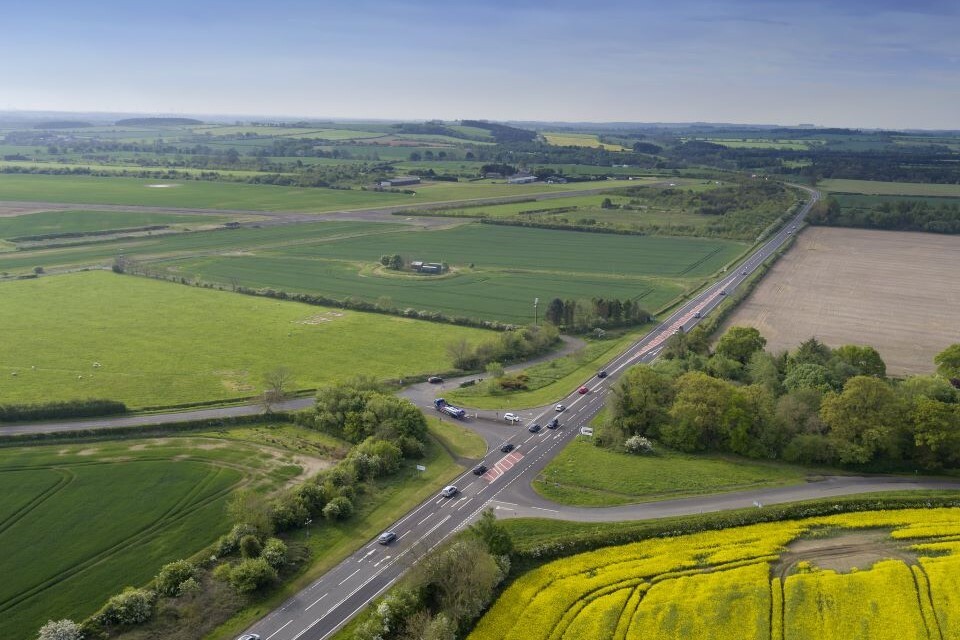
The saga/farce of the cancellation of the A1 to Morpeth to Ellingham scheme, secretly shelved by the Tories in 2022, continues with notice that Labour intends to revoke the Development Consent Order that was granted last year before the election.
The Secretary of State for Transport proposes to make an order to revoke the A1 in Northumberland: Morpeth to Ellingham Development Consent Order 2024.
By way of explanation, the DfT says the transport secretary “is satisfied that there are exceptional circumstances that make it appropriate to exercise the power to revoke the A1 in Northumberland: Morpeth to Ellingham Development Consent Order 2024 (“the DCO”). Accordingly, the Secretary of State proposes to make an order to revoke the DCO.”
It’s not really an explanation of course, and New Civil Engineer reports that Northumberland Council deputy leader Richard Wearmouth said that the move “feels needless and spiteful”.
I have had confirmation from the Department for Transport (DfT) that the Major Road Network (MRN) and Large Local Majors (LLM) are still a “programme” to fund local road upgrades but the DfT remains reluctant to be straight about how much is in the funding pot, perhaps because it isn’t very much or perhaps because it wants to makes its own re-announcement.
As I have written before Labour ministers previously made a fake announcement about a “green light” for 28 local road upgrades of which only two were newly approved, 10 were in construction and 16 awaiting business cases and therefore dependent on how much money the DfT has to pay its share or their costs.
In response to a question about how much money is in the combined or individual MRN and LLM budgets, the DfT told me:
The Spending Review committed a total of £24bn of capital funding for road schemes in England over the period from 2026/27 to 2029/30, which will cover both strategic and local roads. The MRN/LLM programme is a part of that figure, and further details of this and other programmes that make up the £24bn total will be provided in due course.
It didn’t even say that it will reveal the budget for the MRN/LLM programme “in due course”, just that it will provide “further details”.
Labour ministers have been very critical of the previous government for announcing schemes that do not have funding but seem happy to do the same.
I have reminded the DfT that my request for information is covered by the Freedom of Information Act.
There’s an interesting revelation in the Guardian’s story abut hundreds of civil servants being transferred from the Department for Transport (DfT) to the state-owned rail operator, as part of the creation of Great British Railways (GBR):
sources indicated that GBR would now probably not be up and running until 2028
In April, the DfT described the return to public hands of as South Western Railway as a “new dawn for rail”, but the state-owned firm has just quietly announced cuts to services.
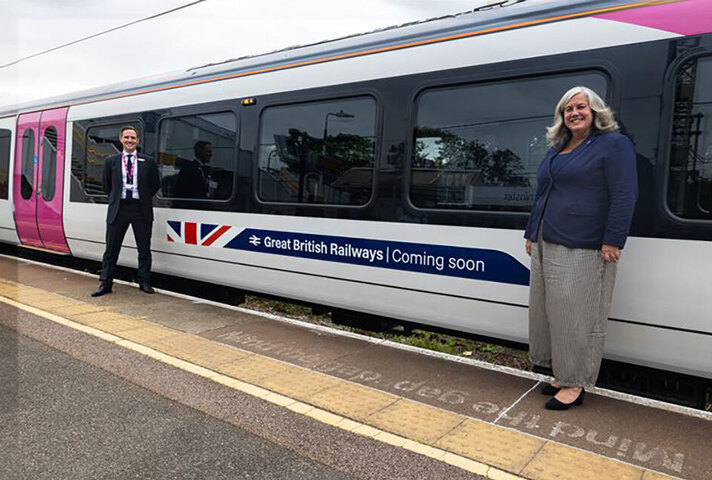
As has been observed, there was no fanfare about this deterioration. Heidi Alexander certainly didn’t stand in front of an SWR train to publicise it.
New Civil Engineer reports that City of York Council has agreed to phase the delivery of its Outer Ring Road project as the anticipated cost has jumped by almost £100m to £164m.
it’s been clear for some time there was never enough money allocated to deliver it.
On that basis, it’s worth recapping the history of the scheme, going back to 2018, when Tory transport secretary Chris “failing” Grayling announced that it would be one of the first schemes in the major road network, although his department had not yet revealed the actual network.
The huge rise in the cost of the scheme – and therefore the huge funding gap – has been known about for a while, leading to the decision to phase delivery of the scheme and the scheme. I’ve written a few times that government funding for these schemes leaves councils well short of what they cost these days.
But the fact that the council was still working on the full business case for the scheme didn’t stop the Department for Transport claiming earlier this month that it was one of 28 local road schemes that had been “given the green light“.
It isn’t really much of an explanation and appears to depend on conflating the suggestion that these bodies should have said the scheme was cancelled (it wasn’t; I didn’t) with what I actually said, which is that they should not have actively pretended it was going ahead within a specific timeframe, when it wasn’t.
I think the top line is that:
The claims National Highways and the Office of Rail and Road misled the public are untrue, as the positions they set out were in accordance with the status of ministerial decisions on the projects at the time.
This depends on pretending that schemes going ahead soon and not (yet) being cancelled is the same thing. In addition:
A Spending Review funding allocation is not the same as a project decision; the latter requires specific approval by a Transport Minister.
The DfT also says that the scheme remained in the RIS portfolio [which] is reflected in the language used by the National Audit Office (NAO) report in September 2022 and the subsequent National Highways delivery plan.
It is absolutely true that the scheme remained without funding in the portfolio awaiting a final decision on whether to proceed, as the NAO revealed and as I reported.
But again, the DfT is trying to pretend that being in the portfolio without funding awaiting a final decision on whether to proceed is compatible with what National Highways said and the ORR also reported, which is that it was going ahead *that year*.
Looking back at what was said in 2022 about the secret decision to shelve the A1 Morpeth to Ellingham scheme, it is quite clear that both National Highways and its regulator misled the public, and both organisations have conspicuously failed to deny that they did so.
I have previously noted that the Tory government’s decision to withdraw all funding from the scheme after the 2021 Spending Review is cited in a leaked report obtained by the Newcastle Chronicle.
However, the National Audit Office’s (NAO) November 2022 report cites the scheme as one of two that had been shelved earlier that year:
In February 2022, DfT formally notified National Highways that two projects on the watchlist had been deprioritised as an outcome of the 2021 Spending Review. These two projects remained in the portfolio awaiting a final decision on whether to proceed but their funding has been removed.
So to be absolutely clear, between February and November 2022 the A1 Morpeth to Ellingham scheme had no funding.
Let’s look then at National Highways’ Delivery Plan 2022-2023, which was published pretty well in the middle of that period. Under “Our activities during 2022-23”; it states:
We will start work on two schemes [including] A1 Morpeth to Ellingham which will upgrade multiple sections of the A1 to dual carriageway to provide continuous high quality dual carriageway from Newcastle to Ellingham, north of Alnwick.
A pretty unambiguous pledge to start work on a scheme that had no funding and unarguably a direct lie but National Highways has not responded to my request for explanation or comment.
Similarly the Office of Rail and Road’s (ORR) Annual Assessment of National Highways’ performance April 2021 to March 2022, “Presented to Parliament pursuant to section 10(8) of the Infrastructure Act 2015” and “Ordered by the House of Commons to be printed on 14 July 2022” lists the scheme as one of “12 schemes where RIS2 funding was reduced in SR21”.
So already the public and Parliament are being misled by the ORR’s description of the scheme as having had its funding “reduced”, rather than outright withdrawn.
To make matters worse, the ORR then presented Parliament with a graphic (above) showing the construction period for the scheme beginning in 2022-23.
It then falsely claimed that the scheme was “currently forecasting spend of £255m against a RP2 baseline of £39m”. The scheme was not currently forecasting any spend as it was unfunded.
It’s great to see another rail service (London to Essex c2c services) return to public control, with the Department for Transport (DfT) highlighting – somewhat unconvincingly – the potential savings to the taxpayer.
In an announcement on Sunday, the DfT described the development, under the Public Ownership Act, as a “step towards Great British Railways” but it’s very much Labour’s version of Great British Railways.
When I hear the name, I can’t help remembering that it’s Grant Shapps’ bullshit branding – basically British Rail with “Great” at the front and “ways” at the back. What a difference adding two carriages to the set makes.
The Shapps version was the integration of track and train without nationalising the train operating companies, which leaves the DfT claiming that both public ownership of c2c and the company’s already popular services are “driving growth”.
Leave a comment