There’s an interesting revelation in the Guardian’s story abut hundreds of civil servants being transferred from the Department for Transport (DfT) to the state-owned rail operator, as part of the creation of Great British Railways (GBR):
sources indicated that GBR would now probably not be up and running until 2028
In April, the DfT described the return to public hands of as South Western Railway as a “new dawn for rail”, but the state-owned firm has just quietly announced cuts to services.
As has been observed, there was no fanfare about this deterioration. Heidi Alexander certainly didn’t stand in front of an SWR train to publicise it.
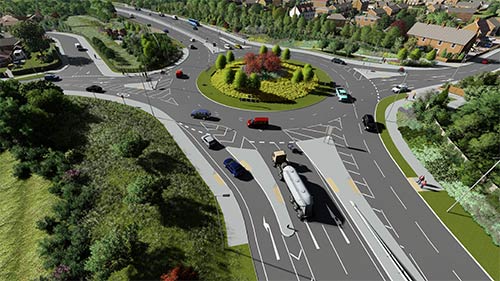
New Civil Engineer reports that City of York Council has agreed to phase the delivery of its Outer Ring Road project as the anticipated cost has jumped by almost £100m to £164m.
it’s been clear for some time there was never enough money allocated to deliver it.
On that basis, it’s worth recapping the history of the scheme, going back to 2018, when Tory transport secretary Chris “failing” Grayling announced that it would be one of the first schemes in the major road network, although his department had not yet revealed the actual network.
The huge rise in the cost of the scheme – and therefore the huge funding gap – has been known about for a while, leading to the decision to phase delivery of the scheme and the scheme. I’ve written a few times that government funding for these schemes leaves councils well short of what they cost these days.
But the fact that the council was still working on the full business case for the scheme didn’t stop the Department for Transport claiming earlier this month that it was one of 28 local road schemes that had been “given the green light“.
It isn’t really much of an explanation and appears to depend on conflating the suggestion that these bodies should have said the scheme was cancelled (it wasn’t; I didn’t) with what I actually said, which is that they should not have actively pretended it was going ahead within a specific timeframe, when it wasn’t.
I think the top line is that:
The claims National Highways and the Office of Rail and Road misled the public are untrue, as the positions they set out were in accordance with the status of ministerial decisions on the projects at the time.
This depends on pretending that schemes going ahead soon and not (yet) being cancelled is the same thing. In addition:
A Spending Review funding allocation is not the same as a project decision; the latter requires specific approval by a Transport Minister.
The DfT also says that the scheme remained in the RIS portfolio [which] is reflected in the language used by the National Audit Office (NAO) report in September 2022 and the subsequent National Highways delivery plan.
It is absolutely true that the scheme remained without funding in the portfolio awaiting a final decision on whether to proceed, as the NAO revealed and as I reported.
But again, the DfT is trying to pretend that being in the portfolio without funding awaiting a final decision on whether to proceed is compatible with what National Highways said and the ORR also reported, which is that it was going ahead *that year*.
Looking back at what was said in 2022 about the secret decision to shelve the A1 Morpeth to Ellingham scheme, it is quite clear that both National Highways and its regulator misled the public, and both organisations have conspicuously failed to deny that they did so.
I have previously noted that the Tory government’s decision to withdraw all funding from the scheme after the 2021 Spending Review is cited in a leaked report obtained by the Newcastle Chronicle.
However, the National Audit Office’s (NAO) November 2022 report cites the scheme as one of two that had been shelved earlier that year:
In February 2022, DfT formally notified National Highways that two projects on the watchlist had been deprioritised as an outcome of the 2021 Spending Review. These two projects remained in the portfolio awaiting a final decision on whether to proceed but their funding has been removed.
So to be absolutely clear, between February and November 2022 the A1 Morpeth to Ellingham scheme had no funding.
Let’s look then at National Highways’ Delivery Plan 2022-2023, which was published pretty well in the middle of that period. Under “Our activities during 2022-23”; it states:
We will start work on two schemes [including] A1 Morpeth to Ellingham which will upgrade multiple sections of the A1 to dual carriageway to provide continuous high quality dual carriageway from Newcastle to Ellingham, north of Alnwick.
A pretty unambiguous pledge to start work on a scheme that had no funding and unarguably a direct lie but National Highways has not responded to my request for explanation or comment.
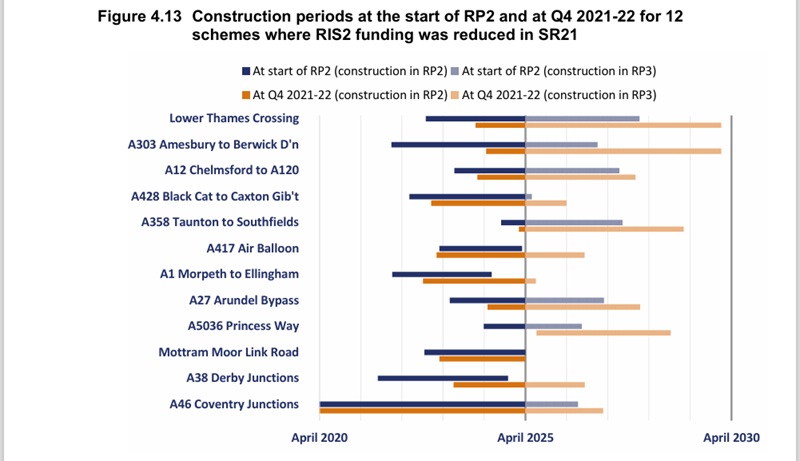
Similarly the Office of Rail and Road’s (ORR) Annual Assessment of National Highways’ performance April 2021 to March 2022, “Presented to Parliament pursuant to section 10(8) of the Infrastructure Act 2015” and “Ordered by the House of Commons to be printed on 14 July 2022” lists the scheme as one of “12 schemes where RIS2 funding was reduced in SR21”.
So already the public and Parliament are being misled by the ORR’s description of the scheme as having had its funding “reduced”, rather than outright withdrawn.
To make matters worse, the ORR then presented Parliament with a graphic (above) showing the construction period for the scheme beginning in 2022-23.
It then falsely claimed that the scheme was “currently forecasting spend of £255m against a RP2 baseline of £39m”. The scheme was not currently forecasting any spend as it was unfunded.
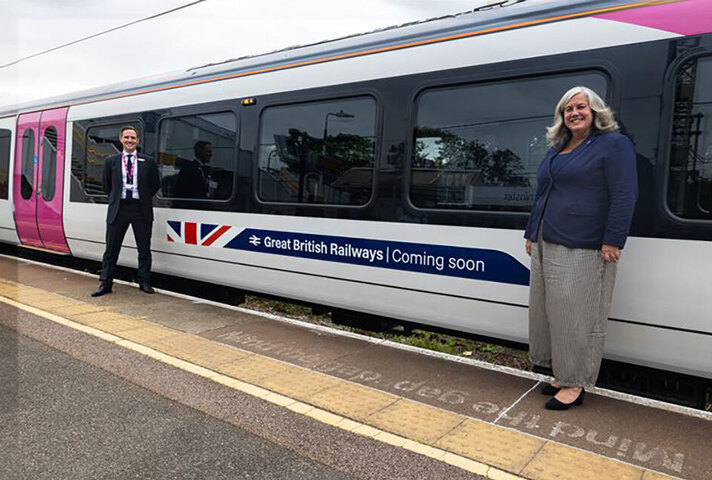
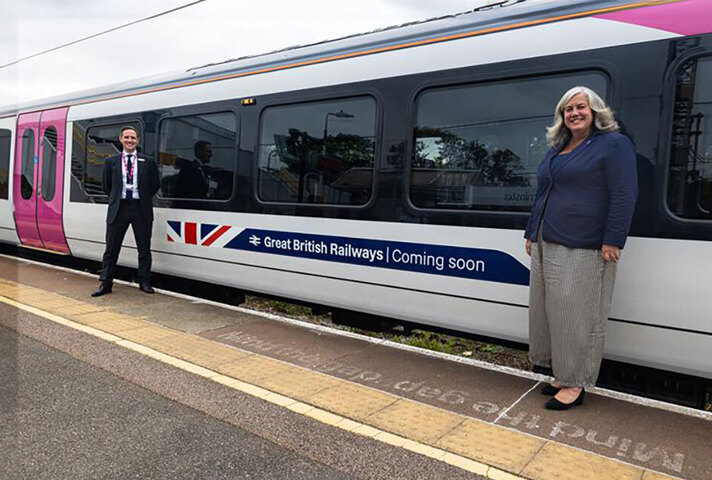
It’s great to see another rail service (London to Essex c2c services) return to public control, with the Department for Transport (DfT) highlighting – somewhat unconvincingly – the potential savings to the taxpayer.
In an announcement on Sunday, the DfT described the development, under the Public Ownership Act, as a “step towards Great British Railways” but it’s very much Labour’s version of Great British Railways.
When I hear the name, I can’t help remembering that it’s Grant Shapps’ bullshit branding – basically British Rail with “Great” at the front and “ways” at the back. What a difference adding two carriages to the set makes.
The Shapps version was the integration of track and train without nationalising the train operating companies, which leaves the DfT claiming that both public ownership of c2c and the company’s already popular services are “driving growth”.
Local news outlets in the North East are reporting a potentially huge scandal over a recently cancelled National Highways scheme, with a shocking tale of deceit potentially involving the government-owned company, the previous (Tory) government and the Office of Rail and Road (ORR).
Department for Transport staff were ordered to stop working on plans to dual the A1 in Northumberland back in 2021 – three years before it was approved by the Conservative Government, leaked documents have revealed.
And:
…during the 2021 Spending Review the funding for the scheme was “withdrawn” and the plan was “deprioritised”. The report adds: “The funding decision was not made public, but we instructed National Highways to cease work on the scheme.”
In another twist on this story, the Chronicle notes that the scheme was included in the Network North announcement following the cancellation of the northern leg of HS2.
This goes some way to explaining something that baffled me at the time. In October 2023 I reported that:
…the A1 scheme is described in the current RIS programme as a ‘committed’ scheme. As part of the process of seeking a development consent order (DCO), National Highways submitted a document to the Planning Inspectorate (PINS) asserting that the scheme was funded.
However, as Highways has reported, the scheme has been held up by repeated delays from ministers. So far there remains an unpublished recommendation from PINS.
In its annual assessment of National Highways 2022-23, the Office of Rail and Road noted that the scheme should have started work during that year but was delayed by ministers’ postponement of the DCO decision.
Whether the boost is new is always the first question, with the age-old tradition of announcing a funding envelope and then each tranche of funding from it as a separate “new” boost.
Image: DfT
It looks as if the £63m is drawn from the “£200m for charging infrastructure” announced in the Autumn budget.
The details are quite vague: £25m for local authorities, £8m for the NHS and the rest apparently for a “major new grant scheme to help businesses install charging points at depots nationwide”, which the government says it “is launching” but only on the basis that it intends to launch it.
The money is said to “build on” – implicitly to be additional to – the “£400 million announced in the Spending Review to support charging infrastructure, including on the strategic road network”, or rather the redirected portion of the £950 rapid charging fund that Labour scrapped.
It’s worth returning to Tuesday’s announcement about rail and road projects, in which the government falsely claimed to have green-lit 28 local road schemes, while actually confirming two, for what transport secretary Heidi Alexander told MPs about the schemes that are not (yet) getting funding.
We know expectations were raised. And, sadly, we know there was no plan to pay for them. Indeed, schemes that formed part of the previous government’s major road network programme, all of which were meant to be in construction by now, have not progressed as expected. Almost half are yet to reach the outline business case stage, despite being in the programme for 6 years. Years of dither and delay wasted everyone’s time and left communities in limbo. This, I must say, is the tragic legacy of the farcical ‘Network North’ announcement made by the previous Prime Minister.
I have probably covered the major road network (MRN), which ran alongside large local majors (LLM), more closely than any other journalist, noting how it was supposed to be part of a National Roads Fund paid for hypothecated Vehicle Excise Duty, but the money was never there and schemes just dribbled out.
I also wrote extensively about how the Network North shambles promised to ensure that schemes happened but that really only meant potentially paying the full cost at outline business case stage for schemes that had got significantly more expensive since.
The Department for Transport also suggested that £1.6bn MRN/LLM funding – focused on the North and Midlands – could continue into the next parliament (now the current parliament).
The local authority that will receive government funding for one of the two local road schemes that the Department for Transport (DfT) *actually announced* yesterday is far from happy and expects the cost of the scheme to rise further.
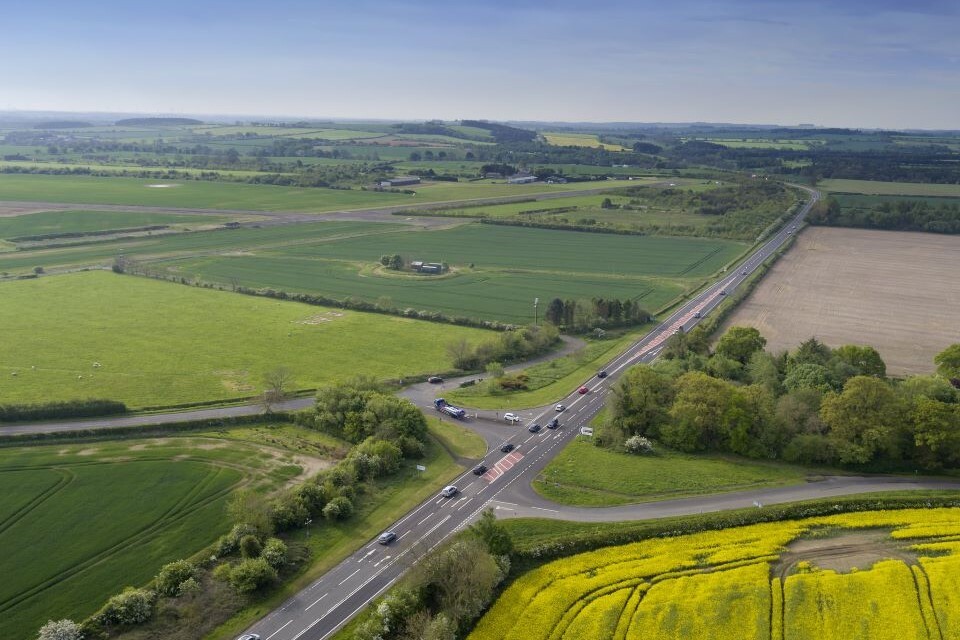
The Middlewich Eastern Bypass is a 1.6-mile bypass including a new bridge over a railway line and a combined cycleway and footway. Cheshire East Council has told me that the estimated total cost of the scheme is currently £97.941m, of which the DfT will provide a maximum funding contribution of £48.037m, including £1.257m already paid.
“Cheshire East Council is solely responsible for meeting any expenditure over and above this maximum amount.”
Yesterday the council’s leader and deputy leader, Nick Mannion and Michael Gorman, issued a statement with a strong good news, bad news flavour:
The Department for Transport’s (DfT) announcement of a “green light” for 28 local road schemes has fallen apart as quickly as the Tories’ notorious Network North announcement, as it emerges that many of the green lit schemes have been in construction for a while and others are still awaiting confirmation of cash promised years ago.
I wrote earlier that the DfT had clarified that only two of the Large Local Major (LLM) and Major Road Network (MRN) schemes had actually had funding confirmed (today) but the department’s list of schemes with “funding confirmed” (now at the bottom of the announcement) includes schemes that are not only in construction, but were promised funding as far back as 2018.
Also on the “funding confirmed” list is the North Hykeham Relief Road, which was the only new road project announced in the Tories’ November 2020 National Infrastructure Strategy.



 Transport Insights
Leave a comment