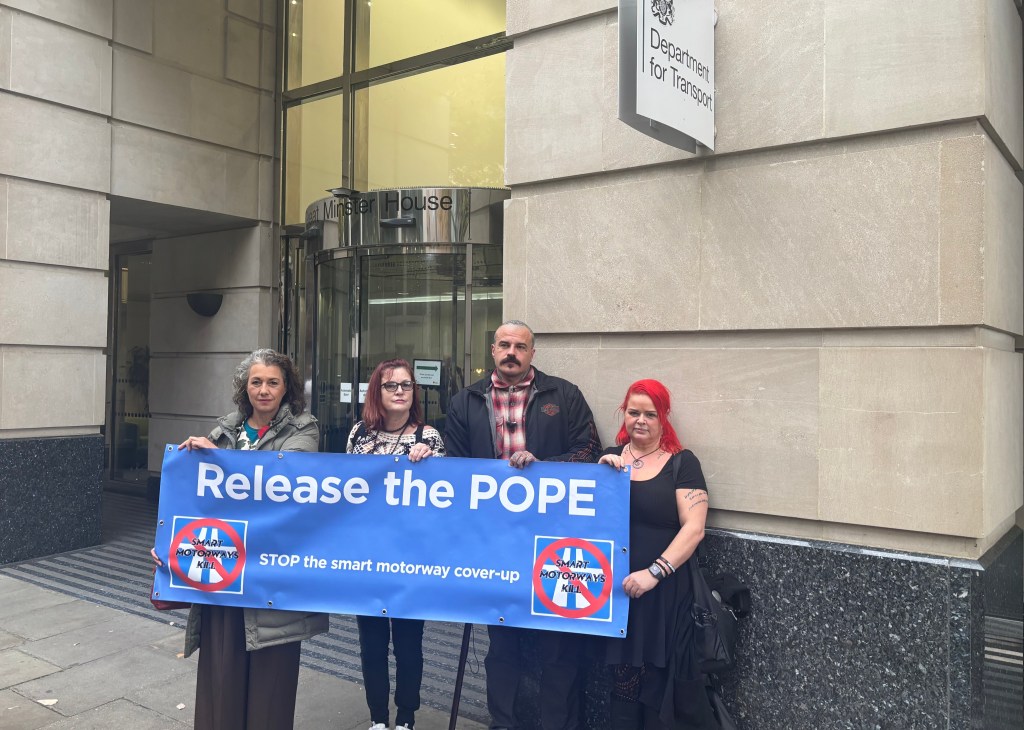
The brilliant Claire Mercer has posted two TV news reports on yesterday’s demonstration, on the Smart Motorways Kill Facebook feed and YouTube.
I think both reports give a good explanation of the issue, but by way of a reminder, roads minister Simon Lightwood is refusing to release a raft of Post Opening Project Evaluation (POPE) reports on smart motorways, which would reveal their record on issues such as safety, value for money and environmental impact.
The first is from Fred Dimbleby of ITV’s Calendar:
And a second from Spencer Stokes of BBC Look North:
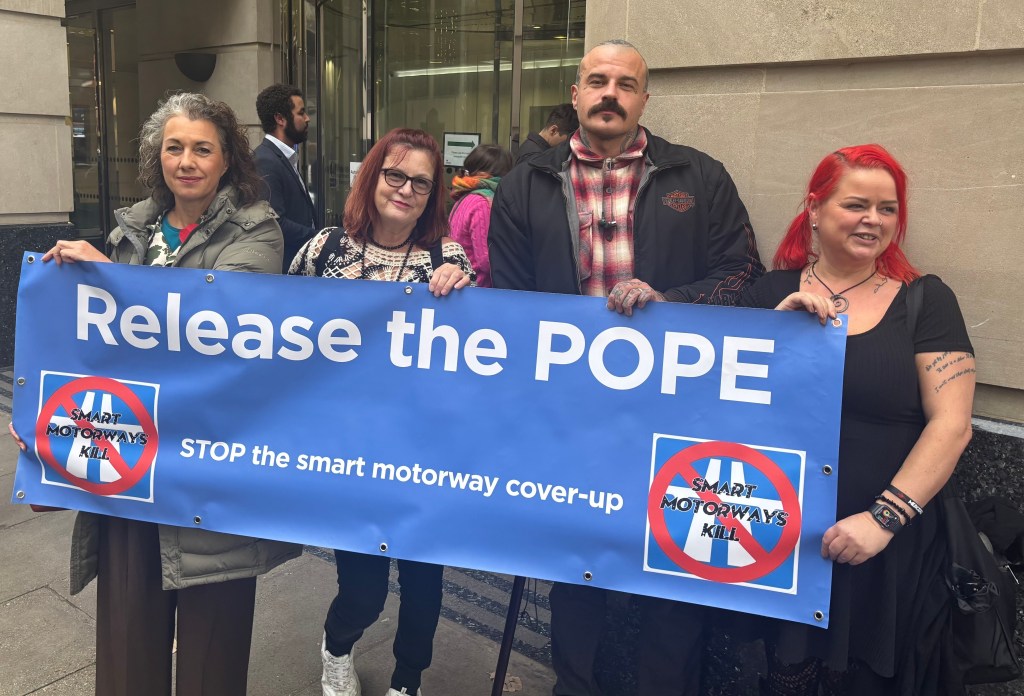
A Labour MP joined campaigners outside the office of the Department for Transport (DfT) today, calling for suppressed reports on the impact of smart motorway schemes to be released.
The event was a collaboration between myself and Claire Mercer of the Smart Motorways Kill campaign and aimed to highlight the fact that the DfT is refusing to release a raft of Post Opening Project Evaluation (POPE) reports on smart motorways, which would reveal their record on issues such as safety, value for money and environmental impact.
It generated a significant amount of attention, with Mercer interviewed by local and national media, telling them that she aimed to “shame” ministers into taking action.
According to a 2022 report by National Highways’ regulator, the Office of Rail and Road (ORR), nine POPE reports were due to be completed that year alone. It is not known how many have been compiled since.
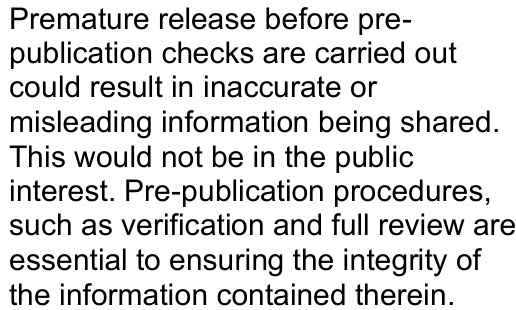
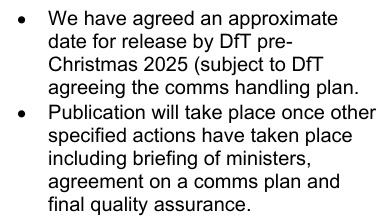
Both National Highways and the ORR have blamed ministers for the failure to make the reports public, with the DfT claiming that the reports are still undergoing an “assurance” process.
Sarah Champion, Member of Parliament for Rotherham, who is Mercer’s MP, also attended the demonstration, at which a banner demanding “Release the Pope” was held up at the entrance to the DfT’s offices.
Funding for local road enhancements and repairing thousands of “run-down bridges, decaying flyovers and worn-out tunnels” over the next four years will be equivalent to the cost of one major project on the strategic road network.
The Department for Transport (DFT) has clarified its botched press release in June about cash for England’s road network, explaining that while the £1bn in the headline will not be used for the Lower Thames Crossing (LTC), it will have to cover both “local highway enhancement projects” and a new Structures Fund.
The department will still not say how much of the £1bn is for enhancements to local roads under the Major Road Network (MRN) and Large Local Majors (LLM) funding streams and how much is for repairing dodgy structures, but it’s unlikely to do much on either front.
The original announcement referred to “major investments to improve vital road structures”, with approximately 3,000 bridges currently unable to support the heaviest vehicles, with the package also including £590m to take forward the LTC.
It made no reference to enhancement schemes on local roads, but was very much focused on making “vital road structures…both more resilient to extreme weather events and to the demands of modern transport”.
In a further announcement in July, the DfT claimed in July to have “green-lit” 28 local road enhancement schemes, referring to:
£1 billion to enhance the local road network and create a new structures fund
As I wrote last week, roads minister Simon Lightwood told shadow transport secretary Richard Holden in a parliamentary written answer that £24bn capital funding for roads over the next four years:
includes £1 billion for key local highway enhancement projects and a new Structures Fund for repairing run-down bridges, decaying flyovers and worn-out tunnels.
The DfT has now confirmed that the £1bn covers the Structures Fund and enhancement schemes on local roads, with an additional £590m specifically for developing the LTC.
It’s not clear why Lightwood thought the £1bn was something to boast about as it is the same as the estimated cost of just one of National Highways enhancement schemes – the A428 Black Cat to Caxton Gibbet.
The Department for Transport’s (DfT) longstanding roads delivery director, Kate Cohen, has taken over the role of senior responsible owner of the Lower Thames Crossing (LTC).
The news, reported by Highways magazine, follows a report in the Guardian, since denied by the DfT, that the government-owned company had been stripped of responsibility for the £10bn+ project.
According to the DfT website, Cohen is director of Roads and Projects Infrastructure Delivery, a section that includes responsibility for the LTC.
Speaking to Highways, National Highways chief executive Nick Harris stressed that the company remains responsible for delivering the LTC, but National Highways’ Sean Pidcock had been its senior responsible owner since 2021.
Harris said:
The DfT has recognised the size of the Lower Thames Crossing project means they have to put focus on it and I am really chuffed to see Kate Cohen becoming the SRO. She is going to focus on the LTC and we have worked with Kate on the rest of the portfolio and I think that is a decision that makes a lot of sense.
While maintaining the usual refusal to comment on “leaked” documents, the Department for Transport (DfT) insisted that nothing has changed and suggested that most of the Guardian story was based on a misunderstanding.
As I noted yesterday, the £10bn+ plan to build a tunnel and new roads linking Kent and Essex was already classified as a “Tier 1” infrastructure project. The DfT pointed out that all such projects are “governed and funded” by the government and that key decisions “are a matter for ministers”, while delivery is the responsibility of National Highways.
This has not changed.
The DfT added that, as the Guardian pointed out, that National Highways is responsible for the development of the crossing and will publish a breakdown of costs in its annual report, with decisions over the scope and funding of the project are taken by ministers.
It said that as this is how Tier 1 projects are governed, this directly contradicts the claim that National Highways has been stripped of the project.
The DfT added that the project’s scope of the Lower Thames Crossing has been legally fixed by its Development Consent Order (DCO) which was granted by transport secretary Heidi Alexander in March, and that any material changes to a DCO, including scope, must be approved by her.
A DfT spokesperson said:
Backed by £590m, the Lower Thames Crossing is the most significant road building project in a generation – and will cut local congestion, better link up motorists and businesses in the Midlands and North with key ports in the South East, and spreading growth throughout the regions, as set in our Plan for Change.
As I pointed out yesterday, Labour has actually given the project £250m as well as the £590m. More on this soon.
The AA has picked up on my revelation that the Department for Transport (DfT) is sitting on a large number of post-opening evaluations of smart motorways and suggested that the loss of the hard shoulder may be responsible for an increase in delays on the strategic road network.
The AA said it believes that the impact of smart motorways is now “firmly under the spotlight”, adding that drivers are avoiding lane one through fear of running into a stranded vehicle, which undermines the efficiency and speed of these roads.
Another reason for increased delays on motorways without a hard shoulder is that they have less resilience when things go wrong.
Elsewhere on the network, major schemes like the one at Junction 10 of the M25 have continued to cause significant traffic jams.
The AA also noted my report that several Post Opening Project Evaluation (POPE) reports into all lane running schemes have yet to be released, and called for their immediate publication.
Head of roads policy Jack Cousens said:
With numerous stretches of so-called smart motorway now in regular use, rather than improving traffic flow it seems to have created more bottlenecks.
There are several reports about these schemes which have not yet been released by the Department for Transport which would show what, if any, improvements drivers have experienced.
We need these documents released to understand what traffic flow benefits have been made, alongside a value for money assessment on these motorways drivers perceive as dangerous.
Ministers are sitting on a huge amount of data on the safety and value for money of smart motorway schemes, including at least nine that were due for completion in 2022.
The concealment of multiple post opening project evaluation (POPE) reports will raise concerns that the government is once again hiding inconvenient facts about the controversial roads, as it did in 2021, when I put pressure on the Department for Transport (DfT) over reports that it was suppressing.
When the five-years after POPE on the scheme to convert the M1 between junctions 10 and 13 to dynamic hard shoulder was published in September 2021, it revealed that it had cost the economy £200m instead of a projected benefit of £1bn, because it slowed traffic down. It made national news.
We are scrutinising the company’s POPE publication plan for smart motorway schemes. Nine of these are due to be completed in 2022. In July 2021, the company published the five-year POPE for the M1 junctions 10 to 13 dynamic hard shoulder running scheme.
That POPE was the last report on a smart motorway to be published, which is unsurprising given how terrible the data was, although aggregated safety data is published separately.
When I asked National Highways why no more POPE reports had been published, a spokesperson told me:
We have provided the Department for Transport (DfT) with the smart motorway post opening project evaluation (POPE) reports. These are multiple detailed evaluations of scheme performance and DfT is now in the process of undertaking its final assurance.
Obviously, for those reports completed in 2022, “undertaking final assurance” means locked in a cupboard.
Simon Lightwood has been made the new roads minister following the shambolic reshuffle that saw Lilian Greenwood removed from the Department for Transport (DfT) after showing too much enthusiasm for tackling pavement parking, before being partially re-instated.
However, Greenwood will only be a part-time minister as she has another job in the Whips Office.
It’s not clear what she will do at the DfT as it has still not bothered to tell the public which minister is responsible for which bit of transport policy. Lightwood is still listed on its website as minister for local transport, while Greenwood and new minister Keir Mather have no responsibilities or roles listed.
Based on the announcements linked to him, Mather appears to have responsibility for maritime and aviation policy.
I have previously noted Greenwoods clear statements (several months apart) to take action “very soon” on pavement parking and that a parliamentary answer from Lightwood suggested that he was in no hurry to do anything.
Time will tell, but he may have been given the roads brief to take forward Labour’s Plan for Change by not changing very much.
The Department for Transport (DfT) has insisted that National Highways was right to put the the A1 Morpeth to Ellingham scheme in an annual delivery plan, despite the scheme being defunded and officially “paused”.
Rather surprisingly, the department has stated that the formal pausing of the scheme was achieved through a “change control” document previously disclosed to me, despite that document explicitly stating that it would be dealt with a separate change control submissions,
“the timing and communication of which will have to be carefully timed with any broader announcements in response to TSC or Union Connectivity reports and any DCO process considerations”.
This quote indicates that National Highways intended to delay putting through the paperwork to hide the fact that the scheme had been secretly shelved, but the DfT has insisted that the document itself, which it approved, constituted “a change control submission to pause the scheme” and that this was approved.
I’m not saying the government is disorganised of makes things up as it goes along, but former “future of roads” minister Lilian Greenwood has returned to the Department for Transport (DfT), just over a week after being moved.
It appears that she will also be a government whip and her responsibilities at the DfT have not yet been officially confirmed on the department’s website.
Neither have those of new minister Keir Mather, who appears to have maritime and aviation responsibilities.
Greenwood’s return brings the department back up to its full complement of four junior ministers under transport secretary Heidi Alexander.
Bizarre is not a strong enough word for such a turnaround.
Leave a comment