Transport Insights

The transport stories you won't see in the industry-friendly media

Author

Chris Ames

Tag: decarbonisation

  • Fiddling while England burns

    With Andy Burnham describing Britain as “a tinderbox”, you might think the government has picked the wrong day to quit pretending it is taking action on the climate emergency.

    The DfT has announced:

    Vehicle manufacturers, suppliers, charge point operators, dealers, consumers and communities are being asked for their views on the pathway to ending sales of new petrol and diesel cars by 2030 and ensuring all new cars and vans are zero emission by 2035, as the government today (14 August 2026) launches a consultation on the zero emission vehicle (ZEV) mandate.

    Officially, the 2030 targets respectively for ending sails of new petrol and diesel (only) cars and non-zero emission cars by 2035 remain but when you remember that plug-in hybrids (PHEVs) will currently be 20% of the market from 2030 and this might go up to 50%, there is no point in pretending that 2030 will have any meaning.

    The Energy and Climate Intelligence Unit (ECIU) points out that PHEVs have been found to consume five times more fuel than their manufacturers claim, which means that their real-world CO2 emissions are little better than a regular petrol car, and they cost almost twice as much to run as their manufacturers claim.

    The main problem with a (very heavy) PHEV is that you don’t have to plug it in and many users don’t.

    Colin Walker, Head of Transport at the ECIU says:

    By incentivising the industry to sell more plug-in hybrids the Government risks another ‘dieselgate’, encouraging the uptake of vehicles that burn five times more fuel, and cost almost twice as much to run, than their manufacturers claim, and cost significantly more to buy, and hundreds of pounds a year more to run, than an electric car.

    He also notes that:

    With 80% of cars made in the UK exported and with a surge of EV sales in Europe, by far and away the UK’s largest export market, the real risk our car industry faces is a repeat of the 70s and 80s, when a failure to innovate in the face of competition from abroad resulted in factory closures and mass redundancies.

    I really don’t know what Burnham is thinking, except I note that he also sacrificed the health of people in Greater Manchester by avoiding bringing in a clean air zone.

  • National Highways gets its way on (not) cutting carbon

    National Highways’ Annual Report and Accounts, published this week, shows why the company no longer has a target for reducing corporate carbon emissions in the new Road Investment Strategy (RIS 3): it keeps missing its targets, despite constant fiddling.

    For the interim year between road investment strategies (2025-26), National Highways was required to:

    Achieve a 75% reduction in corporate emissions against the 2019-20 baseline in 2025-26, using the Science Based Targets initiative methodology.

    It missed this but achieved a 73% cut to 41,727 thousand tonnes of CO2 equivalent (tCO2e), which implies a baseline of 154,000 tCO2e.

    That looks like a big cut, but it has mainly been achieved by discounting electricity from renewable electricity.

    Although it was not allowed to do this for its RIS 2 (2020-25) KPI, in its 2021 Annual Report and Accounts, it said:

    In April 2020, we invested in a green energy procurement contract to supply the majority of our network with certified green electricity. This has reduced our carbon emissions by approximately 45,000 tonnes annually.

    National Highways’ Net Zero Highways 2030 / 2040 / 2050 plan explicitly states that the company will achieve half of the reduction needed to get to net zero corporate emissions by 2030 by using “certified renewable electricity”.

    And its 2025 update included a cut in electricity emissions from 85,664 tCO₂e to just 18 tCO₂e.

    It effectively wrote off all the electricity it used as zero carbon.

    The company appears to have used the same methodology for 2025-26, i.e. to move away from the methodology that went so badly wrong for it during the second roads period (RP2)

    According to the Office of Rail and Road’s 2025 annual assessment of National Highways:

    (more…)
  • Rail electrification shelved, Alexander confirms

    The transport secretary has confirmed that Labour has no plans for further electrification of the rail network, for affordability reasons, once again giving the lie to the rail minister’s claim that the government is giving rail funding it needs.

    The FT (paywall) reports Heidi Alexander as telling the Rail Industry Association summit that any further electrification is “not affordable right now” and that the government is “only supporting projects that are fully costed and affordable”.

    She said:

    We are keeping further electrification of the line under review, which I believe is the responsible thing to do.

    Alexander also said this had “allowed us to make commitments elsewhere,” the FT reported.

    It’s not clear whether her comments go further than what she said in July when claiming that the government was “greenlighting over 50 rail and road projects”.

    She told MPs in relation to the midland main line electrification scheme phase 3:

    The costs of the scheme were substantial, and we had to prioritise other schemes that deliver more tangible benefits to passengers sooner. However, we will keep the electrification scheme under review as part of our pipeline of projects for future funding.

    But because of ministers’ double speak where “under review” appears to mean shelved and “greenlighting” to mean not shelved, it seems to have been clear for some time that Labour has shelved electrification to spend money on other things.

    But what is clear is that Labour is not “backing rail with the funding needed”, as rail minister Lord Peter Hendy claimed.

    Leave a comment

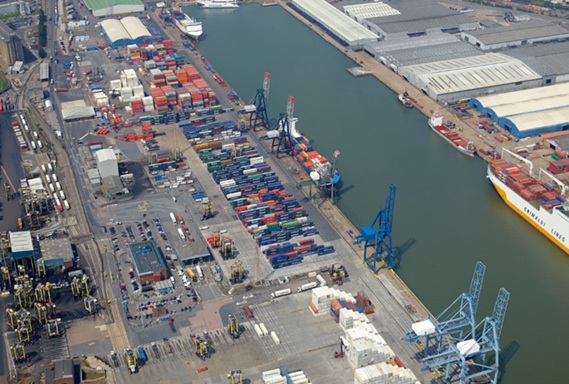
  • Dft all at sea as Mather gets maritime gig

    The new transport minister, Keir Mather, appears to have been given the maritime brief, leaving the role of roads minister pretty vacant.

    To mark London International Shipping Week, the Department for Transport has issued a press release with the title More than £1.1 billion investment to boost growth, jobs and skills in UK’s coastal towns and cities.

    And the claim that:

    Funding will help businesses and academia develop real-life technology that reduces carbon emissions from shipping.

    It follows the government’s recent policy of badging decarbonisation spending as aimed at growth, presumably because they are worried what fascist Farage will say and scared of upsetting the even more fascist Trump.

    The press release issued in the name of The Rt Hon Heidi Alexander MP and Keir Mather MP but Mather’s linked profile still does not give him a portfolio.

    Apparently:

    To launch the week, Local Transport Minister, Simon Lightwood, will ring the bell at the London Stock Exchange. The Transport Secretary and Maritime Minister will attend several key events during the week where they will champion UK shipping on the international stage and showcase the UK as a global hub for growth, investment, skills and jobs.

    Mather is not named here as the maritime minister, but a press release from the Transport Select Committee announces that:

    The Transport Committee will question the new Minister for Maritime, Keir Mather MP, as it concludes it inquiry into the Government’s draft revised National Policy Statement for Ports. 

    Let’s hope someone has told Mather what his job is.

    Leave a comment