Transport Insights

The transport stories you won't see in the industry-friendly media

Author

Chris Ames

Tag: alexander

  • A shining example of churnalism

    A story on Your Harlow about transport secretary Heidi Alexander contains both one of the most egregious examples of churnalism that you will ever see and some pretty clear evidence that Alexander is determined to greenwash aviation expansion.

    The paper reports:

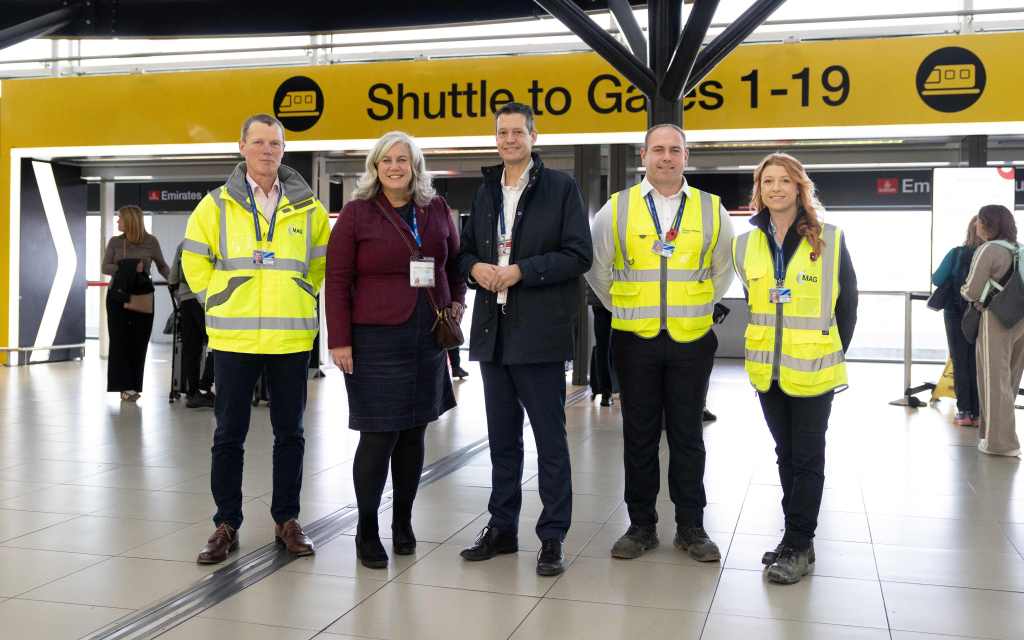
    LONDON Stansted this week welcomed The Secretary of State for Transport Heidi Alexander MP, who saw first-hand how the airport’s transformation programme will boost the role it plays driving trade, investment and tourism for London and the East of England.

    If that looks like it’s been copied and pasted from a press release, that’s because the whole article has. The London Stansted release begins:

    LONDON Stansted this week welcomed The Secretary of State for Transport Heidi Alexander MP, who saw first-hand how the airport’s transformation programme will boost the role it plays driving trade, investment and tourism for London and the East of England.

    Let’s look at one of those boosts – tourism. Given that Stansted is heavily orientated towards low-cost leisure travel and many passengers are UK residents taking holidays abroad, most of this tourism is Brits spending money abroad rather than foreign visitors spending money in Britain’
    Alongside this, Alexander’s greenwashing is off the scale. Funnily enough, both the press release and the newspaper report say:

    Stansted has welcomed a record-breaking number of passengers this year, and saw it achieve its busiest ever flying day this summer with over 700 aircraft movements…

    The visit concluded at the airport’s new on-site solar farm, the only one of its kind at a London airport, which became operation in September this year and is now helping power the airport and supports Stansted’s commitment to achieve net zero carbon emissions from its direct airport operations by no later than 2038.

    Obviously, Alexander isn’t going to let the fact that emissions savings on airport operation are a drop in the ocean compared with those from flights. She is reported to have said:

    We support airport expansion where it balances economic growth with climate, noise and air quality obligations. I’m pleased to see Stansted’s plans to grow passenger numbers responsibly – boosting connectivity, jobs and growth across the East of England, while meeting environmental commitments.

    Stansted’s new solar farm is a shining example of how airports can cut their carbon footprint and reduce emissions as they grow. This comes as we invest £43 million to boost innovation that makes the sector even greener.

    As Labour has clearly realised, why tackle climate change when you can greenwash it?

    One response to “A shining example of churnalism”

    1. clearlyteenage2e6308de03 avatar
      clearlyteenage2e6308de03

      It seems a terrible shame that over two decades after both Tories and Labour realised we had to reduce traffic and our carbon emissions anything is done to increase CO2. Now we know we are close to runaway global heating it is a chronic neglect of duty not to do everything we can to reduce and not increase carbon.

      This is even more of a shame as Heidi Alexander is ex London Government which for the UK has proved outstandingly successful in reducing traffic CO2 and air pollution.

      Like

    Leave a Reply

  • Navel gazing to start immediately

    The transport secretary has said that detailed design work on a replacement Bradford Interchange station “starts immediately”, despite the need to work out whether it will be a new station or a terminus “over the next year or so”.

    RAIL magazine reports:

    Heidi Alexander was speaking at a business conference in the city on Wednesday after it was announced a replacement for the 1973-built terminus would be opened in the 2030s.

    Confirming that the new station would be on the site of today’s, Alexander said: “I’m delighted that the detailed design work starts immediately.”

    But her speech and the Department for Transport (DfT) announcement that preceded it very carefully said nothing about whether the new station would replace today’s terminus with another, or whether it would be the through station that local supporters want.

    Alexander told the Telegraph & Argus:

    We need to do a bit more work on the design of the station and the associated rail network to work out if this will be a through station or whether it will be a turn back station, which is how Bradford Interchange works at the moment.

    Over the next year or so Network Rail need to do a piece of work to look at this issue very carefully.

    It might be that new viaducts need to be built and that could have implications for adjoining properties and for the local community, and we need to think through the implications of that.

    (more…)
  • Is road building up in the air too?

    Still on the subject of Heidi Alexander’s speech to the Labour conference, it has been pointed out to me that she also made no reference to any of the major road schemes that the government is officially taking forward, such as the A66 scheme or the Lower Thames Crossing.

    Has the government gone cold on road building?

    Here are the transport secretary’s references to roads in a speech that had a lot to say about the railways:

    Roads riddled with potholes

    Record investment in roads maintenance, Conference. The first Road Safety Strategy in over a decade.

    Our newest Minister, Justin Madders, who is gripping the problem of driving test wait times and overseeing our investment in roads.

    Given that the first reference to investment in roads is specifically to maintenance, it might be reasonable to assume that the second one is also and that the absence of reference to road building suggests that ministers are less keen on it than they were.

    This seems to have been the case with Heathrow expansion, as I noted yesterday.

    On that subject, City AM reports that

    …Alexander told the News Agents podcast that Heathrow’s expansion was a “very significant infrastructure project” that should be weighed up against the country’s climate obligations and its impact on locals.

    The comments represent a striking departure from the full-throated support that the Keir Starmer government gave the runway, which former Chancellor Rachel Reeves singled out as a key pillar in her bid to boost economic growth.

    Having said that, the Independent reports Treasury minister James Murray as giving the scheme full-throated support, in spite of Andy Burnham’s refusal to do so:

    But I think we recognise that having that third runway is really important for jobs, it’s really important to get that investment into Heathrow and it’s actually really important for the whole country because that investment in making Heathrow stronger, making our country stronger, making sure that we boost trade and making sure we get more jobs right across the country is really important for our future.

    Is there a row going on down near Slough?

  • Burnham keeps Alexander to placate drivers

    I think we can tell from Andy Burnham’s announcement late yesterday evening that Heidi Alexander will stay on as transport secretary that he doesn’t want to rock the boat in this area, which would be consistent with his time in Greater Manchester.

    For all that Burnham did in Manchester to expand and link public transport, what he avoided was taking radical action to tackle toxic air pollution – vetoing a possible charging Clean Air Zone (CAZ).

    As I have written, Manchester falsely framed measures to improve public transport as an alternative to a CAZ, where the two could (and legally should) have been run in parallel, to bring the region into compliance with the Air Quality Directive as soon as possible. The measures were not mutually exclusive; they were mutually supportive.

    With new evidence showing the effectiveness of CAZs and London’s (now expanded) ULEZ in cutting air pollution and the health problems it causes, we can only conclude that Burnham put an unwillingness to upset drivers over the health of his residents.

    And if there is one thing that characterises Alexander’s tenure as transport secretary, it’s an unwillingness to upset drivers; countless Department for Transport announcements have been directed at this group – as well as expanding air travel in a climate emergency.

    It was obvious from the outset that Louise Haigh was forced out because she took far more radical approach to transport policy and it is interesting that she is now back in government in a more powerful role than Alexander.

    Whether Alexander might be persuaded to change tack remains to be seen, but what we can see for now is that Burnham is more focused on consumerist, individualist approach to politics than seeing the bigger picture.

    One response to “Burnham keeps Alexander to placate drivers”

    1. clearlyteenage2e6308de03 avatar
      clearlyteenage2e6308de03

      It’s a shame that all the lessons learned during the 1990’s and changes in Transport Policy at the turn of the century and the positive actions taken (by BOTH major political parties) have been reversed in the early 2010s and now forgotten and ignored.

      Infrastructure (of the right sort?) has been ‘accepted’ as a priority for the economy but new Strategic Roads are not going to help the economy or the public except just after they open for a couple of months. New wind turbines, modernising the grid, getting proper hold of our water and sewage and reinvesting in the existing failing infrastructure like 97.5% of the road network, hospitals and schools would.

      Like

    Leave a Reply

  • Gaslighting the public about a target that doesn’t exist

    The Department for Transport has released a written version of what it called Debrief Drop In Sessions that took place just after the Road Investment Strategy was released last month, including a sort of explanation as to why National Highways will be expected to do so little to improve safety.

    It follows comments by a senior National Highways official last month, in which he admitted that the company had not bothered with its target for the last (2020-25) RIS, because it depended on matters outside its control.

    As I have pointed out, what is described in the RIS as a “KPI Target” is not a target at all, but a requirement that it at least try to meet a level of casualty reduction:

    National Highways must demonstrate it has done all it reasonably can to achieve a 7.5% reduction in the number of people killed or seriously injured (KSI) on the SRN by the end of 2031, based on the 2022-24 baseline.

    It’s worth pointing out that transport secretary Heidi Alexander misrepresented this in her introduction to RIS 3, where she referred to:

    setting National Highways a target to achieve a 7.5% reduction

    One stakeholder at a Debrief Drop-in asked:

    Why is the safety target so unambitious, given previously the target was for zero harm by 2040?

    The answer goes back to the idea that National Highways can only control what it can control:

    (more…)
  • A pointless distraction?

    Unsurprisingly, Heidi Alexander’s announcement that she has “tasked HS2 Ltd to explore options to remove complexity that could cut billions in costs and reduce delays” has fallen flat with people who know what they are talking about.

    The DfT said:

    HS2 was originally commissioned to run at 360km/h, which would have made them the fastest conventional high-speed trains anywhere in the world. However, no railway in the UK, or globally, is currently engineered for 360km/h.

    This means that HS2 would have to wait for HS2 tracks to be built before testing any trains – an approach which could increase costs and delay the completion of the project.

    There’s an interesting use of language of possibility here, with “would have” suggesting that trains at this speed are not going to happen and “could” admitting that the increase in costs and delay might come to nothing.

    RAIL magazine reports:

    Plans to change the specification of HS2 to reduce the top speed are unlikely to save money, according to engineers.

    Railway engineer and writer Gareth Dennis said:

    (more…)

  • Alexander: Mass transit may not mean trams

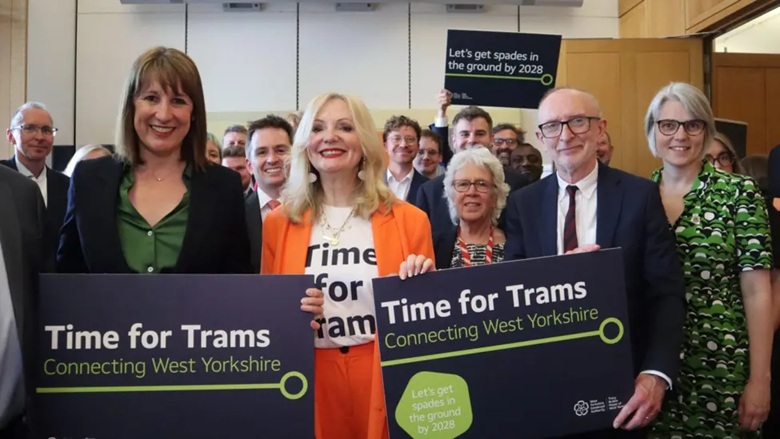
    Heidi Alexander has cast new doubts over whether West Yorkshire’s plans for “mass transit” will ever amount to anything more than “a few better buses”, in what appears to be an ongoing battle between her department on one side and chancellor Rachel Reeves and mayor Tracy Brabin on the other.

    The Yorkshire Post (paywall) reports:

    Transport Secretary Heidi Alexander has refused to guarantee that the planned West Yorkshire mass transit system will include a tram network.

    It adds:

    It comes after The Yorkshire Post revealed last year that civil servants could overrule Ms Brabin and turn the mass transit system into a bus network, with West Yorkshire Combined Authority asked to set out an alternative business case for buses. The Department for Transport is the ultimate body which will sign off the plans for the scheme.

    It also comes after the West Yorkshire Combined Authority (WYCA), led by Brabin, refused to disclose a “peer review” of the scheme by the National Infrastructure and Service Transformation Authority (NISTA) on the grounds that it would damage public confidence in the scheme.

    The Yorkshire Post article shows Alexander not only repeatedly refusing to commit to the trams that Brabin and Leeds MP Reeves have been pushing for but also refusing to back Reeves’ insistence that “mass transit does not mean a few better buses”:

    (more…)
  • A small error

    A baffling announcement from the transport secretary has shone a light on her department’s determination to make the facts (or predictions) around carbon emissions fit Labour’s policy of expanding aviation in a climate emergency.

    A written statement to parliament from Heidi Alexander begins:

    On 19 February I wrote to the judge hearing the above claim in respect of my ongoing duty of candour in those proceedings.

    There is no reference before this, or indeed anywhere in the statement, to any claim or proceedings, although Alexander does later make equally baffling references to:

    an order of the court from 10 December 2025

    and to having

    apologised to the court and the parties and submitted a statement from a senior official in the department to explain the error and correct our position.

    At no point does she say which court but, unpicking all this, it looks as if the case is the legal challenge to Alexander’s decision to back expansion of Heathrow. You can tell this because she protests that

    (more…)
  • Alexander the not-so-great botches West Midlands Metro extension

    The Express and Star reports that:

    The Midlands Metro tramline will open for passengers in Dudley at the end of August – more than two years late.

    At a meeting of Dudley Council’s Communities and Growth Scrutiny Committee, council leaders faced questions on what help was available for traders affected by the delayed works.

    The Metro had been earmarked for a 2024 opening and later for a launch in the autumn of 2025. It was later announced the opening would be delayed until the start of this year.

    The extension to Dudley is the first phase of the Wednesbury to Brierley Hill extension, which is being built by the Midland Metro Alliance (MMA) on behalf of Transport for West Midlands (TfWM).

    Last October MMA said:

    Work on the first phase of the route, between Wednesbury and Dudley town centre, is nearing completion ahead of opening next year

    TfWM has now confirmed in a statement to journalist Peter Plisner:

    (more…)

  • Rail electrification shelved, Alexander confirms

    The transport secretary has confirmed that Labour has no plans for further electrification of the rail network, for affordability reasons, once again giving the lie to the rail minister’s claim that the government is giving rail funding it needs.

    The FT (paywall) reports Heidi Alexander as telling the Rail Industry Association summit that any further electrification is “not affordable right now” and that the government is “only supporting projects that are fully costed and affordable”.

    She said:

    We are keeping further electrification of the line under review, which I believe is the responsible thing to do.

    Alexander also said this had “allowed us to make commitments elsewhere,” the FT reported.

    It’s not clear whether her comments go further than what she said in July when claiming that the government was “greenlighting over 50 rail and road projects”.

    She told MPs in relation to the midland main line electrification scheme phase 3:

    The costs of the scheme were substantial, and we had to prioritise other schemes that deliver more tangible benefits to passengers sooner. However, we will keep the electrification scheme under review as part of our pipeline of projects for future funding.

    But because of ministers’ double speak where “under review” appears to mean shelved and “greenlighting” to mean not shelved, it seems to have been clear for some time that Labour has shelved electrification to spend money on other things.

    But what is clear is that Labour is not “backing rail with the funding needed”, as rail minister Lord Peter Hendy claimed.

    Leave a Reply