Transport Insights

The transport stories you won't see in the industry-friendly media

Author

Chris Ames
  • Getting your priorities wrong

    Following up on my piece about the impact of the major works at Junction 10 of the M25 on road users, I’d like to return to a story I covered elsewhere in January about National Highways’ efforts to persuade drivers disrupted by roadworks that work is being done, even when it probably isn’t.

    The company’s Guidance for using Electronic Boards for Roadworks (EBRW), with the subtitle “Guidance for using ‘customer friendly’ messages through roadworks” is explicit about the need to use information boards for public relations purposes.

    In fact, it frames National Highways’ “primary objective” in a way that you may find surprising:

    For the rest of RIS2, and moving into RIS3, it is imperative we focus on our primary objective of maintaining and improving our reputation with customers.

    Not safety, not decarbonisation, not even improving customers’ journeys, but making them feel like they have had a good journey is the company’s primary objective.

    (more…)
  • Junction 10 closure chaos continues

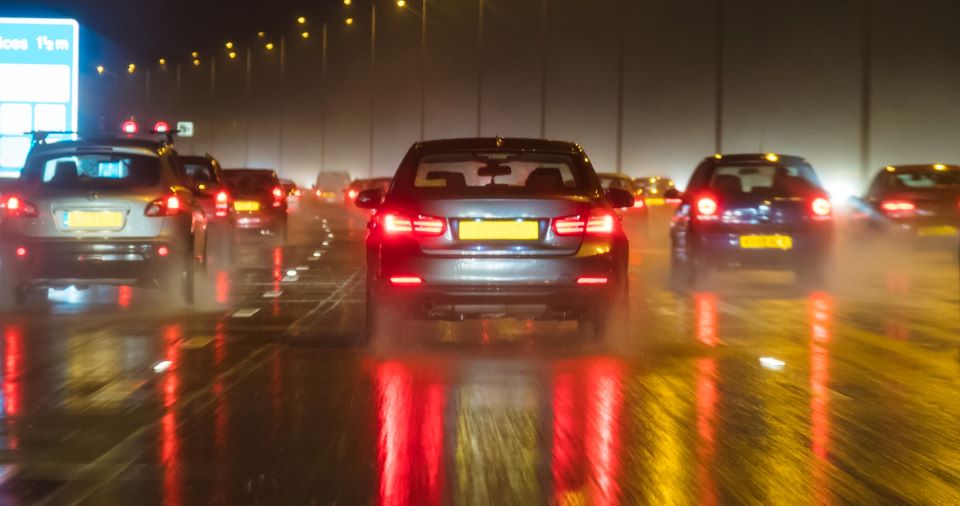
    Another full weekend road closure from National Highways’ catastrophic M25 Junction 10 scheme will cause delays and congestion this weekend, with long diversions, particularly for non-motorway traffic.

    Although National Highways has said there will be no more full closures of the motorway, the A3, which intersects with it at Junction 10, will be closed from Friday night until Monday morning over the short section north of the junction as far as Painshill (Cobham) roundabout.

    Some of the lengthy diversions will be taking traffic past already busy spots on the local network, including Chessington World of Adventures.

    Wisley Gardens, south of the motorway, is warning of delays, with visitors on the northbound A3 already having to engage with to engage with the Junction 10 roundabout, which will be busier with even more people leaving the road to join the M25 for a diversion.

    The charity that runs Wisley, the RHS, says it will have lost £11m in visitor revenue by the time the scheme ends (late) next year. It has a petition calling for compensation with nearly 94,000 signatures so far.

    I have written extensively about the catastrophic impact of the scheme on the network how National Highways underplayed it at the planning stage and this features heavily in Transport Action Network’s National Highways Watch page on the True cost of traffic delays from building major roads, which I researched and wrote.

    In future, National Highways needs to be more honest about the disruption caused by planned schemes and ideally it should not be allowed to mark its own homework.

    Picture: Surrey County Council

    One response to “Junction 10 closure chaos continues”

    1. […] up on my piece about the impact of the major works at Junction 10 of the M25 on road users, I’d like to return to a story I covered elsewhere in January about National […]

      Like

    Leave a comment

  • Shropshire bows to the inevitable over unfunded £215m road scheme

    Shropshire Council has shelved the £215m Shrewsbury North West Relief Road (NWRR) after the Department for Transport (DfT) made clear that it will not put up any money beyond the £54m originally pledged.

    The council, which is now run by the Liberal Democrats, said leader Heather Kidd and deputy leader Alex Wagner met DfT officers earlier this week to “discuss the scheme, seek clarity about funding and explore options with regards to its future”:

    During the meeting officers from the DfT confirmed that they would not award any more money than had been originally allocated to the project. Furthermore, the Local Transport Fund of £136.4m, originally mooted by the previous administration to fund the scheme, has been replaced with a Local Transport Grant totalling only £48m.

    However, they also confirmed that the council would need to cancel work on the road before a formal discussion could proceed with Roads Minister Lilian Greenwood MP, the Department for Transport and other parts of central government about the £39m it has already spent on the scheme.

    The council said it had “paused all work” on the scheme but Cllr Kidd said the council had no choice but to cancel it, faced with a funding gap of over £176m:

    “Through our conversations with the Department for Transport, it was made very clear that no more funding would be allocated to the scheme. This makes it simply unaffordable.

    “As you can imagine, there are many implications for cancelling the road however we really have no choice.”

    (more…)
  • No Apology from Labour MPs over false roadworks claim

    On Tuesday, cyclist, public transport user, ev driver and pedestrian Harry revealed on Bluesky that he had discovered from a freedom of information request that the total number of miles of roadworks that the Labour government had “lifted for Easter” was not “over 1,000” as claimed but…

    0.8 miles.

    It followed propaganda promoted by Labour Party general secretary Hollie Ridley which claimed that the Labour government was “on the side of drivers”.

    I haven’t got the exact data, but Harry says 31 of 34 schemes listed by National Highways “always planned to finish before Easter”.

    In fact, the original Department for Transport press release did not claim that the roadworks were being lifted “for Easter” but referred to roadworks “being lifted or completed in time for the Easter getaway”.

    But transport secretary Heidi Alexander claimed to be “lifting 1,127 miles of roadworks over Easter”, falsely implying that the roadworks were temporarily being put aside over the bank holiday weekend but would return.

    The propaganda was disseminated by Labour MPs, including Rachel Hopkins and Peter Prinsley.  I emailed them to ask them if they stood by the (false) claim or would like to apologise for spreading misinformation.

    So far, neither has taken the trouble to reply.

    As the new government’s first transport secretary, Louise Haigh promised to end culture wars in transport, which was no doubt one of the reasons that Morgan McSweeney got rid of her.

    Leave a comment

  • Designated fund delivers 76 safety schemes on strategic road network

    My deep dive into National Highways’ record of safety improvements up to the end of the 2020-25 Roads Period has thrown up what I hope will be some useful information for people in the sector.

    The company’s webpages on its various “designated funds” include one on “Safety”, which states:

    In Roads Period 2 (2020-2025), we delivered over 570 safety schemes, focused on delivering the greatest possible impact for road users. 

    This is implies that the schemes were paid for from the designated fund for “Safety and Congestion”, which was originally worth £140m over the five years but was cut along the way.

    I asked National Highways’ regulator, the Office of Rail and Road, what it knew about this, eventually using the Freedom of Information Act to get an answer.

    It helpfully replied that does not hold a record of 570 schemes…

    However, we do have a list of [76] safety schemes that National Highways have claimed to have delivered in RP2 under designated funds that fall within scope of your request.

    While this would suggest that National Highways carries out a lot of safety improvements outside its designated funds programme, the significance of this needs to be judged in terms of the scale and effectiveness of the other 494 improvements and whether they were safety schemes or other enhancements with a safety benefit.

    But that total of 570 over five years also puts into context National Highways claim to have planned an “additional” 24 road safety schemes in 2024-25 under an “enhanced” plan to improve its poor record in reducing serious casualties, of which it implemented just five by March.

    Anyway, here are the names of the 76 designated funds schemes as supplied by the ORR…

    (more…)

  • ORR doing everything it reasonably can to spin for National Highways

    I have been trying to find out what National Highways did to improve safety on its network during 2024-25, with some success and some obstructiveness from its regulator, the Office of Rail and Road (ORR), which continues to cover for it.

    First the bad news, after the ORR reported in March that National Highways had only implemented 5 of a total of 24 promised road safety schemes in an enhanced safety plan by the end of February, and 22 actions in total out of a promised 43, I asked it what the position was at the end of March.

    (Quick recap of the context: in 2023 the ORR required National Highways to “transparently” produce a robust plan with additional safety improvements to be implemented in 24-25 – the last year of the Roads Period (RP2) – to improve its shocking safety record. It then colluded with the company that it claims to hold to account, keeping the “enhanced plan” a secret.)

    I had to cite the Freedom of Information Act to get a response and it again came back with the exemption under Section 22 “Information intended for Future Publication” as “We plan to publish our view of National Highways’ performance against its enhanced safety plan in our upcoming safety assessment in Summer 2025”.

    The damage from what the ORR claims is “early disclosure of information that is currently being prepared for publication” is that this “would be misleading and lead to possible misinterpretation”.

    Bear in mind that I am basically asking for three numbers, not the ORR’s opinion of / spin on National Highways performance.

    But the ORR, which has twice previously asserted that National Highways was doing “everything it reasonably can in the final year of RP2” to cut casualties, presumably doesn’t want the raw numbers to speak for themselves.

    There is though another possibility, which I will return to in another post: it appears that the ORR has got itself confused about what “additional” actions National Highways had promised to carry out under the “enhanced plan” and is having a bit of a recount.

    Picture credit: Essex County Fire and Rescue Service

  • Not going anywhere

    A couple of weeks ago I noted that the government was backing away from a commitment to install 300,000 public chargepoints by 2030 via mandatory targets. Now the Guardian reports that “Labour ministers have scrapped a promise by the previous government for a £950m fund for installing electric car chargers near motorways”.

    The rapid charging fund (RCF), announced in 2020 by then chancellor Rishi Sunak was supposed to support upgrades to the grid to get more electricity to service stations.

    In December 2023 the Department for Transport launched a £70 million pilot scheme to “power up motorway service areas to pave the way for ultra-rapid electric vehicle (EV) chargepoints”, rather lazily using a picture (right) of a car being charged at the roadside.

    However, this March the Guardian reported that ministers were considering “diverting money” from the RCF, which had still not paid out any grants.

    Reading the latest Guardian story, you get the impression that most experts consider the RCF to be pretty ineffective, with complaints focusing on whether the money should have been spent elsewhere.

    Increasing the number of public chargers is seen as crucial to persuading people to switch to electric cars. However, the focus has shifted from rapid chargers, which can allay “range anxiety” on longer journeys, to the slower on-street chargers needed for car owners who do not have private parking spaces.

    But here’s the rub:

    The Department for Transport said the RCF had never formally been included in budget plans, so the promise was unfunded.

    There isn’t any money to divert, like a lot of Tory transport promises.

    But what about the March story that said…

    Much of the cash allocated to the rapid charging fund (RCF) could be redirected to investments in other charging schemes, or to support the transition to electric vehicles more broadly, although decisions have yet to be made, according to a person close to discussions in government.

    And

    A government source said that there is no plan to scrap the programme, but added that it needed to be adjusted to reflect the changes in the market.

    “We want to make best use of government money,” the person said. “The concept of supporting charging is not going anywhere.”

    One lesson from this is never to put any weight on an anonymous source who tells you that there are “no plans” to do something.

    And “not going anywhere” is an interesting choice of words for the concept of supporting charging as the government backs away from it.

  • Great British Railways inaction?

    It’s good to see transport ministers plugging the recently nationalised rail franchises in advance of Great British Railways (GBR), which was of course a Tory invention. But are the improvements claimed for what the Department for Transport (DfT) is calling South Eastern Railway all they are cracked up to be?

    South Eastern Railway is what you get when Southeastern trains and Network Rail Kent “unite under a single leadership team”.

    The DfT says that with Southeastern under public ownership it has been able to work increasingly closely with Network Rail for over a year.

    This collaborative approach has resulted in greater efficiency with better, faster decisions for customers and taxpayers, leading to an improved railway. For example:

    • consistently low levels of cancellations
    • customer satisfaction at 86%
    • subsidy required to operate Southeastern expected to reduce by £50 million year on year

    (more…)

  • Greenwood says Dartford charge failure justifies Thames Crossing

    The announcement in the name of roads minister Lilian Greenwood of a 40% increase in the cost of taking a car across the Thames at Dartford contains perhaps the most mindless statement a politician could make in a climate emergency.

    The need to increase the charges to manage traffic highlights the need for the additional capacity that [Lower Thames Crossing], for which the government confirmed new funding yesterday, will provide.

    Translation: we have failed to manage traffic demand so we are building a new road to accommodate it.

    What makes the statement worse is that Greenwood explains in great detail the purpose of the charge and its recent history.

    To manage demand and protect the crossing’s role as a vital component of the nation’s economic infrastructure, a user charge has been collected at the crossing since 2003. In 2014, the tollbooths were removed to help make journeys smoother and the charge was increased to help manage increased demand. This was the last time that charges were increased for all vehicles.

    In the 11 years since, demand at the crossing has grown 7.5%, with the crossing now used by an average of over 150,000 vehicles every day and up to 180,000 vehicles on the busiest days. These traffic levels are well in excess of the crossing’s design capacity, causing delays for drivers using the crossing, congestion and journey disruption to drivers on the M25 and a range of knock-on impacts for local communities.

    And then the killer:

    The new charges will be significantly lower than if they had increased in line with inflation since the tariff was last fully revised in 2014.

    So not only is the government (implicitly) admitting that failing to increase charges at least in line with inflation over the past 11 years means traffic levels “well in excess of the crossing’s design capacity”, but the charges are still not keeping up with inflation.

    Leave a comment

  • Grim reading

    Transport Action Network has published another piece in its National Highways Watch strand, which describes the government-owned company’s record on road safety as a “car crash”.

    National Highways routinely claims that safety is its “top priority” but this spin is not borne out by its spending decisions or its poor record of reducing serious casualties on its network.

    It’s a well-researched and well written piece, which I say having researched and written most of it on a freelance basis.

Subscribe

Subscribe to get our the latest stories in your inbox.