
In the absence of detail on enhancement schemes in the new Road Investment Strategy (RIS), the Office of Rail and Road’s (ORR) advice on National Highways’ draft strategic business plan gives a good indication of what is likely to happen.
We know from the RIS that there is £3.8bn for enhancement schemes, not counting the cash for the Lower Thames Crossing, but what emerges from the ORR report is just how much of this will go on schemes that are already in construction and how much of the new schemes will fall into the post-2031 RIS 4.
The report reveals that:
National Highways’ proposed portfolio of existing enhancements in its draft SBP is made up of 16 schemes, 11 of which are currently in construction.
In addition, only two of the new schemes are due to be completed during the RIS 3 period, also known as Roads Period 3, or RP3.
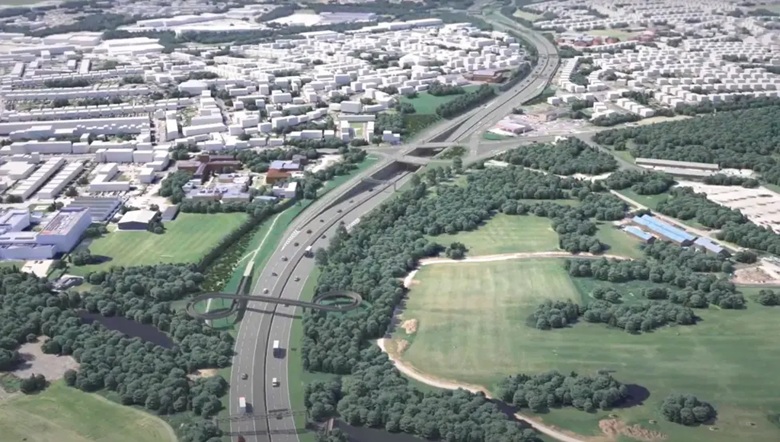
And two of the schemes are not due to start until the last two years of the five-year period, with the A38 Derby Junctions starting in 2029-30 and the A46 Newark Bypass in 2030-31.
As the ORR notes, National Highways enhancements frequently fall into a vicious circle of delays and cost increases, followed by delays because the costs have to be spread out:
Depending on decisions elsewhere in the plan, it might be necessary to defer the start of these projects to improve affordability. However, such deferrals would further increase total outturn costs as seen during RP2.
At least the ORR recognises how stupid this is:
Therefore, given the opportunities to improve the affordability and deliverability of other aspects of the plan, we recommend against additional deferral of enhancements projects.
But this may have happened. All of this was what National Highways was proposing last year, rather than what it is now planning. In fact, the BBC reports that the Department for Transport has given it an update on the A38 Derby Junctions scheme:
It said it was expected to begin during the second part of the next phase of road improvements, which will run from 2030 to 2031.
According to National Highways, construction is expected to last four years.
The other problem is that RIS 3 projects like this one are already crowding out “pipeline” schemes being developed for delivery early in RIS 4. The ORR comments:
Given the tail of RIS3 enhancements costs early in RP4, forecast to be around £600m in each of the first two years, it is unlikely to be affordable or deliverable to start construction on all the pipeline schemes in this timeframe.
It looks as if National Highways may forever be starting one RIS chasing the tail of the last one.
 Transport Insights
Leave a comment