
Unsurprisingly, Heidi Alexander’s announcement that she has “tasked HS2 Ltd to explore options to remove complexity that could cut billions in costs and reduce delays” has fallen flat with people who know what they are talking about.
HS2 was originally commissioned to run at 360km/h, which would have made them the fastest conventional high-speed trains anywhere in the world. However, no railway in the UK, or globally, is currently engineered for 360km/h.
This means that HS2 would have to wait for HS2 tracks to be built before testing any trains – an approach which could increase costs and delay the completion of the project.
There’s an interesting use of language of possibility here, with “would have” suggesting that trains at this speed are not going to happen and “could” admitting that the increase in costs and delay might come to nothing.
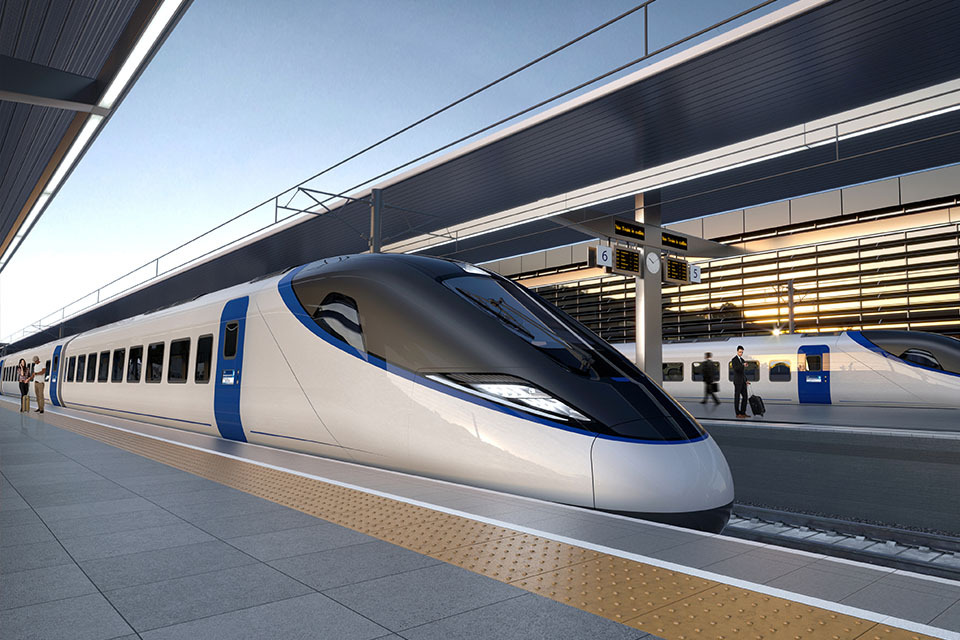
Plans to change the specification of HS2 to reduce the top speed are unlikely to save money, according to engineers.
Railway engineer and writer Gareth Dennis said:
It reduces the released capacity benefit which means you have fewer benefits on the wider network.
A design freeze is what’s needed. Nothing is cheaper than freezing the design and building against a stable scope you’ve spent billions and two decades developing.
There are no savings to be made from reducing speed. the civil engineering is almost done; there’s no saving there.
He’s got a point. Nothing drives up the cost of major schemes like this than politicians tinkering with the scope.
RAIL also doubted Alexander’s claim that HS2 tracks would need to be built before trains can be tested:
RAIL understands initial testing is likely to be done in Czechia and Test Tracks at Melton Mowbray.
A 50-mile section of HS2 between Washwood Heath and Wendover Green is due to be completed first to enable testing.
Meanwhile, Alexander’s latest report to Parliament states:
Mark Wild’s work on the reset has shown that HS2 Ltd did not have an accurate assessment of how much work had been delivered, or of how much was left to do. It is now clear that previous plans significantly underestimated the work required.
Mark Wild and HS2 Ltd have been working closely with my department and other partners in government over the past year to assess the remaining scope of work, and to estimate thoroughly how long it will take and how much it will cost to complete the project.
I am determined to explore every opportunity to remove the over-specification and complexity from this project to bring down costs and delivery timelines. This will ensure the updated cost and schedule estimates are robust, rather than rush the process and risk publishing figures that we do not trust.
It’s almost as if the transport secretary needed to give the impression that delays to the project can be reduced before admitting that it is even more delayed.
 Transport Insights
Leave a comment