
Transport Action Network (TAN) has published its analysis of the 16 evaluation reports on smart motorway schemes that the government finally allowed National Highways to publish this month, concluding that as expected, they showed that almost all had been costly failures.
Instead of delivering a predicted £10 billion of economic benefits, they delivered under £2bn, which is less than they cost to build. And that’s not counting the £900 million spent on retrofitting additional emergency laybys and upgrading technology.
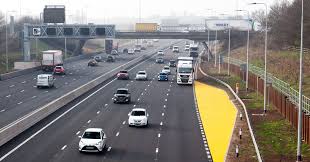
TAN notes that Post Opening Project Evaluation (POPE) studies are produced after a new scheme is built to assess whether it worked in terms of relieving congestion, improving safety, whether the environmental mitigation worked, and overall whether they provided value for money for taxpayers.
It focuses on the 11 schemes with five-year studies and the most reliable data, finding that only two came anywhere near delivering their claimed benefits.
The other nine were an economic disaster, costing the economy over £400m on (lack of) time savings, when National Highways had predicted over £7 billion of benefits. This is before counting the cost of building these nine ‘smart’ motorways, which comes in at a staggering £1.6 billion. This doesn’t include the £900 million that has been spent on retrofitting more emergency refuges and upgrading the technology across all ‘smart’ motorways. That means that these nine ‘smart’ motorways have cost the economy well over £2 billion.
Looking across all 11 schemes, the economy lost over £500 million, showing how bad these motorways are financially, before any consideration of safety.
Looking forward, TAN notes that smart motorways are still being built, despite government claims to the contrary, and notes that the Department for Transport (DfT) is not planning to add any new refuges despite its own report on National Highways’ Performance flagging that a third of All Lane Running schemes still have emergency refuge areas further apart than the standard.
In fact, the DfT report says:
…just over two-thirds of the ALR smart motorway network is compliant with the new spacing standard and have places of relative safety (PRS), including Emergency Areas, spaced at an average of less than one mile.
As I have written elsewhere, places of relative safety include all kinds of “relatively safe” places to stop in an emergency and are not limited to emergency refuge areas.
 Transport Insights
Leave a comment