
Richmond Council’s statement that it had withdrawn a fine against a woman who poured coffee down a drain, while still alleging that she had committed an environmental offence, leaves many questions unanswered, including the question of defamation.
In brief, if the drain (gully) discharges into the combined sewer system, any coffee poured into it would end up in the same place as coffee tipped down a nearby sink. If however it goes into a nearby watercourse, there is a lot more to worry about than a small amount of leftover coffee.
In revealing that it had revoked the fine against Burcu Yesilyurt, the council doubled down on its claim that she had committed an offence under Section 33 of the Environmental Protection Act 1990, which, as the BBC says, “makes it an offence to deposit or dispose of waste in a way likely to pollute land or water, including pouring liquids into street drains”:
It is likely that, had this case progressed through that route, the notice would have been rescinded because it is a minor contravention which the recipient agreed not to repeat.
The council also told the BBC that it is:
committed to protecting Richmond’s waterways
The implication of all this is that the gully discharges into a waterway, rather than a combined sewage system. But when I asked Richmond Council’s press office to clarify this, they refused to answer.
A council webpage says:
Generally, road gullies connect to Thames Water sewers, which are either surface water only or are combined sewers that carry surface water and foul drainage.
Was the council being wilfully misleading about this? And did it defame Ms Yesilyurt by stating that she had committed an offence, even after rescinding the fine?
For an offence under Section 33, the type and quantity of waste would be highly relevant to the risk of pollution and of course the council neither has a sample nor a reliable record of the amount.
On the other hand, if runoff from the road generally discharges into a watercourse such as the nearby Thames without any mitigation, the council will be the polluter; a small amount of coffee would pale into insignificance compared to this type of pollution.
I asked Richmond Council what mitigation is in place if the gully does discharge into a watercourse. It wouldn’t tell me.
This could be because it doesn’t or, if it does, either because the council doesn’t want to further undermine the claim that the coffee was a pollution risk or because it doesn’t want to admit to being the polluter.
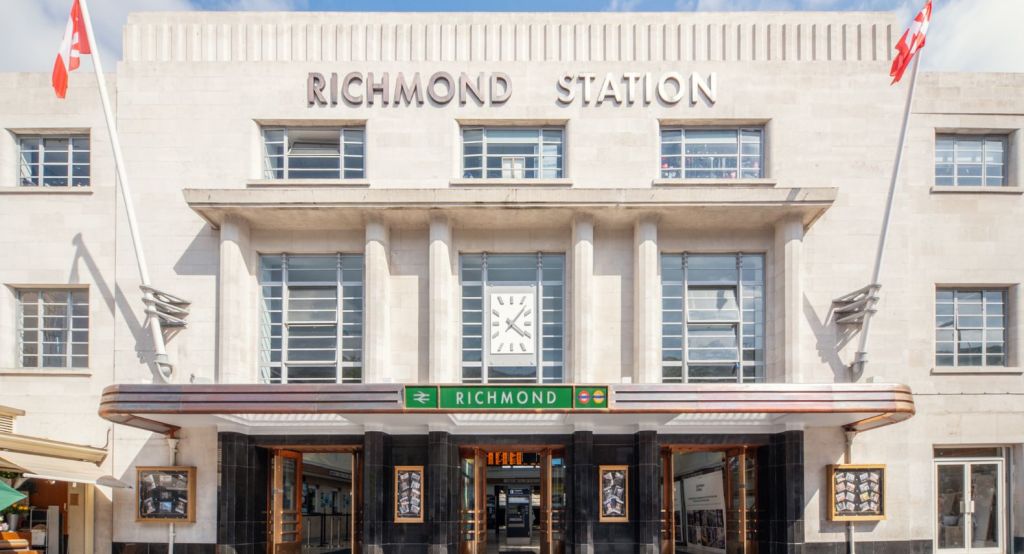
The above of picture Richmond station – scene of the alleged offence – where I used to work a long time ago and which has completed a wonderful looking refurbishment, comes courtesy of South Western Railway.
 Transport Insights
Leave a comment