
Another Department for Transport (DfT) announcement throws random and unsubstantiated numbers at a problem in a successful attempt to get headlines from gullible journalists.
The DfT press release First-time buyers to benefit from 40,000 new homes on brownfield railway land already contains a small quibble in the sub-headline:
Neighbourhoods in Manchester, Newcastle, Nottingham and Cambridge will be transformed with homes, green spaces, shops and hotels.
And of course many of these railway properties will be more suitable for shops and hotels, which may also be more economically viable.
Here’s the plan:
Previously, London and Continental Railways Ltd and Network Rail’s Property Team operated independently, each managing different aspects of surplus rail land across the UK.
This fragmented approach often led to inefficiencies, duplicated efforts and missed opportunities for strategic development.
Now, Platform4 will bring these 2 functions, skills and capabilities together in a unified structure to deliver 40,000 homes over the coming decade by disposing of surplus rail land, attracting private investment and accelerating community regeneration. By working together, instead of separately, Platform4 is expected to generate an additional £227 million by delivering at greater pace and scale.
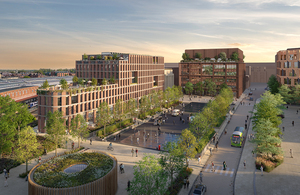
The press release provides no evidence that these numbers are realistic and it is noticeable that the figure of 40,000 new homes (over 10 years) is not only unsubstantiated – and presented elsewhere as an “up to” – but also does not say how many of these homes are additional to what would have happened under the existing structure.
Neither is there any explanation for why first-time buyers are expected to be particular beneficiaries or the new homes, other than that it is an obvious political message.
The BBC appears to have fallen for the story: Up to 40,000 homes to be built on disused railway land
The UK government has pledged to build up to 40,000 new homes on disused railway land, including former goods yards, industrial sites and station buildings, over the next ten years.
I’m not sure that “pledged” and “up to” belong in the same sentence, but the story does at least look behind the headlines:
However, an interim target of 15,000 in the first five years, is a small fraction of the total 1.5 million new homes the government has promised by the end of this parliament, plans that are already facing big hurdles.
 Transport Insights
Leave a comment