
The announcement in the name of roads minister Lilian Greenwood of a 40% increase in the cost of taking a car across the Thames at Dartford contains perhaps the most mindless statement a politician could make in a climate emergency.
The need to increase the charges to manage traffic highlights the need for the additional capacity that [Lower Thames Crossing], for which the government confirmed new funding yesterday, will provide.
Translation: we have failed to manage traffic demand so we are building a new road to accommodate it.
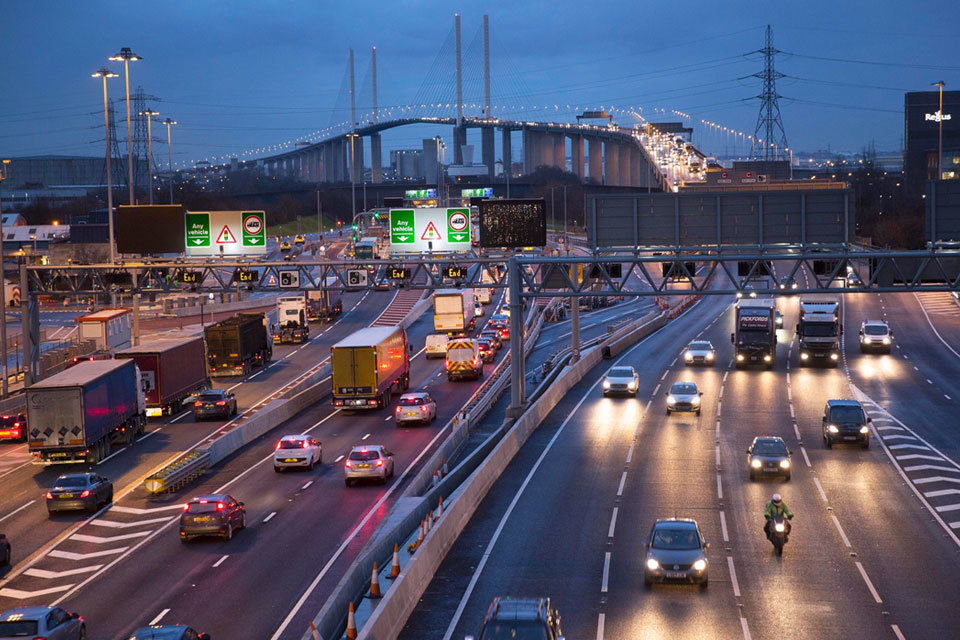
What makes the statement worse is that Greenwood explains in great detail the purpose of the charge and its recent history.
To manage demand and protect the crossing’s role as a vital component of the nation’s economic infrastructure, a user charge has been collected at the crossing since 2003. In 2014, the tollbooths were removed to help make journeys smoother and the charge was increased to help manage increased demand. This was the last time that charges were increased for all vehicles.
In the 11 years since, demand at the crossing has grown 7.5%, with the crossing now used by an average of over 150,000 vehicles every day and up to 180,000 vehicles on the busiest days. These traffic levels are well in excess of the crossing’s design capacity, causing delays for drivers using the crossing, congestion and journey disruption to drivers on the M25 and a range of knock-on impacts for local communities.
And then the killer:
The new charges will be significantly lower than if they had increased in line with inflation since the tariff was last fully revised in 2014.
So not only is the government (implicitly) admitting that failing to increase charges at least in line with inflation over the past 11 years means traffic levels “well in excess of the crossing’s design capacity”, but the charges are still not keeping up with inflation.
 Transport Insights
Leave a comment