I can exclusively reveal the other major scheme in the second road investment strategy (RIS 2) that ministers secretly pulled the plug on during the 2021 Spending Review.
In February 2022, DfT formally notified National Highways that two projects on the watchlist had been deprioritised as an outcome of the 2021 Spending Review. These two projects remained in the portfolio awaiting a final decision on whether to proceed but their funding has been removed.
The NAO revealed that one of these schemes was the A1 Morpeth to Ellingham scheme, which the company formally paused almost immediately, but it did not name the other scheme, which was also blacked out of all documents previously disclosed to me.
Now the Department for Transport has told me that the second, previously unnamed scheme was the M25 Junctions 10-16.
National Highways’ response to the coroner examining the death of a motorist on a “smart motorway” section of the M6 where the emergency areas are officially too far apart also raises concerning questions about the effectiveness of the technology involved.
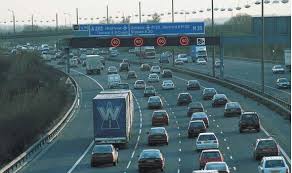
In June 2023, Kevin O’Reilly ran out of petrol on the all lane running M6 northbound approaching Junction 12 and was stationary in lane three when his car was hit by an HGV.
Emma Serrano, area coroner for Staffordshire sent National Highways a Regulation 28: Report to Prevent Future Deaths in relation to the death of Mr O’Reilly, expressing concern over the frequency of emergency areas and that the motorway was ‘not monitored’.
Having reviewed our CCTV footage after the incident, we determined that Mr O’Reilly’s vehicle was slow moving until approximately 30 seconds before the collision. Once stopped, SVD operated correctly in detecting the vehicle and triggered the automatic “Report of obstruction” message just after the HGV, that collided with Mr O’Reilly’s car, passed the variable message sign. Therefore the HGV driver was not presented with this warning message.
So, everything worked as it should, but a driver in a stationary vehicle without access to an emergency area (in the absence of a hard shoulder) still lost his life.
The draft of the third Road Investment Strategy (RIS 3) published this week suggests that ministers are happy with a smart motorway network where many places to stop in an emergency are officially too far apart, putting drivers at increased risk.
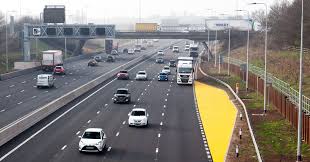
The Department and National Highways should retrofit emergency refuge areas to existing all-lane running motorways to make them a maximum of 1 mile apart, decreasing to every 0.75 miles where physically possible.
The Department (for Transport – DfT) accepted this recommendation in principle and in January 2022 announced that £390m would be spent by the end of March 2025 to retrofit “more than 150 additional emergency areas”, alongside a pause on the construction of new all lane running smart motorways.
Although this was said to provide “around a 50% increase in places to stop”, neither the DfT nor National Highways ever said how far the programme would go to fill in all the gaps where the spacing was longer than the official standard.
National Highways has told me that it had “prioritised locations where emergency areas could make the most difference and bring benefits to drivers as soon as possible” and suggested that it would like to see a continuation of the programme.
Labour delayed the start of RIS 3 by a year and gave the company an interim settlement for the current year that says nothing about improving safety on smart motorways.
In a section on Smart Motorways, the draft RIS 3 document claims that “substantial investment continues to improve the safety of the existing network” citing “the recent completion of additional Emergency Refuge Areas on the All Lane Running (ALR) smart motorways under the National Emergency Areas Retrofit (NEAR) programme”, which it acknowledges “was finished in March 2025” – a whole year before the new RIS.
There is no commitment to continuing the retrofit of what Labour has now returned to calling “Emergency Refuge Areas”, which leaves National Highways with a spacing standard that it is not funded to deliver.

 Transport Insights