Transport Insights

The transport stories you won't see in the industry-friendly media

Author

Chris Ames

Tag: rail nationalisation

  • Signalling claim falls victim to cancellation culture

    It’s worth looking at the Department for Transport’s press release about Britain’s biggest train operator’s services enter public ownership alongside Heidi Alexander’s written statement to Parliament, which has a bit less spin, although the detail of both is pretty unimpressive.

    Yesterday, Govia Thameslink Railway (GTR), which includes Southern, Thameslink, Great Northern and Gatwick Express, transferred into public ownership, or at least its services did, because the trains themselves remain privately owned.

    The DfT press release says:

    A renationalised GTR will deliver a range of initiatives to improve performance and passenger experience under public ownership, such as doubling the number of services between Gatwick Airport and London Victoria every hour and training 110 new Travel Safe Officers to crack down on anti-social behaviour on the network.

    Alexander’s statement to Parliament also promises “doubling the number of Gatwick Express trains each hour between Gatwick Airport and London Victoria from December” as well as providing additional Great Northern off-peak services from Moorgate from December.

    It’s not a massive increase and still leaves GTR services as a whole well below pre-pandemic levels.

    Interestingly, the press release states that the nationalisation will mean:

    Upgrade signalling to reduce cancellations: Secondary signalling system between Farringdon and Blackfriars to reduce delays and boost resilience. Improvements expected to prevent over 1,000 cancellations a year.

    While Alexander’s statement promises:

    completing the automatic train operation training programme by December 2026, which will support improvements in punctuality, particularly in recovering delays during disruption

    Both are about automatic train operation (ATO) but it seems that the statement that improvements are “expected to prevent over 1,000 cancellations a year” is not something Alexander thought robust enough to put in a statement to Parliament.

    Fortunately, most people already got their news from the press release.

    Leave a comment

  • Arterio rollout happening less slowly after nationalisation

    The Department for Transport’s press release celebrating a year since South Western Railway was nationalised highlights some genuine improvements, but the DfT can never resist spoiling a good story with exaggeration.

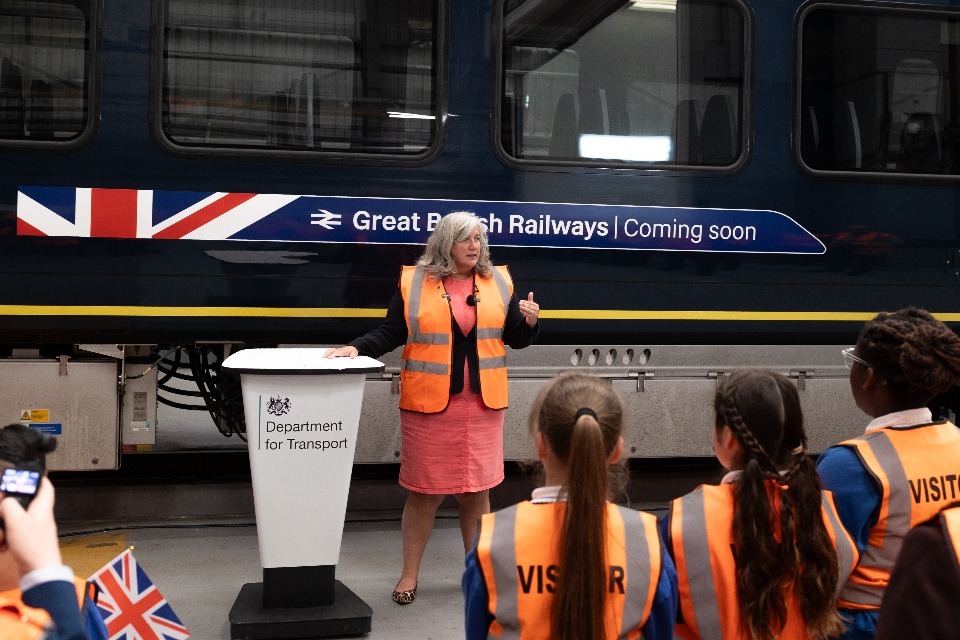
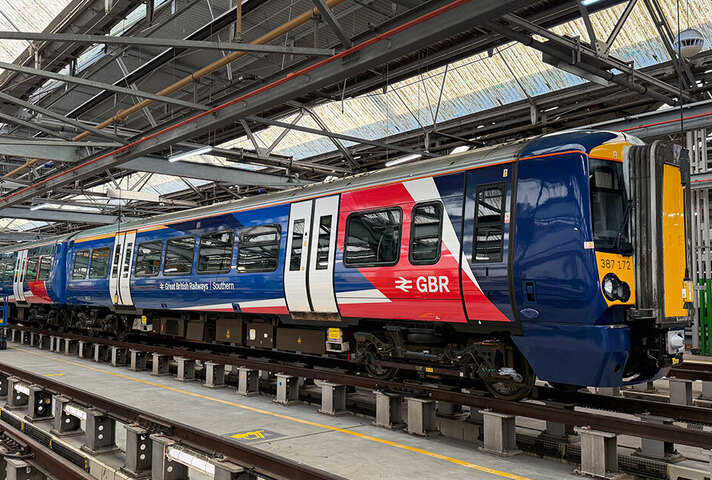
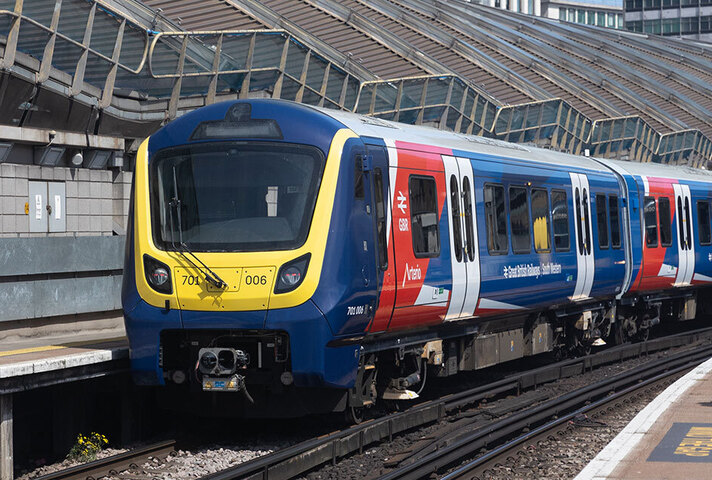
    To celebrate the milestone, the Rail Minister Lord Peter Hendy unveiled a GBR-branded train – an Arterio operated by SWR at London Waterloo station.

    He must have had a big veil.

    I can tell it was a 701 as it says 701 on the front. But the main story is:

    Thanks to public ownership, the government and SWR leadership sped up the introduction of new Arterio trains and accelerated driver training after years of delay, significantly boosting capacity and comfort for passengers across the network.

    This crucial change resulted in 39 new trains entering service since May last year. As a result, the number of seats and space on board suburban services into London Waterloo has increased by 27%, with even greater increases on other routes

    I think it is true that nationalisation cut through some of the ridiculous obstacles that delayed the introduction of the class 701 Arterios for years, but the DfT admits:

    SWR is now on track to have 50 Arterios in service

    The full fleet of 90 Arterio trains is expected to be in service by early 2027

    So we are just about half way to something that should have happened by 2019. This and other things means that the DfT is quoting from very dodgy statistics.

    (more…)
  • All change or plus ca change?

    A couple of announcements linked to Great British Railways show quite how slowly Labour is bringing “change” to the rail network.

    The BBC reports:

    The rail operator Great Western Railway (GWR) is to be renationalised in a “significant” move for trains in the West of England, the government has confirmed.

    GWR, based in Swindon, runs services linking London to the south-west of England and South Wales. It will come back under public ownership on 13 December.

    It’s not really news, other than the confirmation that it will happen, and will happen this year. In fact, it might be seen as later than expected. The BBC reported last September:

    Train firm GWR ‘to be renationalised in a year’

    Train company GWR (Great Western Railways) will be returned to public ownership “in about a year’s time”, one of its bosses has said.

    Meanwhile, the Department for Transport (DfT) has announced:

    (more…)
  • We made it up

    Shadow transport secretary and former transport minister Richard Holden has asked another perceptive question, with the result that ministers are unable to provide the evidential basis for a claim that nationalising rail operations could save £150m.

    To ask the Secretary of State for Transport, with reference to the press notice entitled New dawn for rail as South Western services return to public hands, published on 25 May 2025, on what evidential basis her Department calculated that public ownership of railways would save £150 million from the public purse; and if she will publish (a) the categories of fees that are no longer payable and (b) the estimated value of each fee category.

    Note however that the original wording said the move will save “up to £150 million a year in fees alone”, which is an obviously sneaky PR framing.

    But the answer from Simon Lightwood (pictured) is that ministers are unable or unwilling to show their workings.

    He merely asserts that there was an estimate:

    Private sector train operating companies are paid fixed and performance-based fees are set out in their National Rail Contracts with the Department. Operations are being transferred into public ownership as their National Rail Contract expire, meaning these fees will no longer be applicable once services have transferred. This saving is estimated to be up to £150million per annum once all franchised contracts have expired, with a proportion of these savings achieved each year in the interim as individual operators’ services transfer.

    (more…)