Transport Insights

The transport stories you won't see in the industry-friendly media

Author

Chris Ames

Tag: rail

  • Hendy: Our PAYG upgrade is long overdue

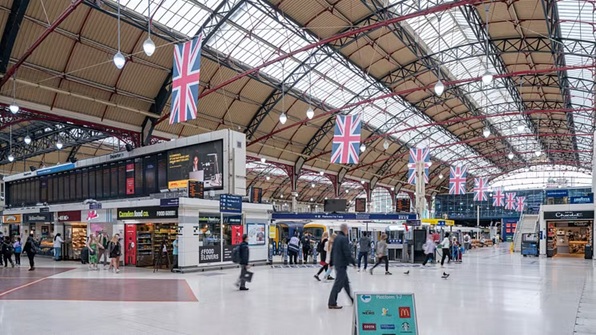
    There’s more good news, bad news on the rail ticketing front with Greater Anglia adding contactless technology to the 20 stations that were due to get it at the end of last year but which were put back to the summer.

    But, although the delay isn’t as bad as it was predicted to be, the whole programme to spread Transport for London’s (TfL) pay as you go (PAYG) beyond London is still years behind and less than halfway complete.
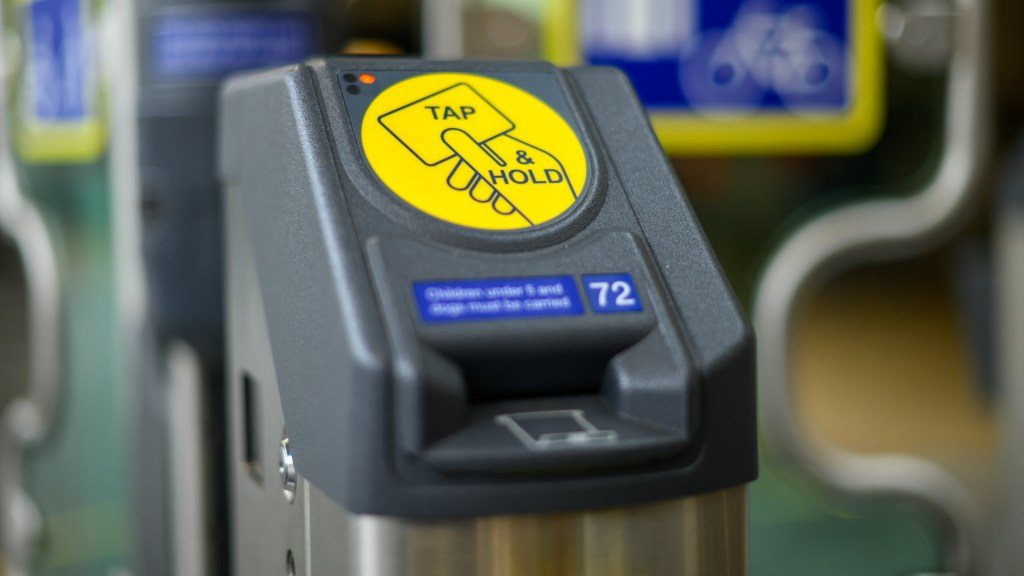
    Out of 233 stations that should have had the technology by the end of 2024, only 103 have now been delivered by TfL.

    Rather embarrassingly for rail minister Lord Hendy (who used to head TfL), he keeps saying the same thing about the upgrade being long overdue, even as he tries to sing its praises.

    In November, it was announced that 50 stations would go live the following month – the first tranche of a second phase. Hendy said:

    Rail ticketing is far too complicated and long overdue an upgrade to bring it into the 21st century.

    In December, it was announced that only 30 stations had been delivered:

    PAYG contactless will be rolled out to a further 20 stations, including Stansted and Southend airports, on Greater Anglia route during Summer 2026 after issues were identified in testing.  

    These are the 20 stations that have now had the technology implemented. Hendy said:

    Rail ticketing is long overdue an upgrade to bring the rail network into the 21st century.

    He is surprisingly frank on this: the upgrade is long overdue and, as I reported in November, there is no target date for adding the remaining 130 stations.
    Leave a comment

  • Expect delays on delay repay changes

    Ministers have made headlines with the announcement that rail passengers will be able to claim Delay Repay compensation directly from third party retailers, but without saying anything about when it will happen.

    The BBC has reported:

    Train Delay Repay rule changes to make claims easier

    But the story begins:

    Train travellers who buy discounted tickets using railcards will face additional checks, as part of a trial to crack down on ticketing fraud starting in April.

    If the trial is successful, the plan will save £20m a year in lost revenue, while preventing confused passengers from being prosecuted for fare evasion, the Department for Transport says.

    Followed by:

    A separate scheme will also make it easier for passengers who buy their tickets from third-party retailers such as Trainline to claim compensation for late or cancelled services under the Delay Repay scheme.

    The confusion is entirely the result of the Department for Transport bundling two slightly related announcements together.

    (more…)
  • As you were

    It’s a sign of how desperate the government is for good news that today the Department for Transport (DfT) has issued a press release in which the prime minister claims that not putting up rail fares “will put more money in working people’s pockets”.

    It is indeed good news that fares have not gone up at the beginning of this month and if the DfT says this is the first freeze for 30 years, I am happy to believe them, although they seem to be happier pointing to increases under the Tories than last year’s increase.

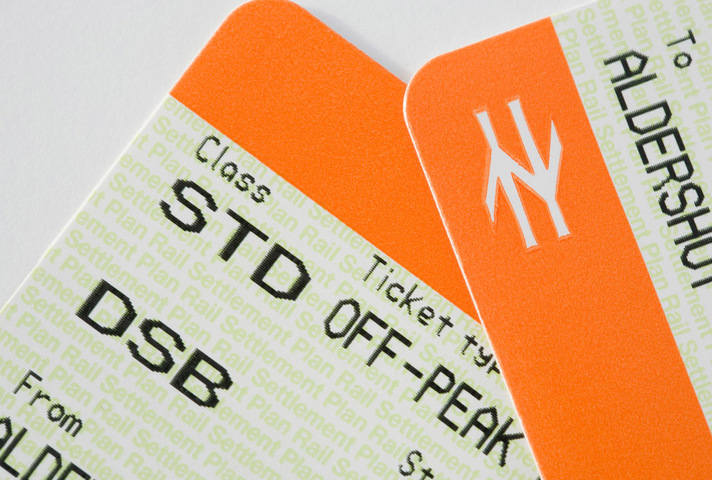
    British rail tickets for Standard off-peak travel day return for disabled. Image shot 11/2008. Exact date unknown.

    Here’s what Keir Starmer is claimed to have said:

    This freeze – the first since the 90s – will put more money in working people’s pockets. By keeping costs down we are making journeys more affordable for millions of people – putting train travel back into the service of passengers, not profits.

    I’m not sure how not charging people more is actively putting money in their pockets and of course the government takes the revenue risk on rail fares under National Rail Contracts.

    Meanwhile, the DfT says:

    With transport costs making up 14% of household spending, this cost-cutting move is providing real savings for passengers

    This is true but a bizarre thing to say all the same. Transport costs may make up 14% of household spending but rail fares could be as low as 1% of spending in the average household.

    It’s also quite funny that the DfT has used a picture (above) of old fashioned orange magnetic stripe tickets to illustrate the story – the ones the whole industry is trying to move away from. Just for fun, I left the caption in.

    But the DfT also rather stupidly refers to:

    building on the expansion of successful Pay As You Go and fares trials across the country

    In fact, the whole process of expanding pay as you go in the South East beyond London is and continues to be, a shambles.

    Of 50 stations that were due to go live in December, 20 (on Greater Anglia Routes) had to be delayed.

  • Deliberately worsening the service

    Many people working in this week or so between Christmas and New Year are having to wait longer for trains, not because of engineering works, but because the service has been intentionally made worse, despite Labour’s claim to be putting passengers first.

    For example, trains to and from London from where I live in Epsom have been cut from one every fifteen minutes in the rush hour to one every half hour – and that goes for both Southern trains to and from Victoria and SWR trains to and from Waterloo.

    As far as I can tell, in at least the case of Southern, there is no impact from engineering works; the company is just choosing to save money by running fewer trains, based on assumptions that fewer people will be travelling.

    Those people are not paying any less to have a worse service and the peak time charges have not been waived.

    And the trains are still overcrowded.

    Another problem is that if you cut the frequency of the trains and then cancel one, as Southern did yesterday, a fifteen-minute wait can become an hour.

    This says a lot about the state of our railways today, with cost-cutting instead of an attempt to run the best service possible. A total lack of imagination about the benefits of giving customers a service where they feel valued.

  • No pledge of more cash as climate change wrecks rail routes

    I’ve previously raised the question about whether the government is putting sufficient cash into our transport networks to fund climate change adaption, with ministers often just saying they are putting in more money rather than asserting that it’s enough.

    But a new written parliamentary answer from transport minister Keir Mather doesn’t even bother to address the question of whether there will be more money.

    Asked by Sarah Dyke, Liberal Democrat MP for Glastonbury and Somerton:

    To ask the Secretary of State for Transport, if she will provide additional funding to help mitigate ongoing soil moisture deficit effects for railway companies.

    Mather gave a long and rambling reply on behalf of Heidi Alexander that began with a description of the problem…

    The Department for Transport funds Network Rail to operate, maintain, and develop the nation’s railway infrastructure. As the climate changes, we expect to see hotter, drier summers, and therefore we will expect to encounter more instances of soil moisture deficit.

    (more…)
  • Rail electrification shelved, Alexander confirms

    The transport secretary has confirmed that Labour has no plans for further electrification of the rail network, for affordability reasons, once again giving the lie to the rail minister’s claim that the government is giving rail funding it needs.

    The FT (paywall) reports Heidi Alexander as telling the Rail Industry Association summit that any further electrification is “not affordable right now” and that the government is “only supporting projects that are fully costed and affordable”.

    She said:

    We are keeping further electrification of the line under review, which I believe is the responsible thing to do.

    Alexander also said this had “allowed us to make commitments elsewhere,” the FT reported.

    It’s not clear whether her comments go further than what she said in July when claiming that the government was “greenlighting over 50 rail and road projects”.

    She told MPs in relation to the midland main line electrification scheme phase 3:

    The costs of the scheme were substantial, and we had to prioritise other schemes that deliver more tangible benefits to passengers sooner. However, we will keep the electrification scheme under review as part of our pipeline of projects for future funding.

    But because of ministers’ double speak where “under review” appears to mean shelved and “greenlighting” to mean not shelved, it seems to have been clear for some time that Labour has shelved electrification to spend money on other things.

    But what is clear is that Labour is not “backing rail with the funding needed”, as rail minister Lord Peter Hendy claimed.

    Leave a comment

  • Official: Lightwood got it wrong with Ely “closed” claim

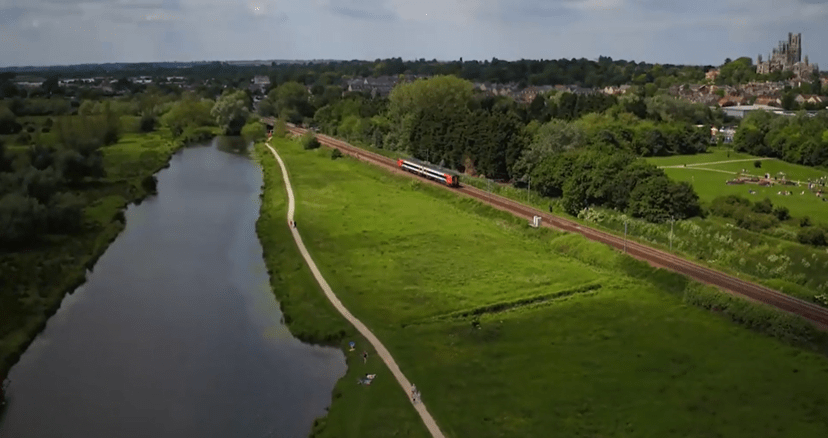
    The Department for Transport (DfT) has rowed back on an apparently false claim from a minister that the previous government “closed” the Ely Area Capacity Enhancements rail scheme.

    As I noted last week, roads minister Simon Lightwood stated in a written parliamentary answer that:

    The Ely Area Capacity scheme was closed by the previous government…

    This was inconsistent with what has been said elsewhere, including by Lightwood, and Network Rail considers the scheme to be awaiting a funding decision.

    I asked the DfT to clarify Lightwood’s claim that the scheme had been “closed”.

    It did not do so. Instead, a spokesperson told me:

    We recognise the importance of the Ely Junction scheme, and we fully anticipate it will be part of a pipeline of projects to be considered as part of future funding decisions.

    There is a strong case for Ely Junction, and we are committed to working with a broad range of stakeholders to support its inclusion in the future pipeline.

    (more…)
  • Ely rail scheme secretly “closed”, Lightwood claims

    A minister’s answer to a parliamentary question this week includes a claim that appears to be untrue but would be just as controversial if it were true.

    I wrote yesterday about Simon Lightwood’s response to a parliamentary question from shadow transport secretary Richard Holden, about the Ely Area Capacity Enhancements scheme, making the point that Lightwood contradicted rail minister Peter Hendy’s claim that the government is “backing rail with the funding needed”.

    Lightwood also said this:

    The Ely Area Capacity scheme was closed by the previous government and it has not been possible to reprioritise it at the most recent Spending Review.

    Firstly note that Lightwood’s claim that is has not been possible to fund the scheme, which again gives the lie to Hendy’s claim.

    But Lightwood also claimed that the Tories had “closed” the scheme.

    Although it is true that neither Labour nor the Tories have provided funding for the scheme, this claim is not matched by information in the public domain.

    (more…)
  • Lightwood tells Hendy: we can’t give rail the cash it needs

    Transport minister Simon Lightwood has contradicted fellow minister Lord (Peter) Hendy’s patently untrue claim that the government is “backing rail with the funding needed”.

    In reply to a parliamentary question, once again from Tory Richard Holden, about the Ely Area Capacity Enhancements scheme, Lightwood said:

    Secretary of State set out the schemes that have been prioritised for the Spending Review period in her 8 July announcement and made clear that other schemes would be kept under review as part of our pipeline for potential progression in future as funding becomes available.

    Network Rail, which Hendy used to run before becoming the rail minister, says:

    The railway through Ely is a vital part of the rail network. It includes a busy junction where five railway lines converge and is currently operating at full capacity. This is limiting the opportunity for growth of important routes for passenger and cross-country freight services.

    Now, it may be a sensible approach to acknowledge that you don’t currently have the money do everything that needs doing. But, as I noted earlier this week, Hendy claimed that:

    The Government … is backing rail with the funding needed.

    How can you have schemes waiting for funding to become available at the same time as providing all the funding needed?

    Leave a comment

  • Making it up as they go along

    A fascinating exchange between two lords has shown the shallowness of the government’s approach to investing in the railways.

    Veteran LibDem peer Lord Rennard asked His Majesty’s Government:

    what assessment they have made of the benefits of expanding local rail services to local economies, and of increasing rail services into cities to reduce road congestion, improve air quality and reduce carbon emissions.

    The reply from transport minister Lord Hendy was basically that the question only arises if civil servants have a specific proposal in front of them, rather than taking a strategic approach, or for example when they have already decided that a major road scheme is the answer:

    Assessments of the benefits of expanding local rail services to local economies, and of increasing rail services into cities, are assessed on a case-by-case basis to reflect local economic conditions, using Transport Analysis Guidance (TAG).

    Expanded local rail services can help drive local economic growth by opening up new development opportunities, unlocking housing, reducing costs for businesses and supporting people into work. 

    Hendy’s answer then descended into something between wishful thinking and lying:

    The Government recognises the crucial role rail plays in delivering these benefits and is backing rail with the funding needed. The 2025 spending review committed £10.2 billion provided for rail enhancements in the period over the next four years.

    So let’s take the proposed upgrade at Ely Junction, a rail enhancement that everyone thinks would make a difference to freight and passengers services.

    (more…)