The annual rise in the cost of the maintenance backlog on local roads as reported by the ALARM survey is guaranteed to get headlines but this year’s increase was predictable for reasons beyond inflation.
The cost of fixing all the potholes on local roads in England and Wales would be an estimated £18.6bn, the industry body that oversees road surfacing has warned.
Research from the Asphalt Industry Alliance (AIA) found that just 51% of the local road network that is maintained by local councils were reported by those authorities to be in good condition.
The chairman of the group called it a “national disgrace”.
The government is having to backtrack on its big announcement about funding for council road maintenance in England “doubling” after I pointed out to the official statistics regulator that it was full of spin.
My biggest problem with this Treasury Press release in November was that it failed to take inflation into account by stating whether the promised future increase will be in real terms or cash terms.
Of course it’s in cash terms, which can always be used to make spending increases look bigger than they are in real terms.
The Office for Statistics Regulation at the UK Statistics Authority agreed with this point and the Treasury has promised to be clearer in future.
The other main trick that the spin doctors pulled was to compare two individual financial years that were five years apart, i.e. 2024-25 (the last funding settlement determined by the Tories) and 2029-30.
This meant a degree of cherry picking and using a previous figure rather as a comparator, rather than what would have been spent.
Note that chancellor Rachel Reeves said:
We are doubling the funding promised by the previous government
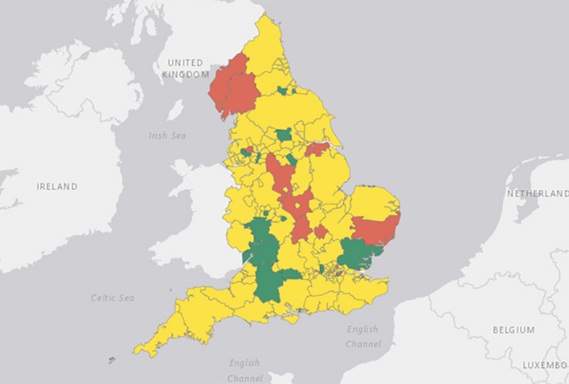
The gist of the story seems to be both that some councils have wrongly been rated red and others undeservedly rated as green.
The twist in the tale, as I mentioned yesterday, is that councils with a red rating, deserved or not, will get extra cash.
As transport secretary Heidi Alexander told MPs yesterday, the ratings are based on three underlying scorecards,
measuring local road condition, the level of capital spend on highways maintenance and the extent to which local authorities have adopted best practice in highways management.
Highways mainly focuses on complications over capital spend, with suggestions that data is not consistent, either because the DfT has not explained the nuances very well, or councils have got the wrong end of the stick, or both:
The mixed messages coming from the latest Department for Transport (DfT) press release on English local authority approaches to road maintenance are mind-blowing, with the idea that prevention is better than cure getting lost in simplistic headlines.
How well is your council fixing your roads?
New map rates how record government pothole funding is being used.
Absent from the top line is the idea that fixing roads and filling in potholes is a sign of failure.
new red, amber, green ratings let public see which local highway authorities are fixing potholes effectively
government’s record £7.3 billion funding announced at budget is helping councils get on with fixing nation’s roads
record investment will drive real improvement, saving drivers money by preventing costly repairs and restoring pride in communities
The press release explains that red, amber, green (RAG) ratings are based on three key areas:
the condition of local roads
how much LHAs are spending on road repairs
whether they are following best practice in maintaining highways
Eventually, the DfT gets around to explaining what they mean by best practice, and it isn’t “patching up potholes”:
Those that scored ‘green’, like Leeds, Sandwell and Manchester, were able to demonstrate they are following best practice, such as investing in more long-term preventative measures rather than just patching up potholes, while also maintaining good road conditions and investing significantly into improving local roads.
Despite all the tough talk, the DfT has created a system of perverse incentives, where the councils with a red rating get *more* money.
Although the media have gone with the obvious bad news angle on the RAC’s survey showing that pothole compensation claims submitted to councils in England, Scotland and Wales jumped by 91% in three years, things actually seem to be improving.
While the comparison to 2021 is concerning, the number of claims has thankfully come down slightly year-on-year. The local authorities that responded to the RAC’s request for data received a total of 56,655 claims in 2023, meaning compensation requests have dropped by six per cent to 2024’s number (53,015).
There is a lot of discussion in the RAC’s press release and in the reporting about preventative maintenance instead of putting resources into repairs but the downside of this is that until it pays off, vehicles will continue to be damaged.
The RAC press release ends on a positive note (or is it wishful thinking?) with its head of policy Simon Williams saying:
We’re now hopeful the dial will really begin to shift as highways authorities in England were this year given a record £1.6bn by the Government for road maintenance. And for the first time they’ve been required to show how much vital preventative maintenance they’ll be carrying out to stop potholes forming in the first place.
On top of this, the Government has now announced multi-year settlements which will give councils the certainty they need to plan and deliver better maintenance programmes. This can only be a good thing.
So, while the figures we’ve analysed are a cause for concern, we hope pothole compensation claims will begin to decline as local authorities increase the amount of preventative surface dressing work on their roads.
One response to “Pothole half full”
queengenuine756b40418a
Hi Chris.
The RAC comment on number of claims is at best a single point within a complex system. It is not just the number of claims that matters. On its own it gives little indication of the state of the roads, highways services or value for public money.
Yes reducing claims numbers is a good thing. But claims and incidents do not necessarily relate to the year the claim is submitted. Taking 1 year in isolation is not a good indicator. You need to look at the 3 to 5 year trend. You need to look at the make up of the total claims, are they motor vehicle damage due to road surface?, are they slips, trips, falls?, are they cyclists, pedestrians? are they town centre? rural, suburban? what is the road or footways class?????????
Secondly it is the effort to defend and the relationship between claims and accepted liability i.e. pay out that really tells you something about the state of our highways and the impact on the public and communities.
At the NHT Network https://nhtnetwork.org/ our members have been using the right range of metrics to asses their efficiency and effectiveness in terms of potholes and defect repairs, claims management and repudiation as part of their whole service performance management and asset management decision making.
Less claims hitting councils is good but it doesn’t tell you the real picture.
I have just caught up with Panorama’s programme on The Pothole Problem, which aired earlier this week and does very much dig beneath the surface of the issue, as you would hope.
Having worked briefly with Richard Bilton and colleagues on last year’s programme about smart motorways, I am not surprised that this new programme went beyond the headlines, as well as making a technical issue accessible and relatable.
While obviously highlighting the safety and other problems that potholes and poor road condition in general can cause, the programme correctly identified the obsession with filling them in as the main issue.




 Transport Insights
Leave a comment