Transport Insights

The transport stories you won't see in the industry-friendly media

Author

Chris Ames

Tag: national highways

  • Lightwood makes light of speed camera snafu

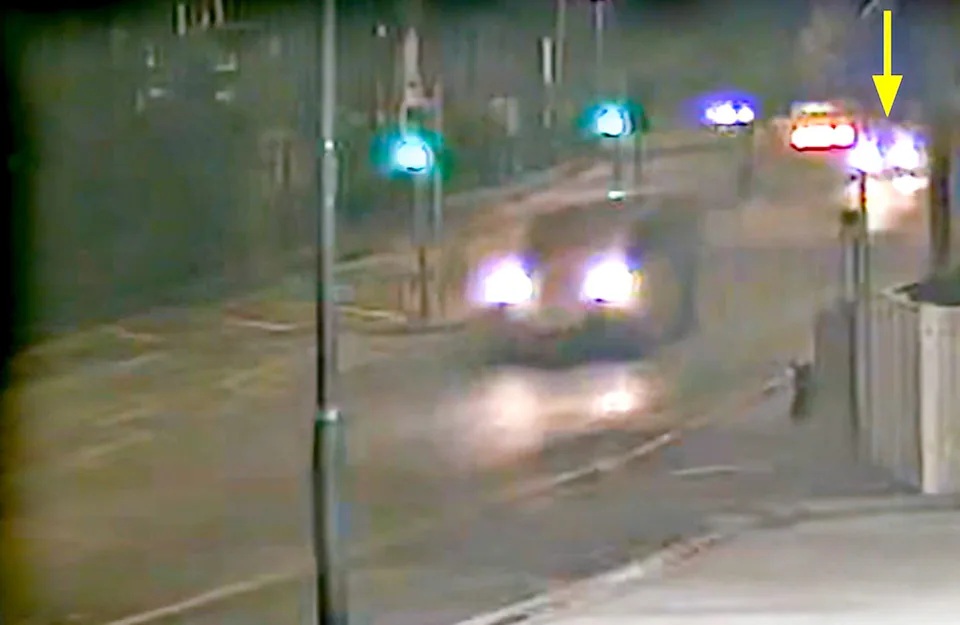
    Roads minister Simon Lightwood has claimed that drivers who break the law “can expect to be punished”, despite confirming that tens of thousands of drivers have got away with speeding offences because of National Highways’ latest technology failure on smart motorways.

    In written parliamentary statement, Lightwood confirmed, but sought to play down, the fact that an “anomaly” over the settings on variable speed limit enforcement cameras occurred approximately 2,650 times over four years, leading to a similar number of wrongful prosecutions.

    But that’s only half the story. As Lightwood told MPs:

    Independently, the National Police Chiefs’ Council took action to instruct all affected police forces to cancel wider prosecutions related to infringements in progress, regardless of whether they were impacted by this issue. As a result, tens of thousands of people’s speed awareness courses are being cancelled, and thousands of historic fixed penalty notices and criminal justice prosecutions are being discontinued.

    Lightwood also explained why his department had covered the problem up for around three months, without explicitly stating that it had done so:

    Throughout this process, I have been clear with all partners that we must ensure our road network remains safe. We therefore took the decision, following a safety assessment from National Highways, not to undermine public confidence in enforcement and risk impacting driver behaviour before we had a solution to this issue approved and ready to roll out.

    He ended his statement with an assertion that the facts have proven to be wholly untrue.

    Compliance with the law is being enforced in a variety of ways across our roads, as has always been the case. If you break the law, you can expect to be punished.

    As I commented yesterday, if tens of thousands of drivers breaking the law cannot be prosecuted because smart motorway technology is, once again, not up to the job, that is a major safety issue.

  • National Highways races to play down speed camera cock-up

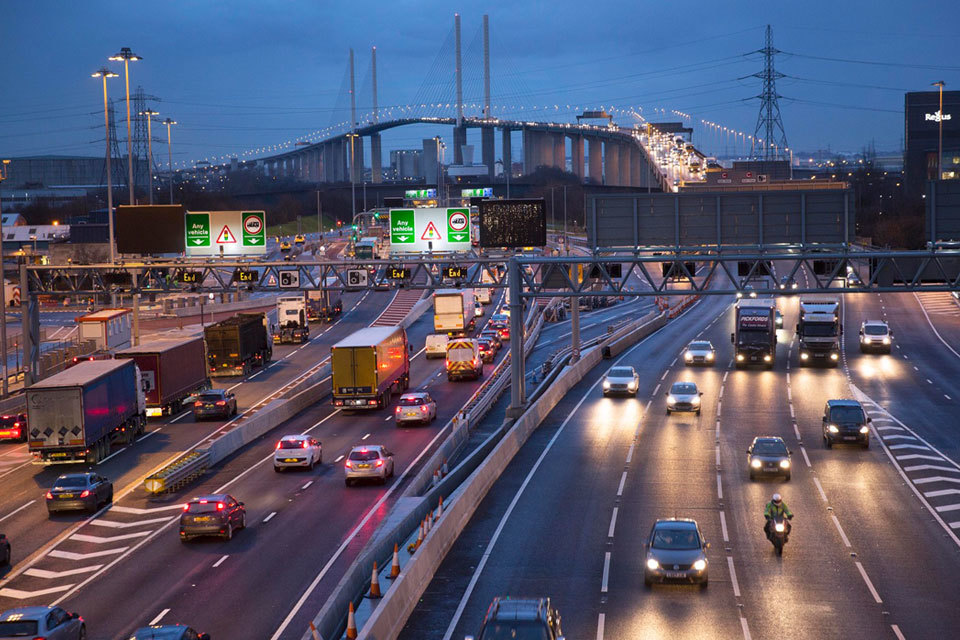
    The revelation that thousands of drivers have been wrongly prosecuted because speed cameras on smart motorways and elsewhere had the wrong settings is a major embarrassment for National Highways, which is why it is, typically, trying to play it down.

    I’m not sure it will boost confidence that the issue has only been admitted by the government-owned company and the Department for Transport (DfT) after a so-called fix has been put in place, but here is the headline on the National Highways press release:

    Fix being rolled out after variable speed camera anomaly

    As the Daily Mail points out:

    The scandal will yet again raise concerns about the safety of smart motorways, which are stretches of road where variable speed camera technology is used to manage traffic flow and reduce congestion.

    It’s fair enough to point out that too rigid enforcement doesn’t put anyone at risk but the story feeds into the general problem that, as the draft of the third Road Investment Strategy put it:

    National Highways should not be over-reliant on technology, for example drawing on insights from the use of cameras and stopped vehicle detection when considering driver safety and welfare.

    This is code for saying that the technology on smart motorways isn’t up to the job.

    (more…)
  • DfT working out how to spin bad news on smart motorway safety

    Update: National Highways has told me that the DfT is sitting on a total of 14 reports. Of these, nine are five years after and five are one year after.

    National Highways has said it will publish the reports on smart motorway performance that the Department for Transport (DfT) has been suppressing for nearly three years once ministers have decided how to spin the “complicated” data.

    As I have reported, ministers called in the Post Opening Project Evaluation (POPE) reports, at least nine of which were due to be completed by National Highways in 2022, and have not allowed the government-owned company so publish them, supposedly while it carries out “assurance”.

    The reports could show that individual smart motorway schemes are failing on issues such as safety, the environment and their impact on the economy.

    I asked both National Highways and the DfT to disclose the reports under the Freedom of Information Act but the company has refused under section 22 (1), claiming that it had agreed “a clear route” to publication with the DfT.

    Among other “public interest” reasons for withholding the data it said:

    We have agreed an approximate date for release by DfT pre Christmas 2025 (subject to DfT agreeing the comms handling plan.

    Publication will take place once other specified actions have taken place including briefing of ministers, agreement on a comms plan and final quality assurance.

    It explained that the POPE are “complicated” and that it is in the public interest “that the communication of the results is led by the DfT”.

    Significantly, National Highways added that the safety sections “include further analysis of data that is already in the public domain, and which has been reported on by NH in its annual stocktake and safety reports”.

    Unable to resist spinning the findings even in a supposedly objective balancing exercise, National Highways added:

    The POPE reports support the conclusion already drawn that Smart Motorways are amongst the country’s safest roads.

    This is clearly the DfT’s concern – National Highways can amalgamate data to disguise the fact that individual schemes are less safe than they want to admit but POPE reports are at a scheme level.

    Leave a comment

  • National Highways blows half a billion on a roundabout

    The BBC reports that half of the work on a £1bn National Highways road improvement project is being taken up with improving one roundabout.

    In fact, National Highways senior project manager Paul Salmon clarifies, the Black Cat roundabout is also taking up “half of the scheme cost”.

    “With everything linking into the flyover at the Black Cat and the A421 and the underpass of the A1 it is just not feasible to open sections” at the moment, Mr Salmon said.

    As the site is also on a high water table near the River Great Ouse, “we have put in around 450 piles, which build a wall to stop ingress of water and silt in preparation of the underpass,” he said.

    Following flooding on the A421 at Marston Moretaine last year, Mr Salmon said: “We have taken learnings over that unfortunate event and we have changed some of the designs of the water tanks.”

    (more…)
  • We have cash to tackle toxic runoff, National Highways boss says

    The government is providing “substantial capital funds” for a programme to tackle toxic runoff from its network, a top National Highways official has said.

    The comment from Ivan Le Fevre, the company’s head of environment strategy and standards, follows a recent publication that identified “182 confirmed high priority locations where outfalls or soakaways present a high-risk of pollution”, with an expectation that a total of 250 would be mitigated by 2030.

    Le Fevre has published on LinkedIn a blog that he wrote in September “primarily for an internal company audience”. He wrote:

    Government is providing substantial capital funds, through to 2031, to deliver a programme of improvement – and expects to see efficient and effective results that dramatically reduces the level of pollution risk and provides value for money for the taxpayer. Getting this programme right disproportionately matters to the company’s reputation over the next five years.

    To illustrate the importance of the issue he referenced two hearings held by the Environmental Audit Committee.

    At one of these, at the beginning of September, National Highways chief executive Nick Harris said the company was “proceeding on the basis that we will be funded to do all 250” sites.

    (more…)
  • National Highways confirms need, but not action, on toxic runoff

    National Highways has declined to confirm that it will meet a pledge to mitigate by 2030 all outfalls that pose a “high-risk” of polluting the environment with toxic road runoff.

    The company has published a document that its director of environmental sustainability, Stephen Elderkin, described on LinkedIn, as “detailing 182 confirmed high priority locations where outfalls or soakaways present a high-risk of pollution”.

    But, while the locations are confirmed, the pledge to mitigate them appears far less certain.

    The detailed document and map represent the next stage of the government-owned company’s 2030 Water Quality Plan, which:

    sets out a high-level programme of work that achieves the plan to mitigate all high risk outfalls by 2030

    However, that document also emphasizes that:

    Delivery in RP3 will be subject to funding being agreed through RIS3.

    Such funding has still not been formally agreed, although National Highways’ chief executive told Parliament that it is “proceeding on the basis that we will be funded” and the plan appears to be part of a funded National Programme.

    Elderkin’s statement National Highways has “committed to mitigate the risk at high-risk locations by 2030 with the installation of new or upgraded treatment facilities” conspicuously lacks the word “all”.

    The new document states that it:

    contains details of sites confirmed through these processes as having an confirmed risk of pollution at the end of August 2025. These high priority locations include a total of 182 assets.

    It adds:

    We expect that, in all, approximately 250 outfalls and soakaways will be confirmed as requiring new or upgraded treatment systems by 2030.

    While Elderkin stated that:

    In total, we expect to deliver improvements to around 250 locations

    this is a statement of expectation without a date.

    Similarly, the new document conspicuously avoids making firm commitments. It lists for each location:

    (more…)
  • ORR praises National Highways as casualties increase

    As National Highways’ safety record gets worse, the spin from both the company’s chief executive and its regulator continues.

    The latest government data shows that 1,931 people were killed or seriously injured (KSI) on the strategic road network (SRN) in 2024. This is an increase of 23 people (1%) compared to 2023.

    So the number of KSIs is going up when it is supposed to be going down.

    In a blog post, the Office of Rail and Road (ORR) notes that this is 38% below the (2005-09) baseline against which National Highways is required to achieve a 50% reduction by the end of this year, “which means that National Highways needs to achieve a further reduction of 12 percentage points (381 KSI casualties) if it is to achieve its target”.

    The ORR says:

    The latest figures confirm that it is now almost certain the target will not be met.

    Note that the regulator says the target will not be met, rather than that National Highways will miss the target.

    (more…)
  • Severn Bridge is safe, National Highways protests…too much

    National Highways has blamed the wrong kind of traffic as it insists that the sixty-year-old Severn Bridge is safe, while bringing in some fairly drastic measures just to allow HGVs to use it.

    Goods vehicles weighing over 7.5 tonnes are currently not allowed on the bridge – now redesignated the M48 – but are diverted onto the M4 Prince of Wales bridge.

    The problem is the continued corrosion of the cables that hold up the bridge decks, first discovered in 2006, which led to vehicles above 7.5 tonnes being banned from the outside lane in order stop having two lanes of heavy vehicles stuck on the bridge if an incident occurred.

    Follow-up monitoring, which I witnessed in late 2020, found the problem had got quite a lot worse, leading to an outright ban on HGVs.

    National Highways has now announced its preferred solution (of two) for the medium term, while it explores longer-term options.

    (more…)

  • Harris blames crash victims for road safety failings

    National Highways’ chief executive has sought to dodge responsibility for the company’s poor progress on road safety, claiming “success” for its limited efforts to reduce casualties through engineering.

    With the company expected to miss its key performance indicator (KPI) for reducing killed and seriously injured (KSIs) casualties during the second (2020-25) road investment strategy (RIS), Nick Harris pointed out that the next RIS does not currently have an equivalent target.

    In an interview for the official podcast of the Highways UK trade show, he said:

    Increasingly on safety though the focus is shifting from that headline KPI to the things we are doing. So there’s a little bit of a shift there.

    The comment also reflects the expectation that the next RIS will give National Highways a National Programme on safety, “supporting specific programmes of activity” and measure it against how much it delivers.

    Harris also sought to blame the victims of collisions:

    (more…)
  • National Highways looks to clear funding stream to fund clear streams

    National Highways is set to be given funding and a clear target to tackle toxic water runoff from its roads under a new-style “National Programme” in the forthcoming road investment strategy (RIS 3).

    The government-owned company is under pressure to tackle the contaminated water that runs off the strategic road network (SRN) into sensitive waterways in particular.

    Last month Parliament’s Environmental Audit Committee (EAC) challenged its chief executive, Nick Harris, on its plans and funding.

    He replied without explanation that it expects to be “funded to do all 250” of the “high-risk” outflows on the strategic road network that it has prioritised for mitigation.

    It has now emerged that water quality will fall under a National Programme for environmental mitigation, as floated in the draft RIS 3 published in August:

    We are considering introducing new National Programmes to deliver defined outputs that support RIS objectives or commitments which are not within other programmes (for example, supporting specific programmes of activity around safety and environmental mitigation).

    The company has since published a Preliminary Design Playbook, produced by consultants and setting out measures to mitigate high-risk outflows.

    In an interview with New Civil Engineer, Stephen Elderkin, director of environmental sustainability at the government-owned company, said:

    Rather than having different design teams coming afresh to each of those locations, given that we’ve now got a national programme, we’ve centralised it.

    He added:

    We take pollution contained in water running off our network incredibly seriously. It can contain heavy metals, hydrocarbons, tyre crumbs and other particulates and without suitable management of that runoff there is a risk of polluting water bodies where it gets discharged into water so this, this matters. It matters for health and it matters for ecosystems; it’s quite an extensive problem.

    (more…)