Another BBC article about Heathrow expansion frames the issue in the terms chosen by the business promoting it, with the only mention of the climate, in true BBC style, being a reference to “climate campaigners”.
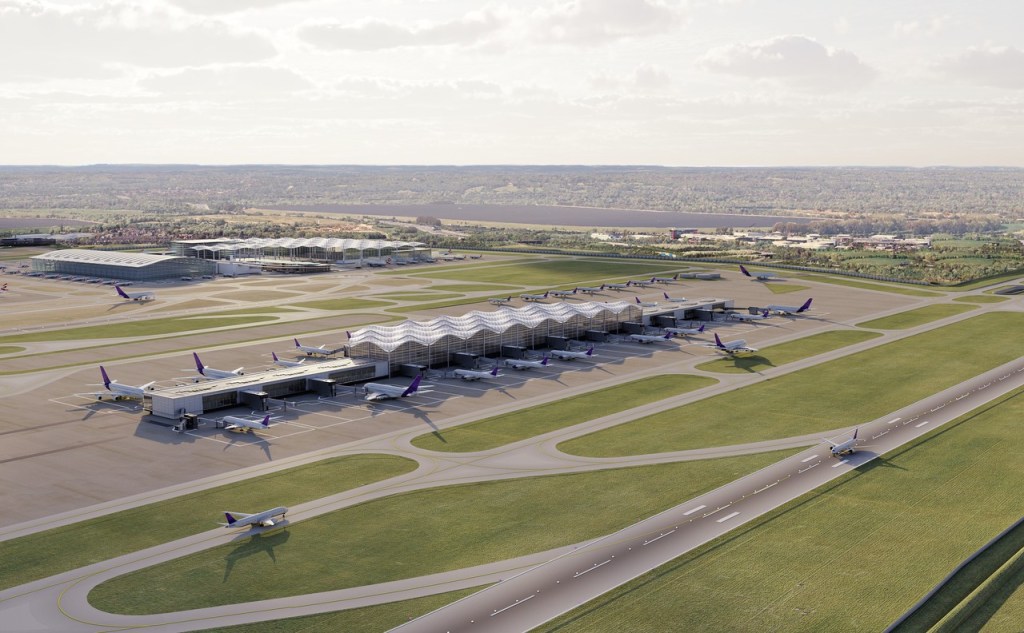
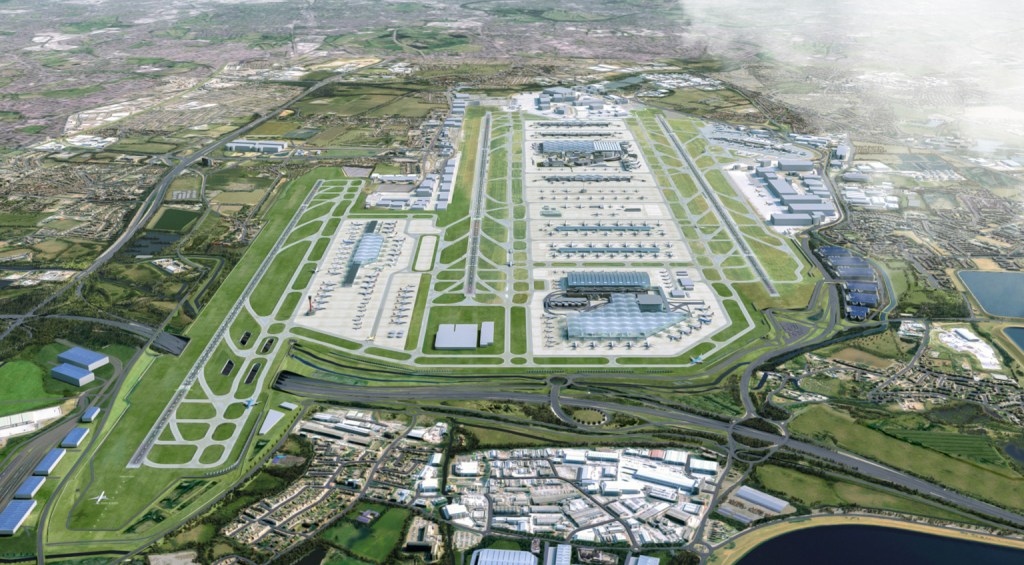
Not building a third runway at Heathrow Airport would be a “huge missed opportunity” for the UK, the boss of the country’s busiest airport has warned.
Thomas Woldbye told BBC Radio 4’s Today programme it would be “good to know” the government’s position on the project, after Prime Minister Andy Burnham refused to say whether he backed expansion.
The airport’s chief executive said if its owners could not invest in a third runway, the money “will be invested somewhere else in the world”, suggesting a decision would be made in the new year.
It’s not clear why the BBC has given the CEO of a private business a platform to lobby the government in support of its business interests – except that it provides a good news story.
The BBC then completely forgets any idea of balance, going into he said, she said mode instead and mentioning
potential to deliver around £40 billion in economic benefits across the country
from the Department for Transport, without mentioning that these are projected to be cancelled out by disbenefits.
Interesting journalistic takes on the latest advice on Heathrow expansion from the Climate Change Committee (CCC), which appears to rule the whole thing out, barring some major fudge or magical thinking from the government, which of course we can expect.
Heathrow expansion incompatible with climate goals, UK government advisers warn
Expanding Heathrow would add as much carbon to the atmosphere as the city of Birmingham and is incompatible with the UK meeting its legally binding climate targets, the independent Climate Change Committee has warned.
But here’s the rub:
“There is no credible pathway for Heathrow airport expansion within the UK’s climate commitments under current policies,” the committee said in a report.
The CCC appears to have left the door open for the government to bring in new policies – or pretend to do so.
In fact, the Guardian has a different take on the story:
Heathrow airport should be allowed to expand only if airlines pay for the removal of carbon dioxide from the atmosphere, the government’s climate advisers have said. … The “only way” to manage such expansion within the UK’s climate commitments was for the aviation industry to become more efficient, use an increasing proportion of “sustainable aviation fuels” (SAF) in place of fossil fuels, and pay for the permanent removal and storage of carbon from the atmosphere.
This has led to some people smelling a rat:
But campaigners rejected the CCC’s plan of relying on nascent technologies to wipe out the impact of an expansion that would commit the UK to much higher emissions for decades, and called on ministers to halt all airport expansion.
Tony Bosworth, campaigner at Friends of the Earth, accused the CCC of “pulling its punches”, pointing to recent research by the Tyndall Centre that found SAF and carbon removals were unproven and unlikely to ramp up in time to the extent needed to justify airport expansion.
The airlines are unhappy and say the costs would price a lot of people out of flying. The FT says:
The CCC forecast that the costs borne by the industry lowering emissions, which would run into the billions in total, would add about £150 to flights to Alicante in Spain and roughly £400 to the price of a ticket to New York.
Of course, if that were to happen, you probably wouldn’t have the demand to justify the new runway, which still seems to be predicated on helping people make these types of flight en masse in a climate emergency.
In fact, putting the costs onto the airlines, and therefore the passengers, is a matter of equity. The FT says:
Half of UK residents did not fly abroad, and a third of all international flights were taken by the top 5 per cent of travellers, classed as anyone who takes more than five round-trip flights a year, the CCC said.
On the subject of magical thinking, Carbon Brief reported last week:
The UK government has slashed its hopes for electric planes and “sustainable aviation fuels” (SAFs), ahead of giving the green light to a third runway at Heathrow.
An “ambitious” rollout of new technologies and efficiency upgrades will only cut flight emissions by a quarter over the next two decades, according to forecasts quietly released in June.
This would leave aviation emissions in 2050 nearly 50% higher than expected under the “jet-zero” strategy, launched by the previous Conservative government in 2022.
This appears to be already factored in to the CCC report. So what will the government try next?
One of the things my research into transport journalism is addressing is the way that mainstream outlets tend to look at transport issues in consumer terms rather than looking at systemic issues and this BBC report, which treats air travellers as victims of climate change rather than contributors to it, is a case in point.
In an “In Depth” piece, Theo Leggett, international business correspondent, warns:
Aviation faces hotter, stormier skies – and passengers might have to accept more disruption
Looking at a particularly stormy day in June, which caused significant disruption to flights, Leggett does at least name the underlying problem:
The timing in this case was clearly unlucky. But there are concerns that such incidents are only going to become more common as the effects of climate change mount up around the world and weather systems are likely to become increasingly unstable, making disruption more likely and adding to costs for airlines, airports and travellers.
As far as it goes, it’s a good article, which notes that disruption from climate-driven weather patterns extends beyond storms:
Heavier rainfall, for instance, increases the likelihood of flooding. In a worst case, this can paralyse airport operations, as happened in April 2024 when torrential downpours hit Dubai International Airport. It briefly had to close its runways, while disruption lasted for two days. More than 1,200 flights were cancelled, affecting tens of thousands of passengers.
The government has continued to signal its determination to expand aviation in a climate emergency, even as another analysis casts doubt on plans to expand Heathrow airport.
Heathrow’s plan for a third runway is impossible to deliver on time, and the project is likely to run into complications including the relocation of several angling lakes, ministers have been told.
A report by the American construction firm Bechtel…
… concluded that Heathrow’s third runway would be possible at the earliest by 2040 — five years after the intended delivery date.
The problem is the scale of works to be done even before construction can begin:
It looks as if plans to expand Heathrow Airport in a climate emergency may be a dead duck – especially if their main backer in government – chancellor Rachel Reeves – is ousted.
A Chinese sovereign wealth fund is considering a sale of its stake in Heathrow airport partly over concerns about the rising cost of developing a third runway at the London hub.
The Chinese Investment Corporation, which is backed by Beijing, has put its 10 per cent stake in Heathrow on “active watch” and is mulling a sale, two people with knowledge of its thinking said.
The FT adds that CIC is concerned that commercial aspects of the airport, including the steep costs, undermine the business case for expanding the airport and that airlines have raised similar concerns, warning that the costs could be off-putting to carriers and that the total bill for the project, which includes moving part of the M25, may be far higher than currently forecast.
In response, a Heathrow spokesperson said:
The costs for expanding the airport have been reviewed by the CAA and their independent experts have determined they are credible.
However, writing on LinkedIn, Alex Chapman of the New Economics Foundation noted that the CAA (Civil Aviation Authority) had recently commissioned an independent report that showed the true cost of the scheme is in the range of £33bn-£52bn, excluding public transport improvements.
He wrote:
that’s a very big caveat. Years ago, TFL estimated the public transport improvements required to support the scheme would run to several billions. Uprate that to today’s money and the scheme costs are *beyond HS2 levels*.
The government has clearly stated that any such costs must come “at no cost to the taxpayer”. So the net private cost of the scheme is even higher than the stated range.
A baffling announcement from the transport secretary has shone a light on her department’s determination to make the facts (or predictions) around carbon emissions fit Labour’s policy of expanding aviation in a climate emergency.
On 19 February I wrote to the judge hearing the above claim in respect of my ongoing duty of candour in those proceedings.
There is no reference before this, or indeed anywhere in the statement, to any claim or proceedings, although Alexander does later make equally baffling references to:
an order of the court from 10 December 2025
and to having
apologised to the court and the parties and submitted a statement from a senior official in the department to explain the error and correct our position.
At no point does she say which court but, unpicking all this, it looks as if the case is the legal challenge to Alexander’s decision to back expansion of Heathrow. You can tell this because she protests that
Heathrow airport reported record September passenger numbers, which some might think is a bad thing in a climate emergency, but the (London) Standard thinks is inadequate.
The airport announced that:
Heathrow welcomed nearly 7.4 million passengers last month, making it our busiest September ever and rounding off a record-breaking summer. It’s a clear sign that Heathrow is the UK’s hub for global travel.
It may be stating the obvious, but passengers and flights are not the same metric and more passengers can fly on the same number of flights (or fewer), particularly if planes are getting bigger.
But the Standard reported the same “record-breaking summer” as very much glass half-full: