Transport Insights

The transport stories you won't see in the industry-friendly media

Author

Chris Ames

Tag: active travel

  • Not outright fictitious

    Yesterday I asked Co-pilot to predict what accounting tricks the government might pull to get to a spend of £4.5bn on active travel over five years and today I asked it to look at the newly published third cycling and walking investment strategy (CWIS3) to see what they have actually done.

    The CWIS3 document sets out a projected sum but then transport secretary Heidi Alexander treats that in her foreword as if it will actually happen:

    backed by £4.5 billion of investment, we will empower local authorities across England to embed active travel into their local transport systems, so the benefits can be felt by everyone

    But is this sum just wishful thinking? According to Co-pilot:

    The funding projections in CWIS3 are structurally optimistic and in several places internally inconsistent with the scale of outcomes the strategy claims to deliver. They are not outright fictitious, but they rely on assumptions that are significantly more ambitious than the underlying funding mechanisms, historic delivery rates, or local authority capacity would justify.

    And the more detailed answer is that only £1.107bn is direct Active Travel England (ATE) funding. The remainder is:

    Estimated proportions of wider transport funds
    Non-ringfenced local transport budgets
    Contributions from planning, health, and regeneration programmes
    Assumed local match funding

    This means the headline figure is not a guaranteed pot, but a composite of:

    (more…)
  • “Surely, it will be coming to the House first”

    It looks like there may be a row over the transport secretary’s plan to publish the third Cycling and Walking Investment Strategy tomorrow, when Parliament is not sitting, but ministers have already been briefing the contents to the friendly media.

    Responding to an MP at transport questions this morning, Heidi Alexander advised him to look out for the strategy. The Speaker could clearly be heard to say:

    Surely it will be coming to the House first.

    His point was that this is a statutory document and needs to be put before Parliament before being published. It’s not clear what Alexander thinks she is playing at.

    In the meantime, the Guardian has the spin:

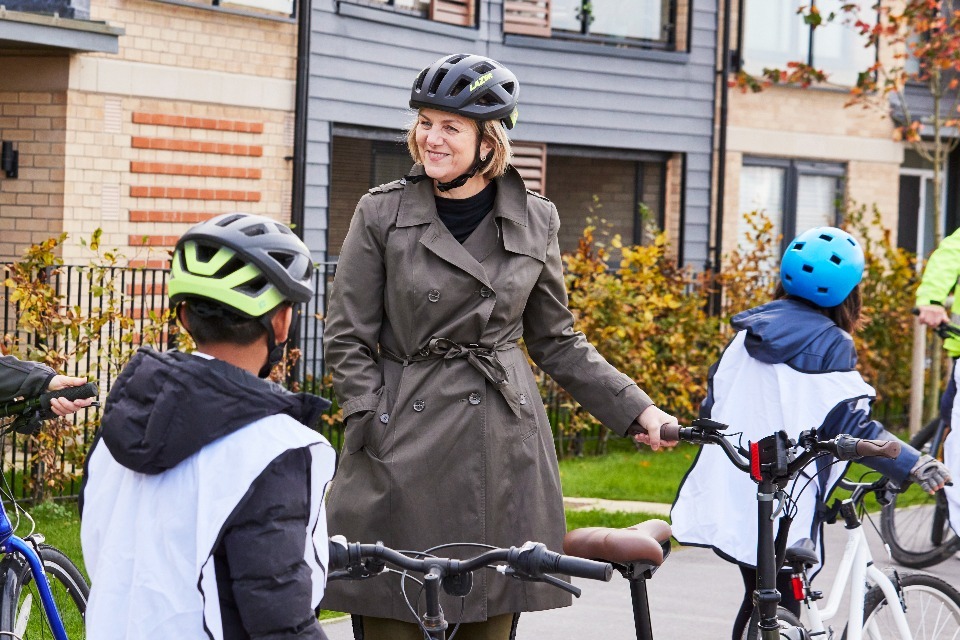
    Ministers are to launch a major push to get more children walking and cycling to school as part of a wider boost for “active travel” by the transport secretary Heidi Alexander.

    In the first significant change to active travel policy since the Boris Johnson era, thousands of new safe routes and crossings will be built around schools in England, with a target of having at least 60% of all children walk, cycle or wheel to school by 2035.

    Another pointless target that the government will make no attempt to meet and in any case Labour probably won’t be in office.

    But I’m asking, it’s an investment strategy; what will the funding be? The Guardian refers to:

    a promised total active travel spend of £4.5bn over five years

    This looks like quite a lot of money, but leaves me asking, what will the funding actually be? Or rather what accounting tricks will ministers pull to make this look like it happens.

    Just for an experiment, I asked Co-pilot. The short answer is:

    They will almost certainly inflate the definition of “active travel” by counting every possible pot of money that can be loosely connected to walking or cycling, even if it is not actually spent on active travel infrastructure or behaviour‑change programmes.

    This is a classic Treasury/DfT tactic, and it is exactly how previous governments have inflated the numbers.

    (more…)
  • Look over there, Greenwood says as active travel funding falls

    With Labour cutting funding for active travel and being coy about whether its forthcoming cycling and walking investment strategy (CWIS3) will include meaningful targets, transport minister Lilian Greenwood has gone in for the diversionary tactic of reheating the culture wars.

    On Sunday The Guardian reported pressure from campaigners for CWIS3 to include targets beyond the feeble – and clearly unmeasurable – aspiration to make walking, wheeling and cycling “easy, safe, and accessible for everyone” by 2035.

    On Wednesday, Greenwood answered – or rather failed to answer – a question from shadow transport secretary Richard Holden on:

    (more…)