Heathrow airport reported record September passenger numbers, which some might think is a bad thing in a climate emergency, but the (London) Standard thinks is inadequate.
The airport announced that:
Heathrow welcomed nearly 7.4 million passengers last month, making it our busiest September ever and rounding off a record-breaking summer. It’s a clear sign that Heathrow is the UK’s hub for global travel.
It may be stating the obvious, but passengers and flights are not the same metric and more passengers can fly on the same number of flights (or fewer), particularly if planes are getting bigger.
But the Standard reported the same “record-breaking summer” as very much glass half-full:
Two Tory transport secretaries gave Parliament misleading information over the secret decision to shelve a major National Highways scheme, I can reveal.
By way of a recap, in February 2022, following the 2021 Spending Review, the Department for Transport (DfT) secretly told National Highways that it should pause two of its enhancement schemes – one smart motorway conversion and the A1 Morpeth to Ellingham scheme.
The smart motorway scheme (M25 junctions 10-16) was officially paused by transport secretary Grant Shapps in January 2022, following a recommendation from Parliament’s Transport Select Committee.
But the DfT, National Highways and regulator the Office of Rail and Road (ORR) conspired to keep the shelving of the A1 scheme from Parliament and the public. As I have reported, both National Highways and the ORR falsely claimed that the “paused” scheme would start work during the 2022-23 financial year.
True to form, National Highways’ regulator, the Office of Rail and Road (ORR), has brushed off a complaint from campaigners about the company’s alleged misuse of designated funds.
Specifically, it alleged that the company was spending the “ring-fenced” funds on:
Projects completely unrelated to roads (such as dance classes and school play equipment), acting as ‘sweeteners’ to buy local support on controversial schemes such as the Lower Thames Crossing
Mitigation for new road projects, removing the cost of conservation projects from the project budget and artificially lowering the cost estimate.
Designated Funds are a separate cash pot intended to make improvements on and around the strategic road network to address impacts such as community severance and environmental impacts, as well as delivering “additional” improvements to road schemes and improving safety across the network.
The ORR’s response to TAN’s complaint was broadly that as the government had not prescribed what designated funds could or could not be spent on, National Highways can do what it likes with the cash, which totalled £870m under the 2020-25 road investment strategy (RIS 2) and £89m in the interim period (2025-26).
It paraphrased RIS 2, which itself paraphrased its four named funds, as naming “some specific areas for investment – such as improving environmental performance, investigating innovative processes and improving facilities for those who walk and cycle” but also making clear that this is not an exhaustive list.
National Highways has continued its greenwashing of the Lower Thames Crossing but its pledge to wish away emissions from the construction of the unaffordable scheme is full of holes.
The project aims to cut its construction carbon footprint by 70% by aggressively targeting carbon as it refines the design of the new road and adopting new materials and methods of construction as they emerge. It has also made a legal commitment to responsibly offset any remaining carbon emissions using best practice, and only in the early 2030s once efforts to reduce it during construction are exhausted.
I have written extensively about how the government-owned company invented a purely notional figure for construction carbon emissions, which it now says it will cut by 70%. One part of this scam was to imagine that the project might not use ground-granulated blast furnace slag – a widely used lower carbon cement substitute – and then to claim a saving from deciding to use it after all.
I also reported that, although National Highways claims to have carbon limits built into its contracts with the companies that will build the tunnel, it will not disclose what penalties will result from non-compliance, raising concerns that contractors may find it cheaper to pay the penalties.
National Highways has banned contractors from using offsetting to meet these targets but its Carbon and Energy Management Plan for the scheme does away with any claim that the targets represent any kind of a cut. It refers to “an upper limit for the use of carbon in construction, based on industry practice”, which implicitly admits that the original figure was using poor practice.
I’ve just caught up with what Keir Starmer told Metro about the government’s mindless “builders not blockers” decision to back more flights at Gatwick.
When asked whether he is a climate doomer, the PM told Metro: ‘I strongly believe that we can get this right, which means we can have the expansion of the growth that we need at the same time as meeting our climate obligations, and we can do both.
‘In other words, you don’t have to choose one or the other.
‘You don’t have to sort of say to people nobody can travel in the way they want anymore.
‘I think that would be completely the wrong thing to do.”
He disingenuously portrayed the issue as a binary choice between a pragmatic policy and a total extreme; you either add more flights or say to people “nobody can travel in the way they want anymore”.
Nobody.
It goes without saying that people are flying from all over the country, including Gatwick, at the moment and that this won’t stop if you have *the same number of flights*.
This is the sort of nonsense that should be beneath a prime minister, but no, it’s classic Blairism.
A good few years ago I wrote how Ed Milband, a cabinet minister in the last Labour government who was reportedly opposed to its then plans to expand Heathrow, told a conference:
We’re not going to tell people they can’t fly.
It was a lie then and it’s a lie now. At the time I called Miliband a “gutless Blairite clone”. The same could be said about Starmer.
Ministers have again given the “green light” to the A46 Newark Bypass, although the £500m scheme has no delivery timetable.
Rail minister Lord Hendy has approved a development consent order for the project, presumably because Labour is doing so little to improve the rail network, apart from not announcing funding for Northern Powerhouse Rail.
National Highways said the move:
means the formal green light has been given for the scheme to tackle congestion on a crucial trade corridor through the East Midlands.
The Department for Transport also announced in July that it given the green light to the scheme, “which could support thousands of new jobs and homes, if planning approval is granted”. Perhaps that was more of an amber light?
In the coming months, National Highways will work with the Department for Transport (DfT) to identify the most efficient and cost-effective delivery timetables for this project, as part of the process of setting the next Road Investment Strategy. An update on timings will be given next year.
So, if you are interpreting a green light as saying that the scheme is in a position to go forward, think again.
We are currently working with DfT to identify the most efficient delivery times for the A46 Newark Bypass scheme, and these will be published alongside RIS3 in March 2026.
No mention of cost there. Maybe they need to wait for the money to be genuinely in place.
The AA has picked up on my revelation that the Department for Transport (DfT) is sitting on a large number of post-opening evaluations of smart motorways and suggested that the loss of the hard shoulder may be responsible for an increase in delays on the strategic road network.
The AA said it believes that the impact of smart motorways is now “firmly under the spotlight”, adding that drivers are avoiding lane one through fear of running into a stranded vehicle, which undermines the efficiency and speed of these roads.
Another reason for increased delays on motorways without a hard shoulder is that they have less resilience when things go wrong.
Elsewhere on the network, major schemes like the one at Junction 10 of the M25 have continued to cause significant traffic jams.
The AA also noted my report that several Post Opening Project Evaluation (POPE) reports into all lane running schemes have yet to be released, and called for their immediate publication.
Head of roads policy Jack Cousens said:
With numerous stretches of so-called smart motorway now in regular use, rather than improving traffic flow it seems to have created more bottlenecks.
There are several reports about these schemes which have not yet been released by the Department for Transport which would show what, if any, improvements drivers have experienced.
We need these documents released to understand what traffic flow benefits have been made, alongside a value for money assessment on these motorways drivers perceive as dangerous.
Plans to extend high-speed rail across the north of England have been delayed further and will not now be announced by the prime minister at the Labour Party conference next week.
The BBC understands concerns over the long-term costs of the line earmarked between Liverpool and Manchester have pushed back the revival of Northern Powerhouse Rail.
The Northern Powerhouse was invented a decade ago by the Tories
Islam adds that “an announcement had been expected on multiple occasions in recent months”.
Keir Starmer is to formally revive Northern Powerhouse Rail this autumn with an announcement expected before the Labour conference, as a major demonstration of Labour’s commitment to northern infrastructure.
The AA is again flagging up the dangers (and irritation) of tailgaiting – and it’s right to do so.
The motoring organisation says that, in to a survey of 12,014 drivers, more than a quarter (27%) named tailgating as the most irritating behaviour carried out by “other drivers”.
The poll also found that a fifth (19%) of drivers are “hacked off” by middle lane hoggers, while one in six (16%) get annoyed at drivers picking up and using a mobile phone when they are behind the wheel.
A study carried out by AA Accident Assist in 2023 also highlighted driver frustration over tailgating and in another survey last year more than half (55%) of drivers said it had been getting worse in recent years.
Ministers are sitting on a huge amount of data on the safety and value for money of smart motorway schemes, including at least nine that were due for completion in 2022.
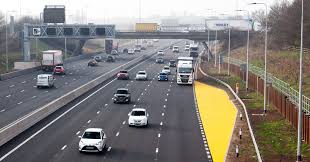
The concealment of multiple post opening project evaluation (POPE) reports will raise concerns that the government is once again hiding inconvenient facts about the controversial roads, as it did in 2021, when I put pressure on the Department for Transport (DfT) over reports that it was suppressing.
When the five-years after POPE on the scheme to convert the M1 between junctions 10 and 13 to dynamic hard shoulder was published in September 2021, it revealed that it had cost the economy £200m instead of a projected benefit of £1bn, because it slowed traffic down. It made national news.
We are scrutinising the company’s POPE publication plan for smart motorway schemes. Nine of these are due to be completed in 2022. In July 2021, the company published the five-year POPE for the M1 junctions 10 to 13 dynamic hard shoulder running scheme.
That POPE was the last report on a smart motorway to be published, which is unsurprising given how terrible the data was, although aggregated safety data is published separately.
When I asked National Highways why no more POPE reports had been published, a spokesperson told me:
We have provided the Department for Transport (DfT) with the smart motorway post opening project evaluation (POPE) reports. These are multiple detailed evaluations of scheme performance and DfT is now in the process of undertaking its final assurance.
Obviously, for those reports completed in 2022, “undertaking final assurance” means locked in a cupboard.
Leave a comment