
The Telegraph has an article on what it calls a “crisis in British bridges”, focusing on the closure of a couple of Thames crossings but said to be “by no means limited to west London”.
It’s an important story, but a terrible article. Let’s start with:
Last summer, the Government spoke of a £1bn Structures Fund to “inject cash into repairing run down bridges”. Slightly worryingly, the statement mentioned that approximately 3,000 bridges nationwide were not fit for 21st-century purpose and that the number of collapses had risen. “A stark reminder of the need for urgent action,” it warned.
But bridge experts say that not only is the 3,000 figure likely to be on the low side, but £1bn will not be anywhere near enough money to solve the issue – not least because local authorities will have to bid against each other for the money.
In fact, as I have pointed out before, the £1bn is to be split between the Structures Fund and local road upgrades, so it won’t be anywhere near anywhere near enough money.
The article also quotes the Department for Transport as saying that “stakeholders” will be surveyed to determine how best to deliver the Structures Fund, when this actually happened two months ago.
It also cites a 2021 survey by ADEPT/the RAC foundation as the source of the 3,000 figure, when in fact the latest is a 2023 survey published in March 2024.
It’s on firmer ground (sorry) when it cites RAC Foundation director Steve Gooding:
Of the tens of thousands of bridges on local authority roads in Britain there is a sizeable proportion that would need attention, potentially involving expensive strengthening work, to accommodate the heavier vehicles commonly in use.
In addition to the costs involved, our concern is whether, after many years of belt-tightening, councils really have the in-house expertise they need to assess and manage their highway structures.
And Hazel McDonald, “chairman” of the UK Bridges Board and chief bridge engineer at Transport Scotland.
It’s a lot more than 3,000 bridges.
A lot of authorities only do general inspections, so they don’t have an up-close and personal view of the condition of structures. The risks are not then escalated, and in England, the Department for Transport doesn’t collect condition information on the assets.
Bridge condition indicators were brought in about 20 years ago, but they’re no longer fit for purpose. At the moment we’re handing out taxpayers’ money to do work, but we don’t really know where the worst affected structures are.
You would think for something as complicated and as essential as bridges, that we would have something that could benchmark and report consistently across the country.
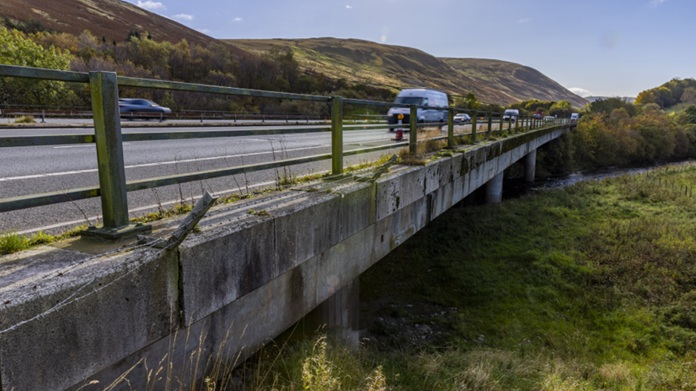
The article ends with a grumble about how National Highways is actually repairing some of its bridges – the Lune Gorge bridges on the M6 (pictured), which it says are “rapidly reaching the end of their serviceable life” – but inevitably causing disruption.
My question is, if the bridges are “rapidly reaching the end of their serviceable life”, how is essential maintenance going to improve their lifespan, as National Highways says?
 Transport Insights
Leave a comment