
The BBC has an astonishingly poor story about the Silvertown Tunnel a year on, with Transport for London (TfL) claiming that it is reducing congestion elsewhere, based on some very selective data, and with a huge piece of misinformation from the broadcaster,.
I have obtained (via TfL) the statement on which the BBC report was based and it is a pretty accurate version, with one exception.
The broadcaster reports:
One year after the Silvertown Tunnel opened, Transport for London (TfL) said the project had reduced “chronic congestion” and improved journey times.
New data suggested that drivers who used the neighbouring Victorian-era Blackwall Tunnel saw journey times reduced by more than 10% during weekday peak periods, TfL said.
So, we only have weekday peak data with a reduction in journey times that doesn’t seem to justify a £2.2bn scheme that will see drivers charged tolls for years to come.
And that is only one river crossing. Has congestion increased near the new tunnel? David Rowe, director of investment planning at TfL, said:
We are continuing to monitor the impact of the Silvertown Tunnel both on congestion and the surrounding areas and environment as we pass this important milestone.
I think that’s a yes.
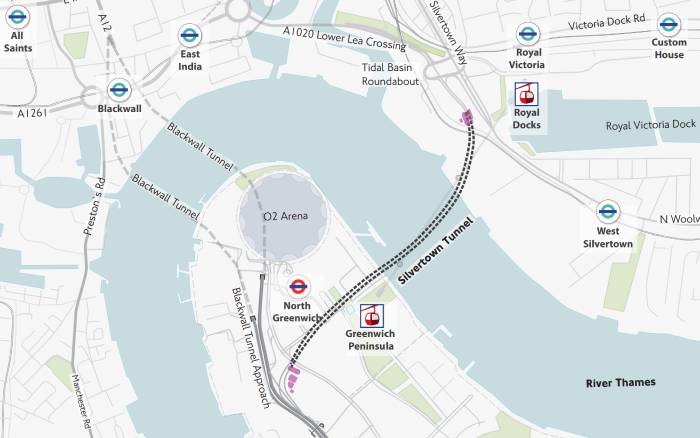
Rowe also said:
Before the Silvertown Tunnel opened, east London residents and businesses faced chronic congestion in the area.
Note that he didn’t actually say that this problem has been solved.
The BBC also reports:
Before the new £2.2bn link opened, the Blackwall Tunnel saw 700 closures a year, often caused by stuck HGVs, TfL said.
No need for post-opening data, obviously.
The report does include anecdotal claims of increased traffic elsewhere, and reports from last year suggest that reduced combined traffic at Blackwall and Silvertown may include displacement to the Rotherhithe Tunnel.
The good news from TfL is there are estimated to be 10,400 cross-river bus journeys on the average weekday, compared to 2,700 last March, although this may include some displacement from rail services.
But the main bit of misinformation cannot be blamed on TfL being economical with the truth. It told the BBC that buses are
making use of the dedicated bus and HGV lane.
The BBC reported:
New zero-emission double-decker buses use a dedicated lane through the tunnel,
It’s so dedicated, they are letting HGVs use it.
 Transport Insights
Leave a comment