
I’ve been catching up with the government’s response to the responses to the pavement parking consultation – i.e. what they are actually planning to do – as well as the responses to the response to the responses.
The weight of opinion that I have seen is that ministers have bottled it by going for the halfway house of giving individual councils (in England outside London) the power to take action and I wonder again why it took so long to do so little.
Let’s start with the convoluted way the Department for Transport (DfT) framed its approach in yesterday’s press release:
New local powers to keep pavements clear for those who rely on them most
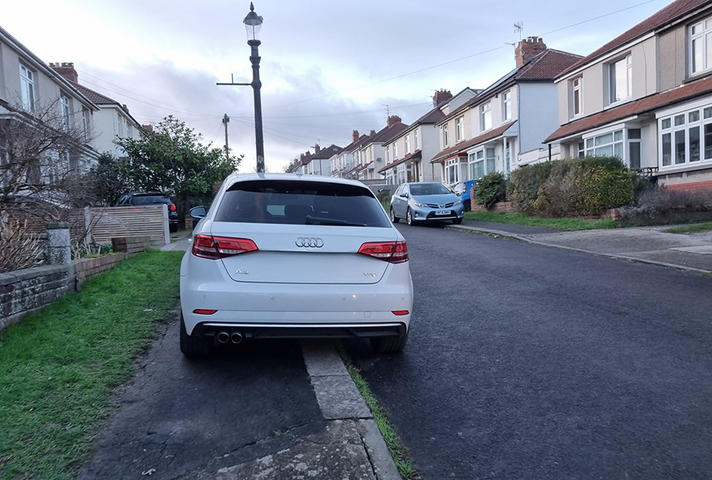
You can see what they are getting at, but it’s also bizarre to suggest that pavements (footways in the trade) will only be kept clear for those who rely on them the most. There seems to be an obsession among spin doctors to highlight protecting “the most vulnerable”, for example when cutting benefits.
To be fair, in her ministerial foreword, Lilian Greenwood says the impact of pavement parking is felt by “many”, including
anyone who relies on safe, accessible pavements to move around independently.
Another bizarre aspect is that, having sat on the issue for so long, the DfT is arguing that its approach is influenced by the fact that:
much has changed since the government’s consultation on pavement parking was undertaken in 2020
But, on this basis, my reading of the situation is that the proposed solution is neither Option 2 (outright)
Enable local authorities to enforce against ‘unnecessary obstruction’ of the pavement
Nor option 3:
Introduce a national prohibition on pavement parking, with local exemptions
But:
approaches that are better aligned to achieve the policy objectives underpinning Option 3
although Option 2 will be pursued in the via secondary legislation while ministers look to bring in new primary legislation “at the next available opportunity”.
In that light, I think some of the criticism, such as from Living Streets, that
Officials will be allowed to define what constitutes “unnecessary obstruction” when parking on the pavement, creating a postcode lottery
is misplaced as this applies to the interim solution.
In any case, I have never been a fan of the phrase “postcode lottery” as that the divergence of rules between areas is an inevitable and indeed intended outcome of local democracy and devolution.
In that light though, the DfT’s claim that:
Taken together, these steps will give local authorities the powers they need to address pavement parking effectively, while ensuring consistency, clarity and fairness for all road users
is utter nonsense.
Commons Transport Committee Chair Ruth Cadbury welcomed the overall approach while noting that remaining questions include:
how an approach based on making powers available locally will work for non-local drivers if there is inconsistency between neighbouring highway authorities.
She added:
The Transport Committee will be watching closely to ensure that legislation is enacted without further delays.
And not parked, she might have said.
One positive that the DfT rightly stresses is that, unlike enforcement of moving traffic violations,
the exercise of these powers will not require application to the Secretary of State. This represents an ambitious step towards empowering local government and avoiding unnecessary bureaucracy.
In other words, when we say we will give local authorities these powers, we mean it.


 Transport Insights
Leave a comment